

Most people schedule cataract surgery the same way they schedule a dental cleaning: a referral arrives, an office calls, a date is chosen. Then, somewhere between the pre-op measurements and the consent form, a staff member asks which lens you would like — standard or premium — and hands you a brochure full of words you have never heard before. Monofocal. Toric. Extended depth of focus. It is a strange moment to be making a decision that will shape how you see for the rest of your life.
Cataract surgery is one of the most commonly performed operations in the world, and for the vast majority of people it goes smoothly. But “routine” does not mean “identical.” The surgeon you choose and the lens that goes into your eye are two separate decisions, and neither one should be made in a hallway. Here is how to approach both with your eyes open, so to speak.
A cataract does not appear overnight — and neither should the plan
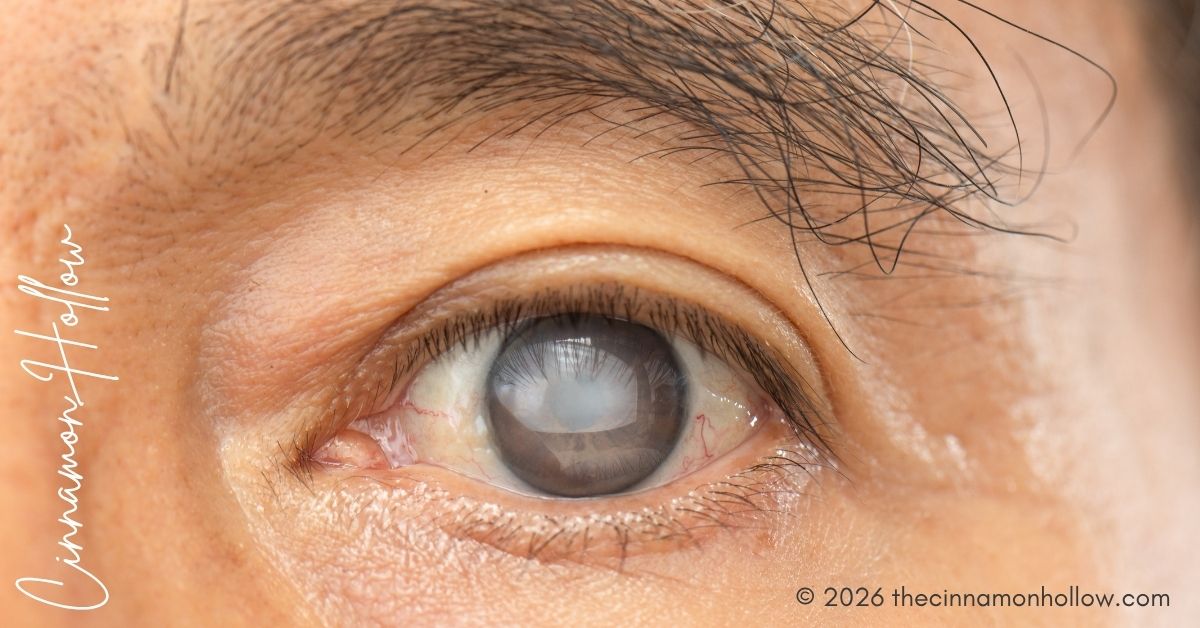
Cataracts form as the natural lens inside the eye gradually clouds and stiffens, usually over years. The early signs are easy to rationalize away: headlights that smear into starbursts, a need for brighter reading light, colors that seem slightly washed out, a prescription that keeps drifting. Many people assume their glasses are simply out of date.
That slow timeline is actually an advantage, because it gives you room to prepare. It is also one of the strongest arguments for keeping up with routine exams rather than waiting for symptoms to force the issue — seeing an eye doctor annually gives a clinician a baseline to compare against, which makes it far easier to tell the difference between a maturing cataract, dry eye, or something that needs attention for a different reason entirely. Conditions such as glaucoma and retinal disease also influence which lens options make sense, and those are found during exams, not during a rushed pre-surgical visit.
How to judge a cataract surgeon without a scorecard
You cannot evaluate surgical technique from a waiting room. What you can evaluate is process, transparency and fit. Those correlate more closely with satisfaction than most patients expect.
Credentials and scope of practice
Confirm that the surgeon is an ophthalmologist — a medical doctor who completed residency training in eye surgery — and ask how much of their current practice is devoted to cataract and lens-based procedures. Some ophthalmologists concentrate on retina or oculoplastics; a surgeon whose weekly schedule revolves around lens surgery will be more fluent in the newer implant options and the measurements they require.
The quality of the measuring, not just the cutting
Refractive outcomes depend heavily on biometry: the mapping of your eye’s length, corneal curvature and astigmatism that feeds the lens power calculation. Ask what imaging the practice uses, whether they treat dry eye or an irregular cornea before taking final measurements, and whether they track their own outcomes. A surgeon who says, “We repeat measurements if the two scans disagree,” is telling you something meaningful.
How they handle the conversation
A good consultation starts with your life, not with a product. How much do you drive at night? Do you read paper books or a tablet? Are you a golfer, a quilter, a woodworker, a musician reading sheet music at arm’s length? If nobody asks, the lens recommendation is a guess. Pay attention, too, to who answers your follow-up questions and what happens if something feels off three weeks after surgery.
Questions worth writing down
- Which lens would you choose for an eye like mine, and why that one over the alternatives?
- What are the realistic trade-offs — glare, halos, reading glasses, night driving?
- If I am unhappy with my vision afterward, what are my options?
- Will you personally perform both the surgery and the post-operative visits?
- Do I have any eye conditions that make a premium lens a poor fit?
Standard versus premium lenses: the honest trade-offs
Every cataract procedure replaces the clouded natural lens with an intraocular lens (IOL). The categories matter less than what each one asks you to give up.
A standard monofocal lens is set for one focal distance, usually far. It delivers crisp, high-contrast vision at that distance with very little visual noise, and most people then use reading glasses. It is predictable and well understood, which is exactly why many surgeons and many patients still prefer it.
Toric lenses correct astigmatism, which standard monofocals do not. If you have meaningful corneal astigmatism, skipping a toric option often means wearing glasses for distance as well as reading. Extended depth of focus and multifocal lenses stretch or split the focal range to reduce dependence on glasses, but they can introduce halos or starbursts around lights, especially at night, and contrast in dim conditions may feel slightly softer. Monovision, setting one eye for distance and the other for near, suits some brains beautifully and unsettles others.
There is no universally superior choice, and no lens restores the focusing flexibility of a healthy young eye. Harvard Health’s practical overview on tips to choose the best lens for cataract surgery is a useful companion read before your consultation, mainly because it frames the decision around habits and tolerance for visual side effects rather than around technology tiers. Also worth knowing: certain eye conditions — advanced macular disease, significant corneal irregularity, some glaucoma cases — can make advanced-optics lenses a poor match regardless of budget or enthusiasm.
Where surgeon-led education helps more than another brochure
Manufacturer marketing explains what a lens does; it rarely explains who it suits. That gap is why patients increasingly arrive at consultations having read material written by operating surgeons rather than by marketing departments. Eye Surgery Today is one example of that approach — an educational site that publishes surgeon-led articles, guides and videos on cataract surgery, lens and technology options, refractive and retina procedures, glaucoma, recovery and aftercare, along with FAQs, patient stories and a free downloadable Cataract Surgery Playbook. Its “Meet Our Surgeons” profiles introduce the ophthalmologists who contribute the content, including Dr. Gary Wortz alongside colleagues such as Dr. Neda Shamie, Dr. Blake K. Williamson and Dr. Neda Nikpoor; the site is a patient-education resource rather than a practice or booking service, so the value is in the explanations themselves and in learning how surgeons think through options like premium lens implantation, refractive lens exchange and laser vision correction. Reading a few of those pieces before your appointment tends to change the quality of the questions you ask.
A practical sequence for the weeks before surgery
- Get a full dilated exam and ask specifically whether anything besides the cataract is limiting your vision.
- Treat dry eye seriously if it is diagnosed; unstable tear film distorts measurements and blurs results.
- Spend a week noticing when your vision frustrates you most, and bring that list to the consultation.
- Ask for a second opinion if you feel rushed, or if the lens recommendation arrives before any questions about your daily routine.
- Decide how you feel about reading glasses honestly. Some people genuinely do not mind them, and that single answer narrows the lens discussion considerably.
- Plan the recovery: who drives you home, when drops are due, and which activities your surgeon wants you to pause.
The decision you are actually making
Choosing a cataract surgeon and choosing a lens are both exercises in matching the technology to your own habits, eye anatomy and tolerance for compromise. The patients who come out happiest are rarely the ones who picked the most advanced implant on the menu — they are the ones who described their lives clearly, understood the trade-offs before signing anything, and worked with a surgeon who treated the conversation as part of the procedure rather than a formality before it.
The owners and authors of Cinnamon Hollow are not doctors and this is in no way intended to be used as medical advice. We cannot be held responsible for your results. As with any product, service or supplement, use at your own risk. Always do your own research and consult with your personal physician before using.

Meg is an author at Cinnamon Hollow. She writes on a variety of topics sharing tips and ideas for daily life.