
In any chain drive, the sprocket is the quiet partner that decides how well the whole system performs.
Get it right, and the drive runs smoothly for years, but get it wrong, and you invite premature wear and costly downtime.
Sprockets are often treated as an afterthought next to the chain, which is a mistake worth avoiding.
This guide explains what they do, how to choose the right one, and how to keep a chain drive running reliably.

What a Sprocket Actually Does
A sprocket is the toothed wheel that meshes with a roller chain to transmit power between two shafts.
As the driving sprocket turns, its teeth engage the chain and pull it around, carrying motion and load to the driven sprocket.
The quality of that engagement is everything in a chain drive. Well-formed teeth that match the chain pitch precisely spread the load evenly and keep the chain seated, which reduces wear on both parts.
When teeth are worn, mismatched, or poorly machined, the chain rides badly, and stresses build in the wrong places.
The result is faster elongation, more noise, and a drive that fails long before it should.
The number of teeth on each sprocket also sets the speed ratio of the drive. A smaller driving sprocket paired with a larger driven one slows the output and increases torque, which is how a chain drive is tuned to its job.
Why Matching Chain and Sprocket Matters
Chains and sprockets are designed to work as a matched pair, not as interchangeable parts. The sprocket’s tooth profile and pitch must align with the specific chain it drives for the system to perform.
Running a new chain on worn sprockets is a common false economy. The old teeth quickly damage the fresh chain, so what looked like a saving turns into a repeat repair within months.
The reverse is also true, since fitting a new sprocket to a stretched chain causes uneven loading. Replacing the chain and sprockets together is almost always the more reliable and cost-effective approach.
Understanding the Main Sprocket Types
Sprockets come in several configurations to suit different chains and loads. Simplex, duplex, and triplex options match single, double, and triple-strand chains, with more strands carrying more power.
Bore options matter just as much as the tooth count for a clean installation. Finished bore, pilot bore, and taper lock each suit a different shaft setup and method of mounting.
Material choice is the next consideration, and it depends heavily on the working environment. Quality steel suits most general drives, while stainless steel in 304 or 316 grade is built for corrosive, washdown, or food-grade conditions.
Pitch size also varies across a range, commonly up to around two inches for standard transmission chains. Matching the pitch to your chain is essential, since even a small mismatch ruins the engagement.
Standard or Custom?
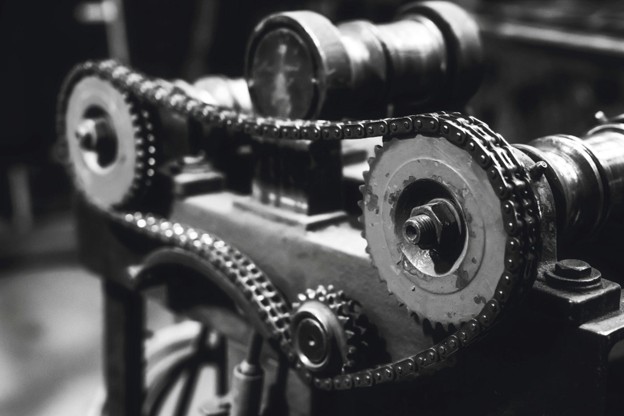
Many drives are well served by standard, off-the-shelf machined sprockets. These cover the majority of common applications and are quick to source and fit.
Some jobs, however, simply do not suit a standard part. Harsh environment, awkward shaft access, and unusual layouts often call for a custom sprocket designed for the specific application.
Specialist options include split and segmental sprockets for installations where removing the shaft is impractical.
Necklace and combination sprockets handle large drums, tables, or drives that need different pitches on a single hub.
How to Choose and Where to Source
Choosing the right sprocket starts with the chain, the load, and the shaft you are working with. From there, you can settle the strand count, bore type, material, and whether a standard or custom part is needed.
For straightforward replacements, it is easy to shop chain gears and sprockets online and match the part to your existing drive.
Browsing a full range also helps you compare configurations and spot the accessories you may need.
For anything unusual, it pays to involve an engineering team early in the process. A supplier with in-house design and machining can specify or build a sprocket that fits the application exactly, rather than forcing a compromise.
Knowing When to Replace
Sprocket wear is gradual, so it is easy to miss until a drive starts failing. The clearest early signal comes from the chain, which stretches measurably as the system wears.
A widely used rule is that when a roller chain reaches roughly two percent elongation, both the chain and the sprockets should be replaced together. Pushing past that point accelerates wear and shortens the life of every new part you fit.
Visual checks help too, since hooked or uneven teeth are a clear sign a sprocket is past its best. Catching this early prevents a sudden failure that takes a whole line down with it.
Maintenance and Useful Accessories
The simplest way to avoid surprise failures is to measure wear on a regular schedule. A chain wear guide lets you check elongation on-site without removing the chain, so that replacements can be planned rather than rushed.
Tools like chain pin extractors make routine chain work faster and cleaner. Having the right accessories on hand turns a stressful breakdown into a straightforward maintenance task.
Tension is another factor that quietly affects how long a drive lasts. A compact chain tensioner can be fitted where space is tight, keeping the chain correctly tensioned in retrofit or cramped layouts.
Specialist and Demanding Applications
Plenty of New Zealand industries push chain drives hard, from food processing to timber and mining. These settings often combine heavy loads with moisture, dust, or chemicals that punish standard parts.
In those conditions, material grade and precise machining make the difference between a drive that lasts and one that fails early. Matching the sprocket to the real working environment is the key to long-term reliability.
Downtime in these sectors is expensive, so reliability is usually worth paying for upfront. A correctly specified sprocket and chain set quietly prevents the failures that bring a whole line to a halt.
Common Mistakes to Avoid
The most frequent mistake is replacing a chain while leaving tired sprockets in place. It feels cheaper on the day, yet it shortens the new chain’s life and brings the next breakdown forward.
Another is ignoring alignment, since even a perfect sprocket performs poorly on a misaligned shaft. Taking the time to align shafts and tension the chain correctly protects the whole investment.
A third is relying on guesswork about wear rather than measuring it. A quick, regular check removes the guessing and turns maintenance into a planned, predictable task.
Conclusion
A chain drive is only as good as the sprockets at each end of it. Choosing the right configuration, matching it to the chain, and replacing both together is what keeps a system running smoothly.
Treat sprockets as a core part of the drive rather than a spare-bin afterthought. Do that, and you will spend far less time on unplanned repairs and far more on productive work.


