Standing in the feed store aisle staring at a wall of joint supplement tubs is its own kind of overwhelming. Every label promises support, comfort, mobility, and long-term soundness, and half of them use nearly identical language for completely different formulas. If you’re shopping for a horse who’s just starting to show a little stiffness, or one who’s been diagnosed with early joint changes, it helps to know what you’re buying before committing to a bag that costs sixty dollars a month. Here’s what actually matters once you flip the tub around and read the fine print.
Know What Each Ingredient Category Is Actually Doing
Most joint supplements build around a handful of core ingredients, and it helps to know what job each one is supposed to do. Glucosamine and chondroitin are the most familiar pairing, and they work by supplying raw material the body uses to maintain cartilage, the cushioning tissue between bones in a joint. MSM tends to sit in the same formulas and is generally included for its role in managing inflammation and oxidative stress rather than rebuilding tissue directly. Omega-3 fatty acids show up for a similar reason, since ongoing inflammation is often what keeps a joint sore even when a horse isn’t actively working that day.
Then there’s a newer category worth knowing: whole-food anti-inflammatories, with rosehip being one of the more talked-about examples. It contains a compound called GOPO, which has been studied for anti-inflammatory effects, and it’s usually positioned as something you add to a horse’s daily feed alongside good management rather than a replacement for the core ingredients above. None of these categories work in isolation. A joint depends on cartilage, synovial fluid, and the ligaments holding everything together, so a formula that only addresses one piece is only doing part of the job.
Judging Sourcing and Ingredient Quality
This is where a lot of owners get stuck, because two tubs can list the same five ingredients and still be worlds apart. Dosage matters more than the ingredient list itself. A supplement might technically contain chondroitin, but if it’s a token amount buried behind a proprietary blend, it’s not doing much. Look for products that list actual quantities per serving rather than hiding behind vague blend names.
Filler is the other issue. Cheaper supplements often bulk up the tub with inactive ingredients to stretch the active ones further, which keeps the price down but also keeps the dose down. It’s worth comparing the actual daily serving size and cost per dose across a few products rather than just the price on the shelf, because a bigger tub isn’t always the better deal.
Why Palatability and Consistency Matter as Much as the Formula
Here’s the part that gets overlooked constantly. The best-researched supplement in the world does nothing if your horse picks around it and leaves it in the bottom of the bucket every other feeding. Palatability isn’t a minor detail, it’s practically half the equation, because joint nutrition only works with regular, sustained use over months, not weeks.
Powders and pellets tend to mix into feed more easily than liquids for picky eaters, though some horses go the opposite way. It’s worth testing a small amount before buying a large supply, and mixing it into a feed the horse already loves rather than expecting a new taste to win them over. Consistency also means thinking about turnout schedules, travel, and who else feeds your horse, since a supplement fed only when you’re doing chores won’t show much benefit.
Matching the Supplement to Your Horse’s Actual Situation
A twenty-year-old trail horse with mild stiffness and a five-year-old eventer in full training don’t need the same thing, even if they’re both technically getting a “joint supplement.” Horses in heavy or repetitive work put more cumulative strain on their joints, so a more comprehensive formula often makes sense compared to a horse doing light hacking a few times a week.
Age matters too, though not in a straightforward way. Older horses often carry years of wear, but younger horses in intense training can develop joint stress just as easily. If your horse has an actual vet-diagnosed condition, a supplement should complement whatever your vet has recommended, not substitute for it. For horses without a diagnosis, this is more about prevention: managing workload, feeding a balanced diet, keeping weight in a healthy range, and treating a supplement as one layer of a broader routine rather than the whole plan.
Setting Realistic Timelines for Results
This is where patience gets tested. Joint supplements aren’t like a pain reliever that kicks in within the hour. Most owners need at least six to eight weeks of consistent daily feeding before they can honestly judge whether something is helping, and some ingredients take even longer to build up. If you switch products every three weeks because you’re not seeing a dramatic difference, you’re not actually giving anything a fair shot.
Keep a rough log of what you’re noticing, stiffness in the morning, willingness to pick up a canter, attitude about grooming near a particular joint, so you have something to compare against a couple of months down the line rather than relying on memory alone.
The Bottom Line
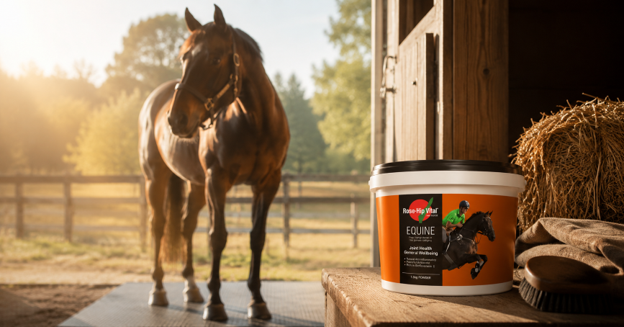
There’s no single supplement that fixes joint health on its own, and any label claiming otherwise is oversimplifying things. What actually matters is understanding what each ingredient does, checking that the dosing is real rather than diluted with filler, and picking something your horse will eat consistently, because consistency is doing more work than people give it credit for. Options like Rose-Hip Vital Equine fit into that picture as a whole-food addition to a daily routine, alongside sensible workload management and a balanced diet. Give whatever you choose a real trial period, pay attention to the small daily habits around feeding and turnout, and let the results build gradually rather than expecting an overnight fix.

Meg is an author at Cinnamon Hollow. She writes on a variety of topics sharing tips and ideas for daily life.