Most Texas homeowners never think about losing part of their property until the letter arrives. It might say “Notice of Right-of-Way Acquisition” or just describe a “project corridor” running through your backyard. Either way, the clock starts ticking the moment it hits your mailbox, and the decisions you make in the next few weeks can cost or save you tens of thousands of dollars.
Texas is expanding faster than almost any state in the country, and that growth comes with real consequences for ordinary homeowners. Pipelines, highways, power lines, and water infrastructure projects are actively cutting across properties that families have owned for generations. If you own land in Texas right now, understanding this process is not optional. It’s one of the most important things you can do to protect your home’s value and your family’s future.
The Scale of What’s Actually Happening Out There
This isn’t a slow trickle of projects. In August 2024, Governor Greg Abbott announced a record $148 billion in total transportation investment for Texas, including adoption of a more than $104 billion 10-year transportation plan by TxDOT aimed at improving safety, addressing congestion, and preserving roadways. That’s not a figure you hear and forget. That kind of spending means land acquisition at a scale most Texans haven’t seen in their lifetimes.
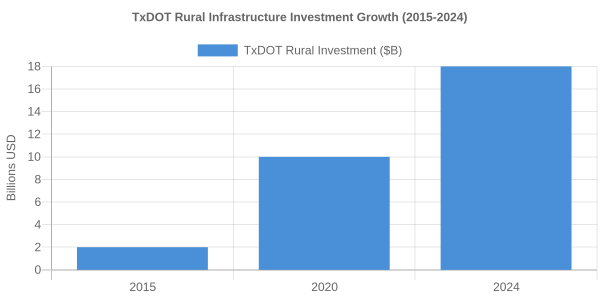
And it’s not just urban highways. From 2015 to 2024, TxDOT’s investment in rural areas of Texas grew from under $2 billion to over $18 billion, representing an 800% increase in rural transportation funding. Rural and suburban homeowners who assumed infrastructure projects were a big-city problem are finding out otherwise. If you live anywhere near a growth corridor, a pipeline route, or a regional power grid expansion, your land may already be on someone’s project map.
What “They Want Your Land” Actually Means in Practice
There’s a difference between a full taking and a partial taking, and most homeowners don’t know which one they’re facing until they’ve already signed something they shouldn’t have.
A full taking means the acquiring entity purchases your entire property. A partial taking is more common and often more complicated. The government or utility takes a strip of your land for a road widening or a pipeline easement, leaves you with the remainder, and you’re responsible for figuring out how that affects your home’s layout, your driveway access, your fence line, and in some cases your ability to use the land at all.
Easements are their own category. A pipeline easement doesn’t give a company your land outright. But it creates permanent restrictions on what you can build or plant within the easement boundary. You still own the land on paper. You just can’t do much with it. That’s the trade many homeowners don’t fully understand until years later, when they want to build an addition or put up a fence and discover they can’t.
Consider a scenario that plays out regularly across West Texas: a family owns a modest acreage property in a county that sits in the path of an energy grid expansion. A utility company’s representative shows up, clipboard in hand, explains the project is happening regardless, and offers a check. The family, relieved to get any money, signs. Six months later, a neighbor with similar land and a lawyer receives three times that amount for the same easement width. The difference wasn’t the project. It was knowing what to do before saying yes.
Three Things That Catch Homeowners Off Guard
These surprises show up repeatedly, and they’re all avoidable with a little preparation.
- Remainder damage goes uncompensated. When a partial taking cuts off a corner of your property, the rest of the land often drops in value. Many homeowners accept compensation only for the land taken, not for the reduced value of what’s left. Under Texas law, you may be entitled to both.
- The deadline feels real even when it isn’t. Acquiring entities sometimes present offers with implied urgency. Legally, you have time to get an independent appraisal and consult with someone who represents your side of the table, not theirs.
- Access and drainage changes are rarely priced in. A new road or pipeline can change how water drains across your property, block driveway access you use daily, or sever utility connections. These are compensable damages, but only if you know to ask for them before you sign.
The SIGN-PAUSE-VERIFY Framework Before You Do Anything
This is the simple sequence every Texas homeowner should run through the moment a project notice arrives. It’s not legal advice. It’s practical order of operations that keeps your options open.
SIGN nothing on the first meeting. No matter how friendly the representative is or how routine the paperwork looks, your signature changes everything. Once you’ve accepted an offer, your ability to negotiate or challenge the amount becomes dramatically limited.
PAUSE and document. Walk your entire property and note everything that could be affected: outbuildings, trees, gardens, driveways, fencing, drainage paths, utility hookups, anything within or near the proposed corridor. Photograph it all with timestamps. This becomes your baseline record if you later need to demonstrate what was there before.
VERIFY the offer independently. The acquiring entity hires its own appraisers. Those appraisers work to the project’s interests, not yours. You have the right to an independent appraisal, and in most cases the cost of getting one is small relative to the difference it can make in your final compensation.
“Landowners who negotiate with professional representation consistently receive more than the initial offer. The first offer is a starting point, not a final answer.”
This reflects the consensus position documented across eminent domain case research and right-of-way industry reporting, including findings from the International Right of Way Association’s biannual case reviews.
When to Bring in Someone Who Actually Works for You
Here’s where many Texas homeowners make their biggest mistake: they assume the process is too formal or too expensive to challenge, so they accept whatever’s on the table and move on. That’s a decision worth revisiting before you make it.
The acquiring entity has engineers, attorneys, and appraisers all working toward a single goal. You’re entitled to the same level of advocacy on your side. Eminent domain attorneys in Texas work specifically for landowners, not for utilities or government agencies, and many handle cases on a contingency or fee arrangement tied to any increase they recover above the initial offer.
That matters because the gap between an initial offer and fair compensation can be substantial, especially when remainder damage, business losses, access changes, and pipeline restrictions are properly calculated. The homeowner who shows up alone to a negotiation is at a structural disadvantage that isn’t about intelligence or resolve. It’s just about information and representation.
The Texas Governor’s Office confirmed in August 2024 that this record transportation investment includes projects across every region of the state, which means the pool of affected landowners continues to grow.
What to Do Right Now, Before Any Notice Arrives
You don’t have to wait for a letter. If you own land in Texas anywhere near a known highway corridor, pipeline route, or energy transmission expansion, a few proactive steps can put you in a much stronger position if and when contact happens.
Pull your property survey and know your exact boundary lines. Review your deed for any existing easements. Look up your county’s current and planned infrastructure projects through TxDOT’s project database and your county commissioner’s public meeting records. And note the contact information for a qualified landowner attorney before you need one, because the day a notice arrives is not the best moment to start searching. Your home is probably the largest asset your household holds. Treat any threat to it with the same seriousness you’d give a major financial decision,