Key Takeaways
- Bark mulch helps retain soil moisture and limits weed growth.
- Proper installation techniques are crucial for plant health and longevity.
- Bark mulch can be used in pathways, play areas, and slope stabilization.
- Pairing mulch with decorative materials enhances landscape design.
- Ongoing maintenance is essential for keeping mulch effective and attractive.
Bark mulch stands out as a practical and visually appealing choice for gardeners and homeowners aiming to upgrade their landscaping. It not only boosts curb appeal but also offers benefits such as retaining soil moisture, suppressing weed growth, and maintaining balanced soil temperatures. For those tackling larger projects or seeking cost-effective solutions, sourcing bulk mulch can help transform extensive outdoor areas more efficiently.
This versatile ground cover enhances landscaping beyond beauty. With proper use, bark mulch adds character and function to gardens, pathways, and shaded areas, creating a low-maintenance, attractive yard. Thoughtful application avoids pitfalls, resulting in longer-lasting results. Whether you’re new or redesigning, proper mulching supports healthier plants and easier maintenance. It’s useful in children’s zones, slopes, and when combined with materials like stone or gravel to customize your landscape.
Benefits of Bark Mulch
Bark mulch brings a range of advantages to landscaping projects of all sizes:
- Moisture Retention: Bark mulch acts as a barrier, slowing evaporation and keeping soil damp longer. This can reduce the amount of time and water needed to maintain gardens, particularly during the growing season.
- Weed Suppression: A thick mulch layer blocks sunlight from reaching weed seeds, reducing their chances of germinating and lessening the need for chemical weed killers. According to HGTV, starting with a weed-free base and maintaining consistent mulch coverage leads to the best results.
- Temperature Regulation: Mulch insulates the soil, protecting plant roots from temperature extremes in both summer and winter.
- Soil Enrichment: As bark mulch gradually breaks down, it adds organic matter to the underlying soil, enriching it and encouraging beneficial microbe activity.
Proper Application Techniques
Getting the most from your mulch means applying it correctly. Here are some key tips:
- Thickness: Maintain a consistent layer 2 to 3 inches deep. Thinner layers let sunlight reach weed seeds, but thicker layers can suffocate roots and restrict water movement.
- Distance from Plants: Always leave a few inches of space around the base of plants and tree trunks. This helps prevent rot, discourages pests, and lets stems stay dry.
- Proper Mounding: Avoid piling mulch into mounds or “volcanoes” around trees. Mounding traps moisture against the bark, which invites disease and decay. Instead, shape mulch into a flat or slightly doughnut-shaped ring around tree bases.
Creative Uses of Bark Mulch
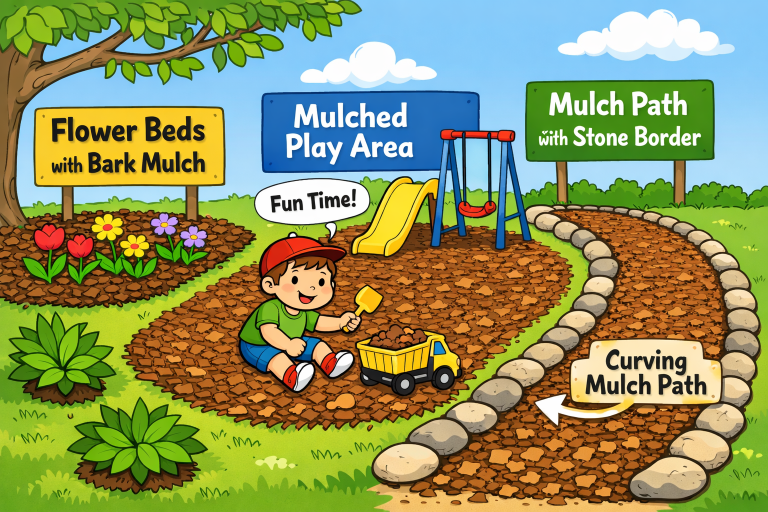
Bark mulch is versatile and can be used in various innovative ways beyond traditional flower beds. It can create natural pathways that blend harmoniously into garden settings, providing comfort and shock absorption for bare feet. Additionally, it can enhance play areas by providing a soft, cushioned surface that reduces the risk of injury for children. Furthermore, bark mulch is effective for erosion control on slopes or bare patches, as it stabilizes soil and minimizes runoff during heavy rains. Exploring creative applications of mulch can inspire fresh landscaping ideas, supported by visual examples on reputable gardening websites.
Combining Bark Mulch with Other Materials
Blending bark mulch with other landscaping materials can enhance the aesthetics and utility of garden beds and outdoor spaces. For instance, using stone or decorative rocks alongside mulched beds creates defined borders that enhance curb appeal while keeping the mulch in place. Additionally, alternating natural mulch with pea gravel can create visually appealing, practical walkways. This combination not only yields durable surfaces suitable for high-traffic areas but also allows highlighting plantings and introducing textural variety in landscape designs.
Maintenance Tips
Bark mulch requires periodic maintenance to remain effective and aesthetically pleasing. Key maintenance tasks include fluffing the mulch regularly to avoid compaction and promote moisture and air circulation, replenishing it annually to maintain depth and appearance, and controlling weeds by promptly removing them to prevent root spread. Consistent maintenance enhances landscaping and prolongs the benefits of the mulch investment.
Conclusion
Using bark mulch in your landscaping delivers both immediate and long-term rewards. It supports plant health, makes yard maintenance more manageable, and adds a touch of natural beauty to outdoor spaces. When installed and cared for properly, bark mulch remains an essential tool for anyone seeking to create a sustainable, inviting landscape that flourishes year-round.