Finding a strange bump under your skin can be unsettling, especially when it seems to appear out of nowhere. The good news is that most skin cysts are harmless, slow-growing, and not something to panic about.
The tricky part is knowing what to do (and what not to do) once you spot one. Pop the wrong cyst at the wrong time, and you could be dealing with a painful infection or a scar that lingers far longer than the cyst ever did.
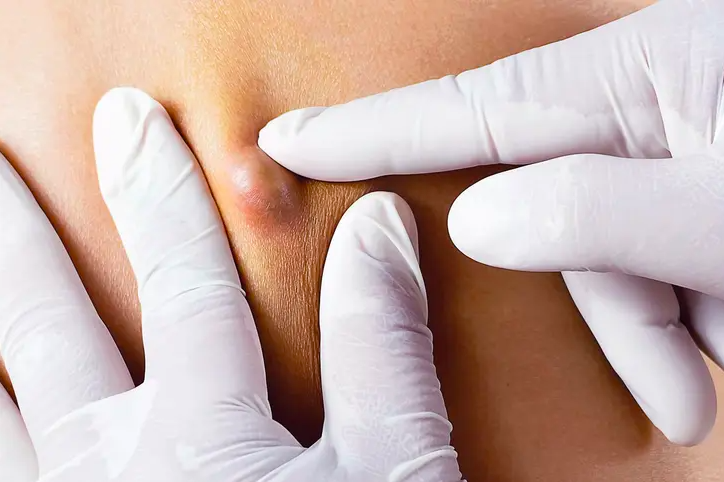
What Exactly Is a Skin Cyst?
Skin cysts are small, fluid- or keratin-filled sacs that form just under the surface of the skin. They’re usually round, slow-growing, and movable when you press on them.
Epidermoid Cyst
An epidermoid cyst, sometimes called an epidermal cyst or Epidermal Inclusion Cyst, forms when skin cells get trapped beneath the surface, leaving behind a keratin-filled epidermoid cyst often referred to as a sebaceous cyst (technically a misnomer, since true sebaceous cysts come from the sebaceous glands themselves).
Pilar Cyst
Pilar cysts, also called an infundibular cyst, develop on the scalp from a hair follicle, while a pilonidal cyst forms near the tailbone area from friction. Less commonly, steatocystoma multiplex causes multiple small cysts at once, and rarer types like a Myxoid cyst, Synovial cyst, or Meibomian cyst near the eyelid round out the list.
Multiple Cyst
Multiple cysts paired with other symptoms can occasionally point to Gardner syndrome, linked to the APC gene and familial adenomatous polyposis syndrome, which is one reason doctors sometimes ask about family history.
Why You Should Resist the Urge to Pop It
It’s tempting to treat a cyst like a stubborn pimple, but squeezing or cutting into one at home risks pushing bacteria deeper into the tissue, which can lead to systemic sepsis in severe cases.
It can also damage the cyst capsule, the thin wall holding everything together. If that capsule isn’t fully removed, the cyst tends to come back, sometimes worse than before.
Home treatment has its place, but it should focus on comfort, not extraction. If you’re unsure whether a bump needs attention, the team at Venice Avenue Dermatology can take a look and let you know whether it’s something to watch or treat right away.
Safe Ways to Manage a Cyst at Home
If the cyst is small and not painful, there’s usually no rush. A warm compress or heating pad applied for twenty to thirty minutes a few times a day can soothe the area and may encourage natural drainage over time. Keep the skin clean with mild soap and water, and skip harsh scrubs, which irritate surrounding skin without helping the cyst go away.
Some people turn to natural remedies like Calendula officinalis, Hydrastis canadensis, Centella asiatica, bentonite clay, or Vitamin E for mild comfort, though clinical trials behind most of these are limited, so treat them as supportive rather than curative.
If a cyst starts draining naturally, cover it with a clean, nonstick bandage, changed daily, to avoid spreading cyst contents to nearby skin. Sitz baths can also help with cysts near the tailbone or sternal region, where sitting adds pressure and slows healing.
When It’s Time to See a Professional
A cyst that turns red, feels warm, grows quickly, or starts oozing pus has likely become infected and shouldn’t wait. The same goes for cysts in aesthetically important areas like the face or ones interfering with movement near a joint.
For preventative care, providers sometimes order ultrasound studies or a CT scan if a cyst is deep or its borders are unclear. This way, they can recommend internal medicine to address the cyst.
It’s also worth mentioning if you’ve noticed cysts flaring around hormonal shifts, since hormonal contraceptives can occasionally influence how active oil glands and hair follicles are.
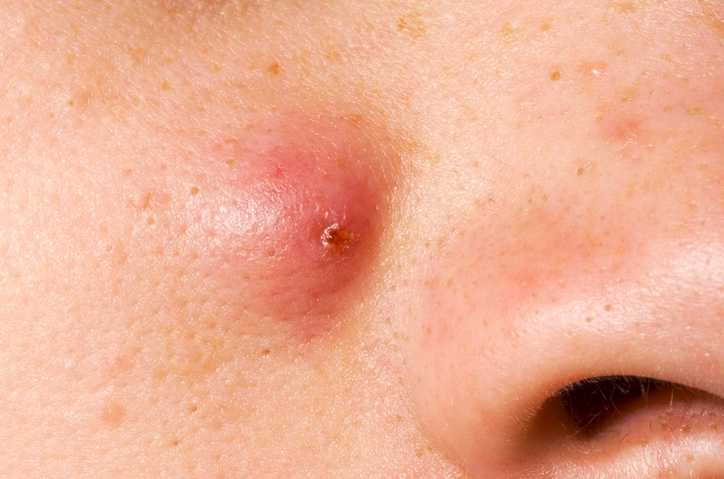
What Professional Treatment Looks Like
Doctors have a few reliable options depending on the cyst’s size, location, and inflammation. A steroid injection can calm a red, swollen cyst quickly without a surgical procedure.
For cysts ready to be drained, incision and drainage under local anesthetic provides fast relief, though without removing the full capsule, recurrence is common.
For a permanent fix, surgical excision is the gold standard. This minimally invasive procedure removes the entire cyst wall, the only reliable way to prevent it from returning.
Providers may use absorbable stitches and a Brown’s dressing afterward, along with wound irrigation and a topical antibacterial ointment to reduce complications and scar formation.
For cysts near the nails, Nail surgery or the Gips procedure under local anaesthetic may be recommended. Some clinics use an Er:YAG (erbium-doped yttrium aluminum garnet) laser for smaller, more superficial cysts, which can reduce visible scarring compared to a traditional cut.
A histologic examination afterward can confirm the growth was benign, particularly if there’s a visible sinus tract or unusual texture.
Recurrence rate varies depending on technique and how completely the capsule was removed, which is part of why an experienced provider matters.
The Bottom Line
Most skin cysts aren’t dangerous, but they’re not always harmless to ignore either. Watch for changes, keep the area clean, and resist the urge to dig in with a needle at home. If something feels off, whether it’s pain, rapid growth, or a location that makes daily life uncomfortable, a quick visit to a dermatologist can save a lot of frustration down the road.
The owners and authors of Cinnamon Hollow are not doctors and this is in no way intended to be used as medical advice. We cannot be held responsible for your results. As with any product, service or supplement, use at your own risk. Always do your own research and consult with your personal physician before using.

Meg is an author at Cinnamon Hollow. She writes on a variety of topics sharing tips and ideas for daily life.