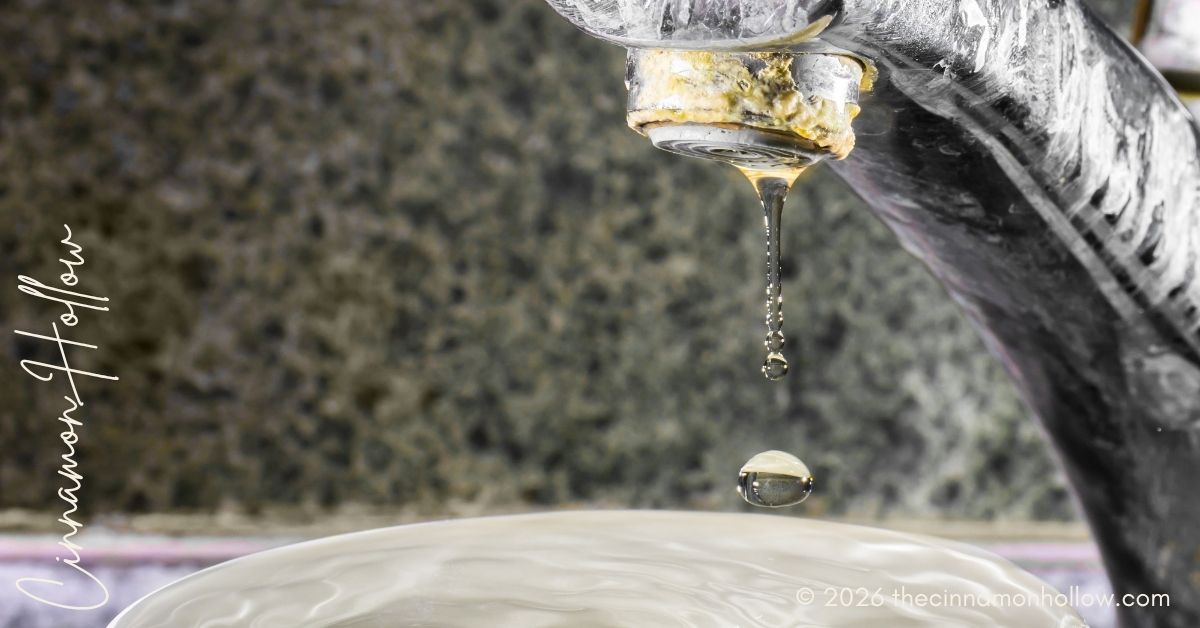
That white, chalky crust around your faucet base is not a cleaning problem. It’s a warning. Hard water minerals are coating the inside of your pipes, settling at the bottom of your water heater tank, and slowly choking every fixture in your home, all without making a single dramatic sound.
Most homeowners notice the crust, wipe it off, and move on. What they don’t realize is that the same minerals causing that crusty ring are also building up where you can’t see them, inside your plumbing walls, inside the tank of your water heater, inside the narrow channels of your dishwasher valves. By the time those hidden deposits cause an obvious problem, the damage is usually well underway.
This article breaks down exactly what hard water does to your plumbing system, stage by stage, so you can get ahead of it before you’re looking at an emergency repair bill.
What Makes Water “Hard” in the First Place
Hard water is simply water with a high concentration of dissolved minerals, primarily calcium and magnesium. As groundwater moves through limestone, chalk, and other rock formations, it picks up these minerals and carries them into your home’s supply lines.
According to the U.S. Geological Survey, hardness is caused by compounds of calcium and magnesium, and water measuring above 180 mg/L is classified as “very hard.” That threshold matters because most plumbing fixtures and appliances are designed with softer water in mind. Push past 180 mg/L and scale accumulation accelerates in ways that meaningfully shorten the life of your entire system.
If you live in the American Southwest, you are almost certainly dealing with very hard water. The geology of that region, built on vast limestone and dolomite formations, dissolves calcium and magnesium into groundwater at exceptionally high concentrations. Many communities there regularly test above 250 mg/L. That is not slightly hard water. That is water that will visibly shorten the life of appliances.
The Quiet Cost Ladder: How Damage Escalates
Here is a framework worth keeping in your back pocket. Hard water damage does not arrive all at once. It climbs what I call the Quiet Cost Ladder, moving from cheap-to-fix cosmetic annoyances up to expensive structural failures, one rung at a time.
| Ladder Rung | What You Notice | What’s Actually Happening | Typical Timeline Without Treatment |
| Rung 1 (Cosmetic) | White crust on faucets, spots on glassware | Surface mineral deposits forming | Weeks to months |
| Rung 2 (Efficiency) | Lower water pressure, longer showers to rinse | Scale narrowing pipe interiors and showerheads | 6 to 18 months |
| Rung 3 (Appliance) | Rising energy bills, noisy water heater | Sediment insulating the heating element, forcing longer run cycles | 1 to 3 years |
| Rung 4 (Structural) | Leaks, failed water heater, clogged valves | Corrosion and complete mineral blockage | 5 to 10 years untreated |
Most homeowners only act at Rung 3 or 4. The goal is to catch it at Rung 1 or 2, when the fix costs a fraction of what a full replacement does.
What Hard Water Does to Your Water Heater Specifically
Your water heater takes the worst of it. Every time the tank heats water, dissolved minerals separate from the water and sink. They form a layer of sediment at the bottom of the tank, and that layer acts as an insulating blanket between the burner and the water. The heater runs longer to compensate. Your energy bill climbs.
This matters more than most homeowners realize. According to the U.S. Department of Energy at energy.gov, water heating is the second largest energy expense in a home, accounting for about 18% of your utility bill. Sediment buildup caused by hard water pushes that percentage higher, and it accelerates wear on the tank itself.
Picture a tank water heater in a very hard water area that never gets flushed. Within a year or two, there is a solid inch of mineral sediment sitting at the bottom. The tank overheats trying to push heat through that sediment barrier. The walls of the tank thin from repeated thermal stress. Popping or rumbling sounds during operation, that’s the sound of water trapped under the sediment layer being superheated. Most tank water heaters are built to last eight to twelve years. Add hard water and zero maintenance, and you might be replacing yours in five.
Tankless water heaters are not exempt. They have no tank for sediment to collect in, but their internal heat exchanger channels are extremely narrow. Scale deposits in those channels can choke flow enough to trigger error codes and shutdowns, sometimes within two to three years in very hard water areas without annual descaling service.
Your Pipes Are Also Paying the Price
Scale does not just stay in the water heater. It coats the interior walls of your supply lines, gradually narrowing the path water can travel. You will feel this as reduced water pressure at the tap. It happens slowly enough that many homeowners just accept the weaker flow as normal.
Fixtures and valves are especially vulnerable. The small internal components inside faucet cartridges, toilet fill valves, and dishwasher supply lines were designed to move freely. Mineral deposits lock them in place or crack them entirely. You end up replacing fixtures far earlier than their rated lifespan because the water flowing through them is quietly grinding them down.
“Hard water, improper installation, and ignoring early warning signs all shorten the lifespan significantly.”
That observation from plumbing maintenance guides rings true. The hard water part of that sentence is the only one homeowners can’t control directly, but it is the one they most often ignore.
A Practical Defense Plan for Hard Water Homes
You do not need to overhaul your whole house to protect your plumbing from hard water damage. A focused approach covers most of the risk.
- Flush your water heater tank annually. Connecting a garden hose to the drain valve and running water through the tank until it runs clear removes accumulated sediment before it cakes into a hard layer. This single task probably does more for your water heater’s lifespan than anything else.
- Check and replace the anode rod every three to five years. The anode rod is a sacrificial metal rod inside your tank that draws corrosion to itself instead of the tank walls. In hard water areas it degrades faster. A depleted anode rod means the tank walls start corroding instead.
- Clean showerheads and aerators every six months. Soak them in white vinegar overnight. This dissolves scale deposits that are restricting flow before they become a permanent problem.
- Consider a whole-home water softener. It is an upfront investment, but it protects every fixture, appliance, and pipe in the house simultaneously. In areas with genuinely severe hardness, it often pays for itself in avoided repairs within a few years.
- Schedule a professional plumbing inspection. A trained eye can spot early-stage scale damage, failing valves, and anode rod depletion before any of those issues turns into an emergency.
If you are in a hard water area and your water heater is making noise, your pressure has dropped noticeably, or your fixtures are corroding faster than they should, those are not coincidences. They are Rung 3 signals that Rung 4 is coming. Calling a plumber in camp verde or your local area to inspect the system before something fails is almost always cheaper than calling one after.
One Thing Most Homeowners Get Wrong
Hard water is treated as a cosmetic nuisance, a glass-spotting, soap-scumming annoyance that you deal with by buying better dish detergent. In reality it is a slow structural problem working on a five to ten year timeline. The homeowners who figure that out early protect their appliances, spend less on energy, and avoid the particular misery of a water heater failing on a cold morning. The white crust on your faucet is not the problem. It is the receipt for a problem that started months ago. Start addressing the root cause now, and your future self will not have to deal with a flooded utility room.