A fourth grader is crying over division homework. Again.
Not because the math is impossible. Because the explanation somehow made it worse. Dad’s trying his best. Mom’s Googling “how to explain fractions without losing your mind.” The YouTube video has a cartoon pizza involved for some reason. Everyone’s exhausted. The dog has left the room entirely.
And honestly? This scene plays out in homes everywhere.
For years, education has quietly relied on a strange assumption: that twenty-five kids should learn the same thing, the same way, at the same speed. Which is a little like handing everyone the same shoe size and hoping for the best.
Now AI tutoring is stepping into that gap, and it’s doing something traditional systems have struggled to pull off for decades: adapting to the child instead of forcing the child to adapt to the lesson.
That’s the real promise behind the modern AI tutor for kids.
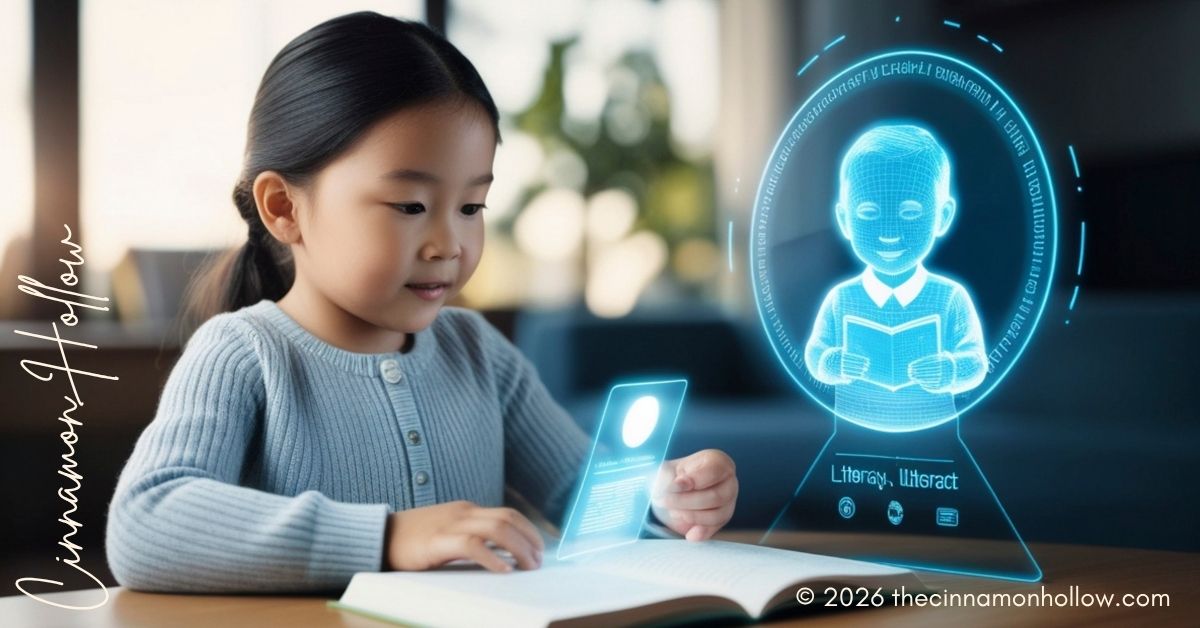
Not Every Kid Learns Like a Spreadsheet
Some children need repetition. Others need visuals. Some need to ask “why?” seventeen times before the light bulb flickers on. And some? They understand the concept instantly but lose focus halfway through the explanation because their brain already sprinted ahead.
AI tutoring platforms are built to notice those patterns.
Fast.
A strong AI tutor for kids tracks how a child responds to lessons in real time. Struggling with reading comprehension after long paragraphs? The system shortens the content and introduces interactive prompts. Flying through multiplication but freezing during word problems? The lessons shift accordingly.
No awkward classroom moment. No raised hands. No “we already covered this yesterday.”
Just adjustment.
The U.S. Department of Education has repeatedly pointed toward personalized learning as a meaningful driver of student engagement and performance. Which makes sense. Adults hate one-size-fits-all experiences too. Nobody enjoys sitting through training that feels either painfully slow or aggressively confusing.
Kids are no different.
The Socratic Tutor Is Basically the Patient Adult We All Needed
Here’s where things get interesting.
The newest generation of AI tutors isn’t just feeding children answers. Many now operate more like a socratic tutor, guiding students through questions instead of solving everything for them outright.
Which sounds simple until you realize how rare that actually is.
Instead of saying:
“Incorrect. Here’s the answer.”
The AI asks:
“What do you think happens if we try a different approach?”
“Why does this answer feel off?”
“What part makes sense so far?”
That tiny shift changes the experience completely.
Kids stop memorizing and start reasoning.
And yes, there’s something mildly ironic about children having more patient philosophical conversations with AI than most adults have during work meetings. But here we are.
The Socratic method has existed for centuries because it works. Asking thoughtful questions builds confidence, logic, and independent thinking. AI just happens to make that style of teaching available at scale, and at 8:47 p.m. on a Tuesday when homework panic hits.
Learning Anxiety? AI Doesn’t Feed It
School pressure starts early now. Earlier than most people admit.
Some students feel constantly behind. Others are bored out of their minds because the class pace moves too slowly. Both situations quietly chip away at motivation.
AI tutoring helps neutralize that tension because pacing becomes personal.
An AI tutor for kids doesn’t get impatient. It doesn’t sigh dramatically. It doesn’t move on because the bell rang.
It simply recalibrates.
That flexibility can be especially valuable for neurodivergent learners, students with attention differences, or children who need alternative teaching styles. According to UNESCO, adaptive educational technology may expand access to more inclusive learning experiences worldwide.
Translation? More kids get a fair shot at understanding things in ways that actually click for them.
Which feels overdue.
The Sneaky Secret: Kids Learn Better When They’re Interested
Groundbreaking insight, right?
But traditional learning models often treat engagement like a bonus feature instead of the entire engine.
Modern AI tutoring platforms lean heavily into interaction, storytelling, voice conversations, visual cues, gamified lessons, even curiosity-driven branching paths. A science lesson becomes an exploration instead of a worksheet. Reading practice feels more conversational and less clinical.
And suddenly the child who “hates learning” spends forty minutes asking questions about black holes.
Funny how that works.
AI Isn’t Replacing Teachers, And That’s Missing the Point Anyway
There’s always a wave of panic whenever AI enters education. Understandably so. But the strongest AI tutoring systems aren’t replacing teachers. They’re handling the repetitive personalization that human educators rarely have enough time to deliver individually.
Teachers still bring empathy, intuition, mentorship, humor, social development, all the deeply human parts of learning.
AI handles the endless patience part.
Which, frankly, is still pretty useful.
Because education was never supposed to be one-size-fits-all. We just acted like it was for a very long time.