

Brushing at home and having a professional dental cleaning are not two versions of the same task. They serve different purposes. Daily care helps remove soft plaque, while a dentist or dental hygienist can remove hardened deposits and assess areas that are difficult to see yourself.
Understanding that difference makes preventive care easier to plan. A thorough cleaning does not replace home care, and a mouth that feels clean can still benefit from a professional examination.
What home care can do
Plaque is a sticky film of bacteria that builds up on teeth. Brushing helps remove it from accessible surfaces, while cleaning between teeth reaches spaces that a toothbrush may miss. Neither task is a one-time fix, because plaque continues to form.
The practical challenge is often coverage. Back teeth, the inside surfaces of teeth, and areas around dental work can be easy to overlook. A dentist or hygienist can demonstrate techniques and suggest tools suited to the spaces in your mouth. Someone with closely spaced teeth may have different questions from someone with a bridge or larger gaps.
Home care also gives you opportunities to notice changes. Bleeding, ongoing sensitivity, or a sore that does not heal are useful things to mention at an appointment. Noticing a change is not the same as diagnosing it, but it gives the dental team a clearer starting point.
Where home cleaning reaches its limit
Plaque that remains on teeth can harden into tartar, also called calculus. According to the National Institute of Dental and Craniofacial Research, tartar needs professional removal. Brushing harder will not turn it back into soft plaque.
Plaque and tartar contain bacteria that can cause inflammation in the gums and supporting tissues. Redness, swelling, and bleeding may be signs of gum disease, although an examination is needed to understand what is happening in an individual mouth.
This is why visible cleanliness is not the whole picture. A mirror cannot show every tooth surface or reveal changes in the bone supporting the teeth. Home care has an important role, but it cannot provide the information gathered during a dental examination.
What a professional cleaning adds
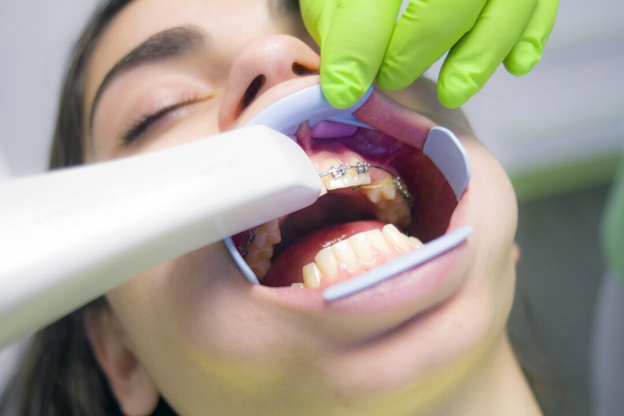
During a professional cleaning, a dentist or hygienist uses dental instruments to remove deposits that home care cannot shift. The work needed depends on the condition of the teeth and gums. Someone with gum disease may need treatment beyond a routine cleaning.
A checkup and a cleaning are related but distinct services. The examination may include reviewing medical history, looking for tooth decay, assessing gum health, and checking the mouth’s soft tissues. X-rays may be recommended when the dentist needs information that is not visible during the examination.
Gum measurements can also help the dental team assess the spaces around teeth. Deeper pockets can indicate periodontal disease. These findings help explain why two people with similar-looking smiles may receive different recommendations for care.
Finding an appointment pattern that fits
There is no single recall interval for everyone. The American Dental Association explains that dental visits should reflect individual needs. A dentist can discuss timing after considering current findings, medical history, and previous dental problems.
For readers looking for a local practice in Schofields, 32smiledesign.com.au is one place to begin that conversation. Useful questions include whether an appointment covers an examination, a cleaning, or both, and how the recommended follow-up relates to your dental health.
Symptoms are also a reason to contact a practice rather than simply waiting for the next planned visit. Persistent bad breath, bleeding gums, tooth sensitivity, and ongoing mouth sores are among the concerns worth discussing with a dental professional.
Why appointments do not replace daily habits
A professional cleaning appointment removes existing deposits; it does not stop new plaque from forming afterward. Home care remains part of maintaining the result between visits.
It helps to treat the appointment as a chance to solve practical problems. If floss catches around a particular tooth or a brush does not seem to reach a back corner, describe that problem. A demonstration using your own mouth can be more useful than trying to follow a generic technique from memory.
Bring up products that are difficult to use, too. The aim is a workable routine, not a drawer full of tools that go unused. Ask the dental team which options fit your teeth, dental work, and level of dexterity.
Make the two kinds of care work together
The most useful comparison is not which option wins. It is which job each one does. Home care helps manage plaque between appointments. Professional care removes tartar, examines teeth and supporting tissues, and guides the next steps.
If a previous cleaning felt uncomfortable, say what happened. Ask what the next appointment will involve and how to signal that you need a pause. Clear communication makes it easier to participate in care without having to guess what comes next.
Keep home care practical and bring questions to your dental visits. Together, these habits support ongoing attention to dental health without asking either home tools or professional cleanings to do a job they cannot do alone.
The owners and authors of Cinnamon Hollow are not doctors and this is in no way intended to be used as medical advice. We cannot be held responsible for your results. As with any product, service or supplement, use at your own risk. Always do your own research and consult with your personal physician before using.

Meg is an author at Cinnamon Hollow. She writes on a variety of topics sharing tips and ideas for daily life.

