By a commercial cleaning industry contributor.
The janitorial budget line item often feels like a fixed cost. You multiply your square footage by a standard rate and you’re done. But this simple math hides a much bigger financial risk: the cost of premature floor replacement. When daily cleaning isn’t enough, or when deep cleaning is done incorrectly, the lifespan of your carpet, tile, or vinyl can be cut dramatically. The result is a capital expense that arrives years ahead of schedule.
Back in 2000, a benchmark survey from the International Facility Management Association reported by FMLink found the median cost for janitorial services was $1.08 per square foot. While that figure provides a historical baseline, today’s costs are influenced by far more than just space. The diverse responsibilities of janitors, as detailed by the BLS, highlight the complexity involved. The real drivers are foot traffic patterns, soil levels, and the specific materials underfoot. A comprehensive plan for commercial floor care services looks at these variables first to build a budget that protects your assets, not just one that covers the basics.
Quick answer: A realistic floor care budget is based on a detailed assessment of your facility’s specific needs, not a generic per-square-foot rate. It should account for floor material, traffic zones, and the difference between daily maintenance and the periodic deep cleaning required to extend the life of your flooring.
What’s inside
· How do I calculate a realistic floor care budget?
· Which is better: in-house staff or a specialized vendor?
· How does floor type impact the maintenance schedule?
· Frequently asked questions
· Floor Care Is Asset Management, Not Just Cleaning
How do I calculate a realistic floor care budget?
A realistic budget is built by analyzing your specific floor types and traffic zones, not by using a generic per-foot rate.
The cost of cleaning is a significant part of a facility’s total operating expenses. While figures evolve, a foundational benchmark survey from the International Facility Management Association, reported by FMLink, placed the median cost of operations at $5.59 per rentable square foot. This figure bundles janitorial services with utilities and general maintenance, showing how cleaning fits into the larger financial picture of managing a property. Understanding this context is key to appreciating why cutting the cleaning budget can lead to higher repair and replacement costs later.
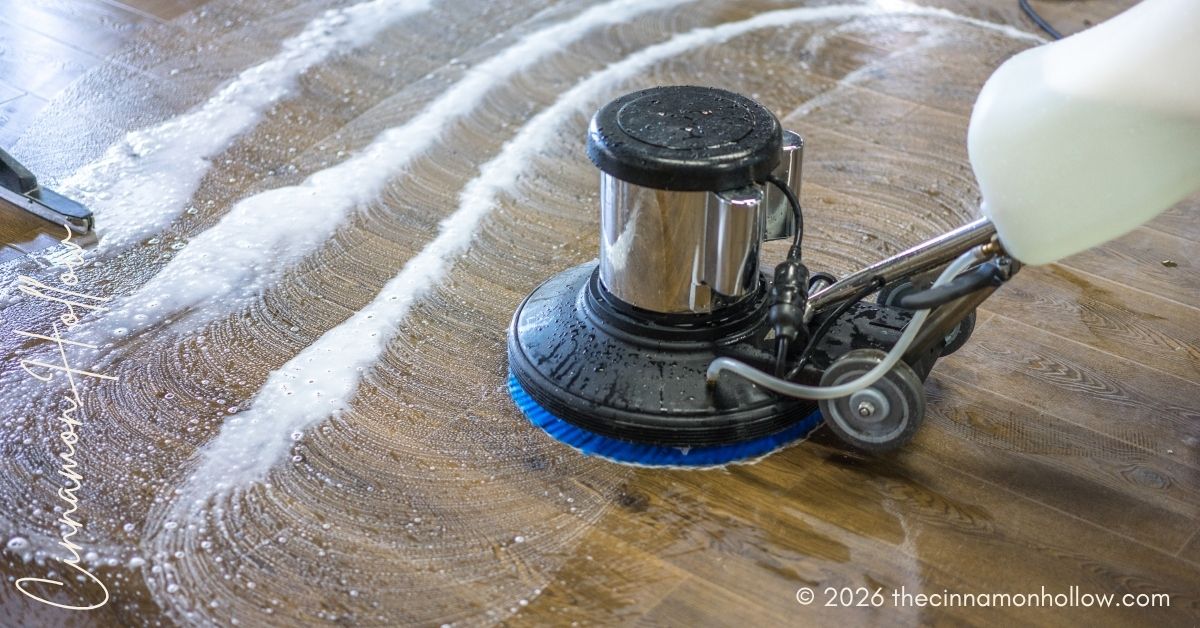
Within that total, the same survey broke out the median janitorial portion, which was $1.08 per square foot at the time. This baseline typically covers routine tasks like vacuuming, mopping, and emptying trash. What it often fails to capture is the cost of periodic restorative work. This is the deep cleaning, like stripping and waxing vinyl composite tile (VCT) or hot water extraction for carpets, that removes embedded soil and protects the floor’s surface. Without a budget for this, you are only paying for surface-level appearance, not long-term asset protection.
❝ A useful rule of thumb is that 80% of the soil in a building is tracked in through 20% of the entrances. Focusing deep cleaning resources on these high-traffic zones, lobbies, main corridors, break rooms, is the most efficient way to protect the entire facility’s flooring.
Your final cost will pivot on three main variables: floor material, soil type, and traffic density. Maintaining textured luxury vinyl tile (LVT) in a busy medical office requires different chemistry and equipment than polishing a concrete floor in a warehouse. Abrasive, sandy soils in a region with harsh winters demand more frequent and intensive cleaning than the dust found in a corporate office park. A detailed quote should map your facility into zones and price the work accordingly, rather than applying one flat rate everywhere. When a vendor provides a proposal, ask them how they differentiate between daily maintenance and restorative care cycles for each floor type in your building. Their answer reveals whether you are getting a strategic plan or just a simple mopping service.
Which is better: in-house staff or a specialized vendor?
The best choice depends on your facility’s scale, the complexity of your flooring, and your capacity for training and equipment management.
Handling floor care with an in-house team offers direct control over scheduling and personnel. However, this path comes with significant hidden responsibilities. The initial investment in professional equipment like auto-scrubbers or carpet extractors can be substantial. Beyond the purchase, your team requires ongoing training not just on how to operate the machinery, but on the specific chemical protocols for different floor types to avoid costly damage. You also assume full liability for any mistakes, from improper chemical mixing to slip-and-fall incidents. Furthermore, your facility becomes responsible for full compliance with workplace safety standards for chemical handling and storage.
A specialized vendor shifts these responsibilities. You gain access to trained technicians and a full range of industrial-grade equipment without the capital expense. A professional crew should understand the nuances of different materials, from the pH level of a cleaner for polished concrete to the correct pad for buffing a VCT floor. They also carry their own insurance, which protects you from liability if their work results in property damage or an injury. When evaluating a vendor’s environmental claims, ask if they use products that meet the criteria for programs like the U.S. Environmental Protection Agency’s Safer Choice standard, which helps identify products made with safer chemical ingredients.
❝ When you get a proposal, check if it includes Safety Data Sheets (SDS) for the primary chemicals they plan to use. If a vendor can’t or won’t provide these, it’s a serious red flag. It suggests a lack of commitment to safety protocols and transparency.
Use these criteria to compare your options:
| Factor | In-House Staff | Specialized Vendor |
| Initial Cost | High (equipment purchase) | Low (included in service fee) |
| Expertise | Requires extensive training | High (core business function) |
| Liability | Rests entirely with your company | Transferred to the vendor |
| Compliance | Your team must manage SDS & safety | Vendor manages their own compliance |
| Flexibility | High for immediate, daily tasks | Lower; scheduled service windows |
Ultimately, the decision is about risk and specialization. While an in-house team can handle daily sweeping and mopping, the periodic, deep restorative work that actually extends the life of your flooring is often best left to a dedicated professional.
How does floor type impact the maintenance schedule?
The floor’s material dictates the specific chemistry, equipment, and frequency of deep cleaning required for its long-term protection. A maintenance plan for vinyl is fundamentally different from one for concrete, and confusing the two can cause irreversible damage.
Vinyl Composite Tile (VCT) is a porous and resilient flooring common in schools, hospitals, and retail spaces. Its durability comes from a protective layer of acrylic floor finish, or wax, which must be periodically removed and reapplied. This restorative process, known as stripping and waxing, is labor-intensive. It involves dissolving the old finish with a chemical stripper, neutralizing the floor’s pH, applying a sealer to close the pores of the tile, and then building up multiple thin coats of new finish. This cycle might occur annually in high-traffic areas or every 18 to 24 months in less-used spaces.
Luxury Vinyl Tile (LVT), on the other hand, is not porous and comes with a durable, factory-applied wear layer. This is a critical distinction. Applying the same aggressive stripping chemicals used on VCT can permanently damage LVT’s surface and void its warranty. LVT maintenance involves routine cleaning with pH-neutral products and periodic deep scrubbing with an auto-scrubber to remove embedded soil. While some specialty finishes exist for LVT, it should never be part of a traditional strip-and-wax program.
❝ Ask a potential vendor to describe their process for a building that has both VCT and LVT, sometimes right next to each other. An experienced crew will talk about using different floor pads, separate chemical sets, and clear protocols to prevent cross-contamination that could ruin the LVT. Their answer reveals their level of technical expertise.
Polished concrete requires a third, entirely different approach. The goal is not to add a protective coating but to maintain the hardened, densified surface of the concrete itself. Maintenance relies on routine cleaning with pH-neutral detergents to avoid etching the surface and periodic high-speed burnishing with a diamond-impregnated pad. This mechanical process reheats the densifiers in the concrete and restores the floor’s glossy, abrasion-resistant finish. Using the wrong acidic or highly alkaline cleaner can dull the polish and require expensive re-grinding to fix.
Frequently asked questions
How much does commercial floor cleaning cost? The cost is typically broken down into two parts: routine maintenance and periodic restorative projects. Routine tasks like mopping and vacuuming are often priced per square foot, per visit. Deeper, restorative work like stripping and waxing VCT or deep-cleaning carpets is usually quoted as a separate, project-based fee, as its frequency depends heavily on foot traffic and soil levels.
How much would it cost to clean a 10,000 square foot building? Using older benchmark data as a starting point, the general janitorial service for a 10,000 square foot facility could be in the range of $10,800 annually for daily tasks. The critical restorative floor care is an additional cost. For example, an annual strip and wax of 2,000 square feet of VCT within that building might be a separate project quote, while a quarterly deep scrub of the main entryway would be another.
What is included in a comprehensive floor care program? Beyond daily sweeping and mopping, a full program should detail the scope and frequency of deep cleaning tasks. This includes services like high-speed burnishing for VCT, deep scrubbing with an auto-scrubber for LVT, hot water extraction for carpets, and maintaining walk-off mats at all entrances. A detailed scope of work should specify which areas get which treatment and how often.
What is the most common mistake made when cleaning commercial floors? Using the wrong chemical for the floor type is the most frequent and costly error. For example, using a high-pH stripper designed for VCT on a luxury vinyl tile (LVT) floor can permanently dull its factory finish and void the warranty. Another common issue is insufficient rinse water after chemical cleaning, which leaves behind a sticky residue that attracts dirt faster.
How do you know if a floor finish needs to be replaced? For floors like VCT, you can tell the finish is failing when it starts to look yellow, cloudy, or powdering at the edges. You may also see embedded black scuffs and scratches that daily mopping or even spray buffing cannot remove. Once the finish is worn down to the tile, the porous material itself starts absorbing dirt, leading to permanent staining.
Floor Care Is Asset Management, Not Just Cleaning
Effective floor care is a form of asset management, protecting one of the most expensive components of your facility. The true cost of a program is not measured in the monthly invoice, but in the years of service life gained or lost. A plan that prioritizes only surface-level cleanliness without accounting for periodic, restorative work is a plan for premature replacement. This approach shifts the focus from a simple janitorial expense to a strategic part of your building’s maintenance budget.
Your most critical decision is not just choosing between an in-house team or a vendor, but verifying their technical knowledge. The ability to articulate a different maintenance protocol for VCT versus LVT is not a minor detail; it is the fundamental test of competence. A provider who cannot explain this difference is a direct risk to your property. Generic proposals that lack material-specific details should be viewed with caution, as they often lead to costly damage.
Ultimately, a successful program is built on a detailed, written strategy. It should map every floor surface to a specific set of procedures, tools, and chemicals, with a clear schedule for both daily upkeep and long-term care. This document is your primary tool for ensuring quality and protecting your investment.
About the author
Go Premier Cleaning provides janitorial and specialty floor care programs for facility managers and business owners throughout the Denver Metro Area. The company, Go Premier Cleaning, focuses on sustainable cleaning methods, utilizing low-toxicity and eco-certified products to maintain commercial spaces and support healthier indoor environments. As a locally owned and operated business, its teams are trained to protect facility assets through detailed maintenance protocols for a variety of flooring materials, from VCT to polished concrete.

Go Premier Cleaning provides janitorial and specialty floor care programs for facility managers and business owners throughout the Denver Metro Area. The company, Go Premier Cleaning, focuses on sustainable cleaning methods, utilizing low-toxicity and eco-certified products to maintain commercial spaces and support healthier indoor environments. As a locally owned and operated business, its teams are trained to protect facility assets through detailed maintenance protocols for a variety of flooring materials, from VCT to polished concrete.