

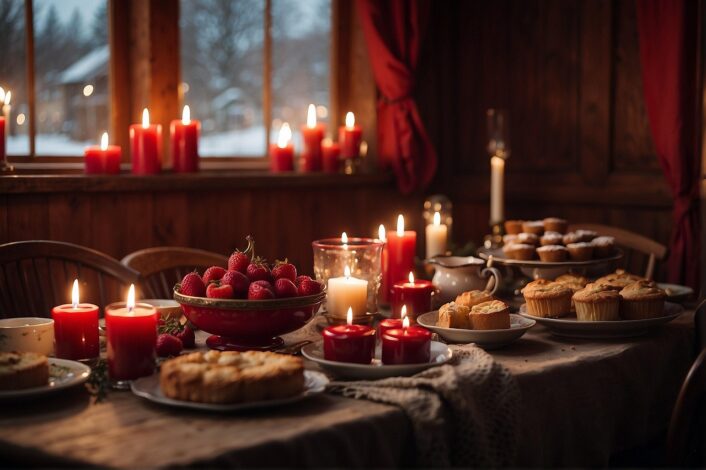
The idea that every relative will sit around one table on Christmas Day does not match many modern family arrangements. Adult children may divide time between two households; grandparents may avoid a long journey in one day and separated parents often work with carefully agreed schedules. Work shifts can add another layer.
As a result, Christmas can become a series of smaller visits rather than one large gathering. This changes the food people need and the gifts that make sense. A selection that can be opened in stages may fit the real calendar better than something designed for one formal meal.
Smaller Visits Can Feel Less Rushed
A Boxing Day breakfast with one side of the family may allow more conversation than a crowded Christmas lunch. Another visit might happen on 27 December or during the first weekend of January. The date matters less than giving each group enough time to be together.
Spreading visits can also reduce pressure on older relatives and households with young children. Nobody has to host every person at once, and travel can be planned around sleep, weather and work. The trade-off is that food and presents need to remain manageable across several days.
A Gift Can Support More Than One Gathering
Food that stays sealed until needed gives the household options. Sweet items may be opened when children visit, while cheese and savoury products can be saved for an evening with adults. Tea, coffee and biscuits can cover several brief calls without requiring a fresh shop before each one.
Mixed Christmas Hampers give buyers a way to compare selections intended for different tastes and household sizes. Highland Fayre lists the individual contents, which helps the sender judge whether a gift offers useful variety or simply repeats foods the recipient is already likely to have.
The buyer should consider storage. A household hosting in stages may already have a full fridge, so packaged products with clear storage instructions can be easier to manage. Items should be opened according to need rather than placed on the table together for the sake of presentation.
The recipient should control when the gift is used
Gift messages sometimes suggest opening a parcel on Christmas Eve or saving it for Boxing Day. That can be pleasant when the sender knows the plans, but it may create an unnecessary instruction when arrangements are complicated. A flexible message gives the recipient permission to use the food when it helps most.
This is particularly important for families moving between homes. A parent may celebrate with children on a different day, and a grandparent may hold their main gathering after 25 December. The gift should recognise their Christmas rather than insisting that only one date counts.
Addressing the parcel to the household can work when the contents are meant to be shared. If it is primarily for one person, name them clearly. These details reduce the chance that a delivery is opened by the wrong group during a busy week.
Dietary needs may change between visits
Different guests bring different requirements. One gathering may include a vegan relative, while another may need alcohol-free choices or careful allergen management. A host should not have to inspect every label while people wait at the table.
The sender can help by checking the product description before buying and choosing an appropriate selection where needs are known. General category labels are useful starting points, but serious allergies require attention to the specific information provided. Contact the retailer if anything is unclear.
Separate serving dishes and utensils may be needed after the gift is opened. The person hosting will understand the arrangements in their home, so transparent labelling is more valuable than assumptions made by the giver.
Delivery should follow the household calendar
When people are travelling between several homes, a technically correct address may still be the wrong place for a parcel. Confirm where the recipient will be during the delivery period and whether a neighbour, reception desk or safe place is suitable.
Order with enough time to absorb ordinary seasonal disruption. The buyer should check whether a selected date is an intended despatch date or a guaranteed arrival date. If the parcel is central to a particular visit, leaving it until the final possible day adds risk without improving the surprise.
A message can be sent separately to let the recipient know that food is coming. This is especially sensible if chilled items are included or if the household will be away for part of the week.
Christmas can be recognised on the day people meet
Families do not need to recreate 25 December several times. One visit may involve lunch, another a walk and coffee, and another a relaxed evening with food placed in the middle of the table. Each can feel like a proper Christmas meeting because the people involved have made time for it.
A flexible food gift suits that approach. It can move through the week with the household, appearing when it is useful and remaining sealed when it is not. The value comes from matching real family life rather than an idealised timetable. Spreading Christmas across several days may require more diary coordination, but it can also make each visit calmer. Gifts chosen for that pattern should offer the same flexibility, allowing the recipient to decide which gathering becomes the right one for opening and sharing them.

Meg is an author at Cinnamon Hollow. She writes on a variety of topics sharing tips and ideas for daily life.