Somewhere between the tooth fairy years and middle school, many parents notice a change. An adult tooth comes in sideways, the bottom teeth begin to overlap, or a child starts chewing on one side. Then another parent mentions that their eight-year-old has an expander, and you wonder whether you are already behind.
The reassuring news is that an early orthodontic visit is usually about gathering information, not starting treatment. Many children who are checked early leave without an appliance and return later for monitoring.
This guide explains when to schedule a visit, how to choose a provider, what common treatments involve, and how to manage daily care. It is educational and cannot replace an individual assessment from a licensed orthodontist.
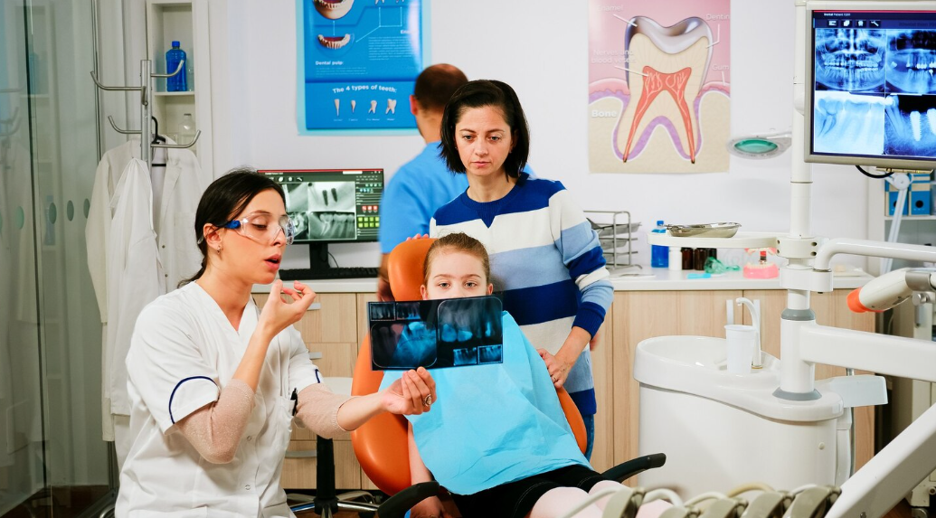
When should kids see an orthodontist?
The American Association of Orthodontists recommends a first orthodontic checkup by age seven. By then, enough permanent teeth have usually appeared for a specialist to evaluate how the bite is developing and whether the jaws are likely to have enough room.
Think of this appointment as a screening rather than a signal that braces must begin. Many children are monitored for several years while their teeth and jaws continue to develop.
Early signs worth mentioning
- Baby teeth lost much earlier or later than expected
- Crowding, protruding teeth, or teeth that do not meet when biting
- An underbite, overbite, or crossbite
- A jaw that shifts to one side when closing
- Difficulty chewing, frequent mouth breathing, or changes in speech
These signs do not confirm that treatment is needed. Mention them to your child’s dentist or orthodontist so they can consider them as part of a complete exam.
What happens at the first visit
Expect a conversation followed by an exam. The orthodontist may check the bite, take photographs, and recommend X-rays or a digital scan when needed. These records help the clinician understand how the teeth and jaws are developing and decide whether care should begin now or later.
Two outcomes are common. The orthodontist may recommend periodic monitoring, or they may suggest targeted early treatment to create space or guide growth. Ask which approach is being recommended, what problem it addresses, and what could happen if you wait.
How to choose a children’s orthodontist you trust
Training and supervision
Orthodontists are dentists who complete additional specialty training focused on tooth movement, bite correction, and facial growth. Some general dentists also provide orthodontic treatment. If you are considering one, ask about their orthodontic training, how often they treat growing children, and who develops and reviews each treatment plan.
It is also reasonable to ask who will handle routine appointments and how often the orthodontist will personally evaluate your child’s progress.
Your consultation checklist
Bring a short list of questions. Ask what problem the provider wants to treat, what happens if treatment is delayed, how long care might take, and what alternatives are available. During active treatment, appointments are often scheduled every six to 10 weeks, but the timing varies by appliance and case.
Request a written estimate that explains the total fee, payment terms, and what is included. Ask whether repairs, retainers, follow-up visits, or replacement appliances could result in additional charges. Coverage and out-of-pocket costs vary by location and insurance plan.
Notice how the team speaks to your child, not only to you. Some children gag during impressions, dislike the sound of suction, or arrive worried about discomfort. Mention any sensitivity or anxiety when booking, since clear patient education is what turns a frightening appointment into a manageable one for a child. A practice willing to explain each step, offer breaks, and move at a reasonable pace may make ongoing visits easier.
Treatment paths at a glance
You may hear orthodontists discuss two treatment phases. Phase 1, also called interceptive treatment, takes place while a child still has some baby teeth. It is usually intended to address a specific concern involving space, bite, or jaw growth. Phase 2 is comprehensive treatment and generally begins after most permanent teeth have appeared.
Two-phase care is used selectively. Many children do well with one comprehensive phase later. If early treatment is recommended, ask why it is preferable to monitoring and whether later treatment will still be necessary.
Everyday care, food, and sports
Brushing and cleaning between teeth
The American Dental Association recommends brushing twice a day with a soft-bristled brush and fluoride toothpaste, along with cleaning between the teeth once a day. Brackets and wires can trap food and plaque, so floss threaders or interdental brushes may be easier to use than regular floss.
A small care kit can help when your child is away from home. Pack a travel toothbrush, fluoride toothpaste, floss threaders or an interdental brush, and orthodontic relief wax. Follow the orthodontist’s instructions if a wire or bracket becomes loose.
Sports safety
The ADA recommends properly fitted mouthguards to reduce the risk of sports-related dental injuries, especially during contact and higher-risk activities. Children with braces need a mouthguard that fits over their appliances and leaves room for tooth movement. Some patients may also need a lower guard.
Store the mouthguard in a ventilated case, clean it according to the provider’s instructions, and check its fit throughout the season. Growing children and those in active orthodontic treatment may need more frequent replacements.
Appointments, retainers, and warning signs
Ask about the retainer plan before treatment begins. Teeth can shift after braces or aligners are removed, and retainers help protect the result. Knowing the expected wear schedule and replacement policy in advance makes long-term care easier to plan.
Consider seeking a second opinion if you encounter any of the following:
- A vague treatment plan without a clear goal or explanation
- Aligners or another appliance recommended without an in-person exam and appropriate records
- Guaranteed results or promises that do not account for growth and patient cooperation
- Pressure to begin immediately without time to discuss alternatives, costs, or risks
Getting another opinion does not mean the first recommendation was wrong. It can help you compare approaches and feel more confident about a lengthy treatment decision.
Getting started near you
Consider scheduling two or three consultations, particularly if the recommended treatment is complex or expected to last several years. Compare how each provider explains the same concerns. Ask about specialty training, supervision, diagnostic records, monitoring, appointment frequency, emergency care, retainers, and sports mouthguards. Request each proposed plan and fee estimate in writing.
Location also matters because active treatment requires regular appointments. If you live in Victoria or plan to move there, you might review an option such as this one to find a trusted children’s orthodontist in Melbourne and use the consultation to ask about braces, aligners, expanders, and monitoring. Dr Geoffrey Wexler is one example of a Melbourne provider whose clinic treats children and offers several orthodontic approaches.
Australian guidance also supports an orthodontic check around age seven, although professional standards, health coverage, and pricing differ from those in the United States. Wherever you live, confirm the provider’s current credentials and make sure the recommended plan is specific to your child.
The bottom line
An early checkup is not a commitment to braces. It is a way to replace uncertainty with a plan, whether that plan involves treatment or simply monitoring development for a few years. Choose an appropriately trained provider who explains the reasoning in language you and your child understand.
At home, focus on manageable habits: thorough cleaning, sensible food choices, regular appointments, and a properly fitted sports mouthguard. For advice specific to your child, speak with a licensed dentist or orthodontist.
Frequently asked questions
Does every seven-year-old need braces?
No. The age-seven visit is a screening. Many children are monitored while their teeth and jaws develop, and some do not need orthodontic treatment. The goal is to identify issues that may benefit from earlier attention.
How long does treatment usually last?
Treatment length depends on the problem, appliance, growth pattern, and patient cooperation. An orthodontist can provide an estimate after an exam and diagnostic records, but the timeline may change as treatment progresses.
Are clear aligners an option for kids?
Sometimes. Clear aligners can work for selected cases, but children must wear and care for them consistently. An in-person assessment is needed to determine whether aligners can address the child’s bite and tooth movement safely.
Should my child wear a mouthguard with braces?
Yes, especially during contact or higher-risk sports. Ask the orthodontist which type will fit over the braces, whether a lower guard is needed, and how often the fit should be checked as the teeth move and the child grows.
The owners and authors of Cinnamon Hollow are not doctors and this is in no way intended to be used as medical advice. We cannot be held responsible for your results. As with any product, service or supplement, use at your own risk. Always do your own research and consult with your personal physician before using.

Meg is an author at Cinnamon Hollow. She writes on a variety of topics sharing tips and ideas for daily life.