Key Takeaways
- Pool coping is the protective and decorative border that defines the perimeter of your pool and plays a critical role in its longevity and safety.
- Material selection, such as natural stone, concrete, porcelain, and brick, affects not just appearance but maintenance and durability.
- Design styles, including bullnose, square edge, and cantilevered coping, balance safety and visual impact with your preferred atmosphere.
- Practical factors such as weather, upkeep, safety needs, and cost should be weighed before making a decision.
Choosing the right pool coping is a fundamental step in enhancing both the look and function of your swimming pool. Pool coping frames your aquatic retreat, prevents water damage, and provides a safe, stylish edge for swimmers. To understand options and make the best decision for your pool, learn more. With a wide array of materials and designs available, the right selection goes beyond simple aesthetics, impacting safety, durability, and ease of maintenance.
Whether you are renovating an older pool or building a new one, choosing the right coping can add character to your swimming area while protecting your pool’s structure. The coping you choose affects not only the final appearance but also how your pool connects with surrounding outdoor spaces, such as patios and decks. Knowing your options in both material and style makes all the difference in the lifetime enjoyment and value you get from your pool.
This comprehensive guide discusses the primary types of pool coping materials, the most popular coping designs, and other crucial factors, including climate compatibility, safety, and overall cost. It also includes practical advice on installation and maintenance to ensure you make an informed selection and care for your coping for years to come. For additional reading, the Houzz pool remodeling guide offers project inspiration and expert insights.
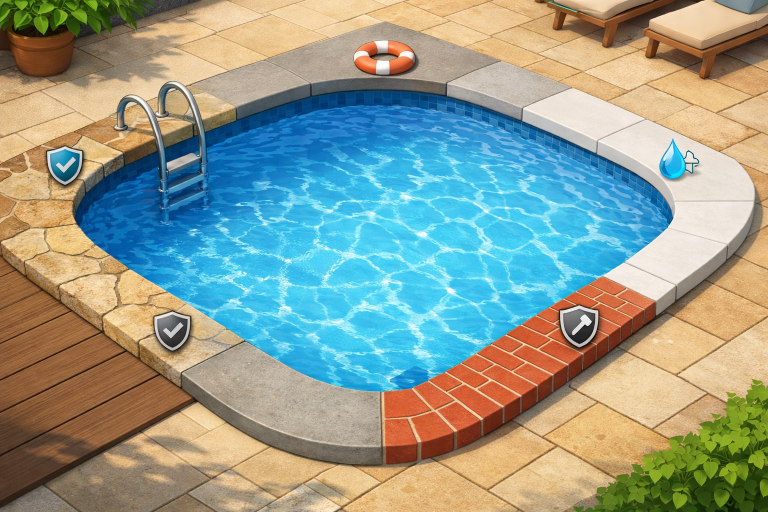
What Is Pool Coping?
Pool coping is the protective cap and finishing edge that surrounds the upper perimeter of a swimming pool. It creates a visually pleasing border while shielding the underlying structure and preventing water from seeping into the pool shell and surrounding deck. Beyond its protective qualities, coping also helps manage water drainage by redirecting splash-out and rainwater away from the pool, safeguarding the shell and adjacent areas.
Popular Pool Coping Materials
The selection of pool coping materials is broad, each offering a unique blend of practicality, style, and price. The most common choices include:
- Natural Stone: Travertine, limestone, and granite offer a natural, timeless look. These stones are long-lasting and typically have excellent traction. However, they often need periodic sealing to maintain their beauty and resilience against pool chemicals and weather.
- Concrete: Both poured and precast concrete options exist, making this material one of the most versatile and cost-efficient. Concrete can be molded or colored to mimic stone or tile, and textured finishes help prevent slips.
- Porcelain: Durable porcelain pavers are gaining popularity for their low maintenance and wide variety of colors and patterns. They offer notable resistance to staining and weathering.
- Brick: Offering classic appeal and strong durability, brick coping can be arranged in different patterns and colors to fit many pool designs. Bricks are well-suited for traditional or colonial-style pools.
Design Styles for Pool Coping
The design style of your coping determines both the tactile and visual experience around your pool’s edge. Popular styles include:
- Bullnose: Featuring a smooth, rounded edge, this style is comfortable for swimmers to grip and sit on, making it a favorite for family pools.
- Square Edge: With sharp, crisp lines, square-edge coping is ideal for modern, geometric pools and creates a striking, minimalist look.
- Cantilevered: Extending the pool deck slightly over the pool wall, cantilevered coping provides a seamless integration between the deck and pool while maximizing deck space.
Factors to Consider When Choosing Pool Coping
Several important elements influence the optimum coping choice for your pool:
- Climate: Extreme hot and cold conditions require materials that withstand thermal expansion and contraction, as well as freeze-thaw cycles, without cracking.
- Safety: Anti-slip surfaces and rounded edges are critical for avoiding injuries around wet pool areas, especially for families with children.
- Maintenance: Some materials need periodic sealing or specific cleaning techniques. Factor in how much time and effort you are willing to dedicate to maintenance.
- Budget: Natural stone tends to cost more, while concrete and brick are typically more budget-friendly. Consider both installation and long-term maintenance costs in your decision.
Installation and Maintenance Tips
Proper installation maximizes the safety and lifespan of your pool coping. Always include expansion joints during installation to accommodate seasonal and temperature-driven movements and prevent cracking. Inspect the coping regularly for signs of wear and respond promptly to any cracks, chips, or shifting. Routine cleaning is essential for preventing stains and prolonging the look of the material. Consult a professional when repairs exceed basic cleaning or caulking needs. For more professional insight, visit the Houzz Pool Remodeling Guide
Cost Considerations
The total cost for pool coping depends on your chosen materials and the complexity of your pool’s design. Natural stone usually ranges from $25 to $60 per linear foot, while concrete coping is typically less expensive but still highly durable. These estimates reflect only material and installation, so account for ongoing maintenance, such as sealing or occasional repairs, in your total budget assessment.
Conclusion
Thoughtful selection of pool coping will transform your swimming pool, delivering not just an attractive border but essential protection and safety. Take time to weigh the benefits of each material and style, think about climate and maintenance, and compare both upfront and long-term costs. With the right choice, your pool will remain a beautiful and functional centerpiece for relaxation and recreation year after year.

Meg is an author at Cinnamon Hollow. She writes on a variety of topics sharing tips and ideas for daily life.