Most people drive through Trinidad, Colorado at 75 miles per hour without a second thought. They’re chasing Denver from the south or burning toward Santa Fe from the north, and Trinidad reads as nothing but a fuel stop at mile marker 13. That’s a genuine mistake. This small city tucked against the southernmost Rockies packs more character per square block than most Colorado destinations tourists actually plan trips around, and the window to discover it before the crowds catch on is probably shorter than you think.
If you’ve got a road trip on I-25 anywhere in your future, here’s the honest case for making Trinidad a real stop, not just a restroom break.
The Geographic Argument Is Practically Automatic
Trinidad sits almost exactly halfway between Denver and Santa Fe, which makes it a natural overnight or lunch stop on any north-south drive. It’s about 190 miles south of Denver and roughly 180 miles north of Santa Fe. That kind of symmetry doesn’t happen by accident, and smart road trippers exploit it.
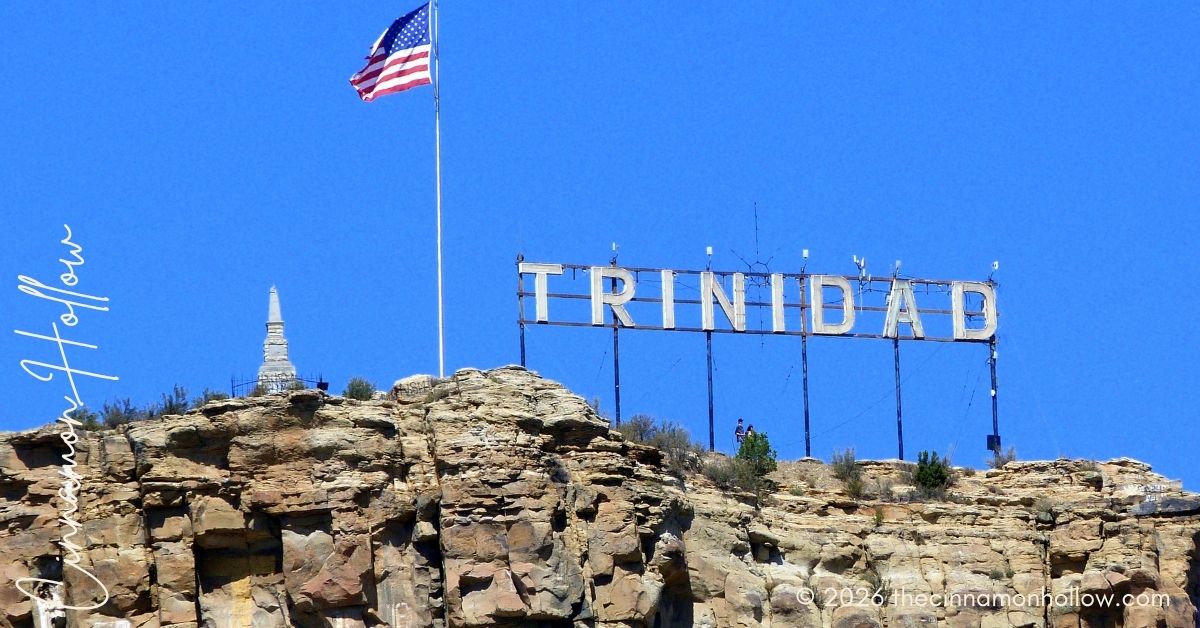
Fishers Peak is the mesa looming over town to the east and it is genuinely dramatic from the highway. You don’t need to hike it to appreciate the silhouette, but the state park access opened in 2021 and now gives you 19 miles of trails if you want to earn the view. The Spanish Peaks to the northwest frame the opposite horizon. Between the two, you’re driving through a natural gateway that most travelers treat as wallpaper.
The town itself runs along the Purgatoire River, and the downtown historic district sits on actual brick streets. Not brick-patterned pavers. Actual 19th-century brick, laid when Trinidad was a coal and railroad boomtown wealthy enough to build mansions. That wealth is still visible, which is part of what makes the place feel different from the generic downtown revivals you see everywhere else.
What the Historic District Actually Looks Like Up Close
The Corazon de Trinidad Creative District is a designated National Historic District containing more than 55 examples of late Victorian commercial architecture. Boutiques, galleries, and cafes now occupy those storefronts, but the bones are original. You’re not looking at a restoration project. You’re looking at buildings that survived because the economic slowdown that followed the coal decline also prevented the demolition wave that hit most comparable towns.
The Trinidad History Museum complex deserves more than a glance from the car window. It covers a full city block and includes the Baca House, an 1870s adobe home acquired for 22,000 pounds of wool, and the Bloom Mansion, a late Victorian showpiece that still has its original interior details. According to the Colorado Governor’s Office 2024 tourism report, Colorado drew 93.3 million visitors and $28.2 billion in travel spending in 2023, with growth concentrated along the Front Range. Southern Colorado towns like Trinidad are still relatively uncrowded by comparison, which right now is the whole point.
The free Trinidad Trolley runs a 45-minute loop through the historic district with narrated stops at the major landmarks. It costs nothing and it’s genuinely useful for getting oriented before you go deeper on foot.
The Santa Fe Trail Connection Most Visitors Miss
Trinidad isn’t just near the historic Santa Fe Trail. The Mountain Branch of the trail runs directly through downtown on Main Street. This is a road that Wild Bill Hickok, Kit Carson, and Zebulon Pike actually traveled. The Santa Fe Trail Museum inside the History Museum complex tells that story with artifacts, not just placards, and the context it provides for the town’s location, sitting at the base of Raton Pass, the critical mountain crossing on the route between Missouri and New Mexico, is the kind of thing that reframes everything you’re looking at outside.
US Route 350 northeast of Trinidad follows the original trail alignment for roughly 73 miles toward La Junta, passing through Comanche National Grassland. If you’re heading east anyway, this stretch of highway is one of the most historically loaded drives in the state. Three interpretive sites along the way connect the landscape to specific events from the trail era. Most people drive I-25 and never know this alternative route exists.
The Stop-Worth Framework: How to Decide What’s Worth Your Time
Not every attraction in every small town earns a dedicated stop. Here’s how to think about Trinidad specifically using what I’d call the Stop-Worth Framework: a stop earns its place if it offers something genuinely unavailable within a two-hour radius, something time-sensitive you can’t easily defer, or a combination of things that compound each other in one location.
Trinidad clears the framework on all three counts.
- The Corazon de Trinidad architecture is not replicated anywhere nearby. Pueblo is bigger but more generic. Walsenburg is smaller and less developed. This Victorian streetscape exists here and essentially nowhere else in southern Colorado.
- Fishers Peak State Park is open now and still quiet. Give it five years and it won’t be.
- The concentration of history museum, trolley, gallery district, trail access, and the Purgatoire River riverwalk in a walkable two-block radius is the compounding factor. You get more done in two hours here than in three hours at destinations that spread their highlights across 30 miles of highway.
One more thing compounds the value: Trinidad has dispensaries, and Colorado’s legal cannabis market is a real part of the state’s visitor economy. The Colorado Department of Revenue reported in August 2025 that marijuana sales tax revenue since legalization has surpassed $3 billion, reflecting a mature, well-regulated market that visitors from non-legal states often treat as part of the Colorado experience. Checking the Trinidad Recreational Dispensary Menu before you arrive lets you plan ahead and spend less time figuring out logistics in the parking lot.
Where to Eat and How Long You Actually Need
Two hours is the minimum. Four hours lets you breathe. An overnight turns the trip into something you’ll talk about for years, partly because accommodation options are genuinely good and not overpriced the way they are two hours north.
The local dining scene skews toward New Mexican influence, which makes sense given the geography. Green chile is present. You’ll find it done well. The riverwalk area has enough options that you’re not eating in your car, and the food quality in the historic district punches well above what you’d expect from a town of 8,000.
“Colorado’s outdoor recreation, thriving communities, cultural heritage, and booming industries continues to draw millions of visitors to our state each year, strengthening local economies in all four corners of the state.” — Colorado Governor Jared Polis, Colorado Tourism Office 2024 annual report
That “all four corners” framing matters. Southern Colorado doesn’t get the marketing attention the ski resorts or Rocky Mountain National Park do, but the infrastructure is there and the experience is real. Trinidad is the clearest proof point.
The Practical Checklist Before You Go
- Download the Trinidad Trolley schedule before you leave. It runs seasonally and hours shift, so confirm timing ahead of arrival.
- Check Fishers Peak State Park for trail conditions, especially if you’re visiting outside of summer.
- Budget at least one stop at the Trinidad History Museum complex. Give it 90 minutes minimum.
- If you’re continuing east toward La Junta, take US 350 instead of doubling back to I-25. The detour is worth it.
- If you’re traveling from a state where recreational cannabis isn’t legal, review what’s available before you arrive so you’re not making decisions under time pressure.
The I-25 corridor between Pueblo and Raton, New Mexico is one of those stretches most drivers treat as dead mileage. Trinidad makes that framing completely wrong. The real question is how much longer it stays this undiscovered.
Check out our Travel Adventure videos below!


Hi, I’m Crystal – a Kentucky-based Aromatherapist, wife, mom and the voice behind The Cinnamon Hollow. I share cozy, real-life inspiration for healthier routines, simple home living, essential oil use and safety, beauty, pets, and family adventures. From everyday tips to travel guides, my goal is to help you create a warmer life and embrace each day as its own little adventure. Always remember to live life, one adventure at a time! read more