Swapping out floors in a new house is a whole different game than it is in an older one. Sell them cheap (as long as they pass inspection) is the typical builder mantra, not let’s give them something that’s going to last. Most of us don’t learn that lesson until years two or three, when the carpet’s pancaked, and the laminate is lifting in every seam. Before you sign off on any replacement scenario, here are the half-dozen-plus-one decisions worth dwelling on far past the point of boredom.
Test Your Subfloor Before You Fall in Love With a Material
This is the step that’s almost always skipped. Yet, it’s the one that will lead to the most expensive mistakes. Concrete slabs in new construction are built to hold leftover moisture for a number of months and often more than a year after they’ve been poured. Try installing solid hardwood or certain laminates over a slab that hasn’t dried and cured properly, and you’ll have your flooring cupping, buckling, or showing mold beneath it by the end of the first humid season.
This isn’t a step you skip where it’s “optional”. It’s a quick, inexpensive moisture test that tells you if you need a moisture barrier at all, if wood is an option, or if you should be shopping for LVP and tile. Flatness matters too. Slabs don’t settle level, and your floor installed over a low spot will give you hollow-sounding pops or actually show visible dips, no matter how good the flooring product is. A flooring contractor should be testing for moisture and checking for flatness before any material is ordered, not after.
Understand What Builder-Grade Flooring Actually is
Spec homes come with flooring that’s built to hit a price point, not a lifespan. That’s usually 7mm laminate over a thin foam underlayment, or carpet paired with an 8lb density pad that will pack down and lose its cushion within two or three years of normal foot traffic. Builders aren’t hiding this. It’s standard practice, and it’s part of how new homes hit their price targets.
More often, buyers are not aware of the narrow line between passing the standard and standing the test of time. An 8lb pad under carpet in a family room with kids and pets is going to feel worn out fast. Compare that to a 10 or 12lb pad, which costs more upfront but holds its shape for years longer. Same logic applies to laminate thickness, anything under 8mm is going to show wear patterns near doorways and under rolling chairs within a year or two.
Match the Material to the Room, Not the Whole House
One of the most common mistakes that people make is to choose the same flooring for the entire house based on aesthetics. While it may seem like a good idea, in reality, it doesn’t work.
For areas such as kitchens, bathrooms, laundry rooms, and entryways you need waterproof flooring materials. In this case, LVP is often used as it can handle spills, pet accidents, and humidity fluctuations without warping. Plus, it can be installed over a slightly imperfect subfloor. Working with a specialized flooring retailer like Carpet Giant instead of a big-box store gets you in-house measurement, installation crews who know the product line, and one point of contact if something goes wrong under warranty. Bedrooms, on the other hand, and low-traffic living spaces are still suitable for carpets. It’s warmer, quieter, and more cost-effective than hard-surface alternatives.
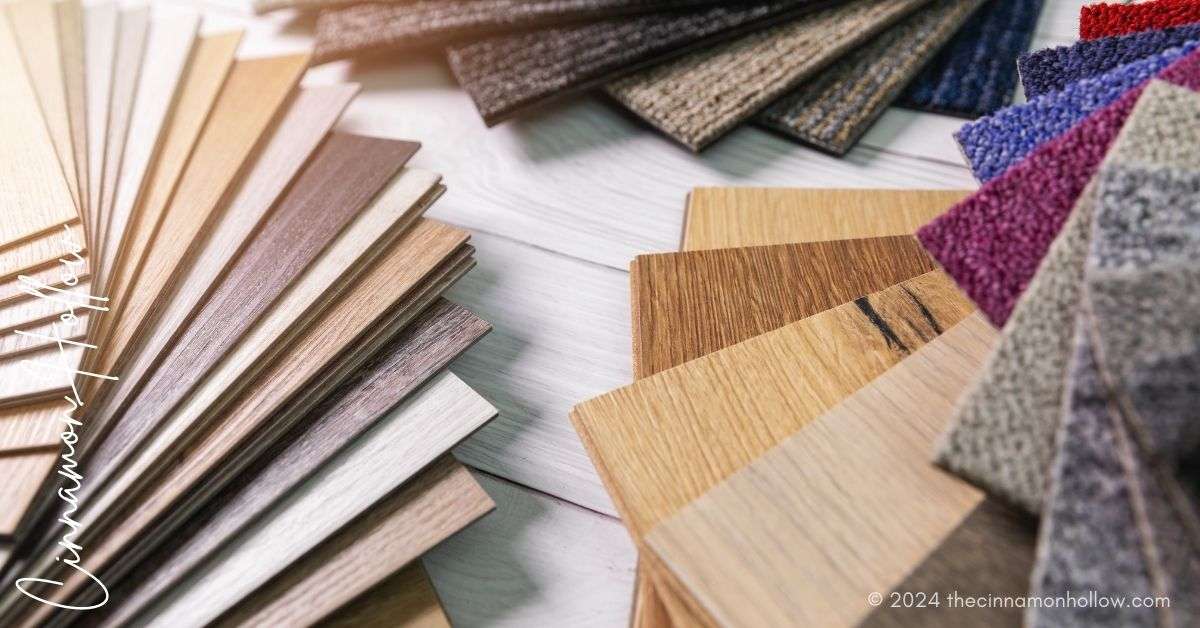
When it comes to main living areas, engineered hardwood is a great choice. It provides that wooden floor look and feel but without the moisture sensitivity that solid hardwood has. This makes it much more compatible with a concrete slab. Tile is also a great option, particularly for bathrooms.
The way to choose should be based more on the function of the room rather than having the same floor across different rooms. The reality is that every room has different needs and therefore different types of floors may be necessary.
Get the True Installed Cost, Not Just the Material Price
Flooring quotes typically advertise the cost per square foot for the material only. However, the total cost you will have to pay includes the installation labor, underlayment, moisture barriers, transition strips, and removal of the old flooring. These additional costs can increase the total amount by 40 to 70 percent, depending on the type of existing floor you have and the new floor you will install.
For instance, removal expenses can be quite high, especially when you need to remove glued-down flooring or you have to move a room full of furniture twice. Also, transition strips between rooms can be easily forgotten and then you will have additional unexpected costs for each doorway.
Therefore, it’s always a good idea to request a total installation quote before you start comparing different materials. For example, a $2.50 per square foot laminate flooring and a $4 per square foot LVP could end up costing roughly the same when you consider the labor and preparation costs, because the installation of LVP is usually faster and less complex in terms of underlayment.
Consider How the Floor Gets Installed, Not Just What it’s Made of
Floating floors, most LVP and some laminate, click together without glue or nails and sit on top of the subfloor. They’re faster to install, easier to repair in sections, and more forgiving of minor subfloor imperfections. They’re also a reasonable DIY option if you’re comfortable with basic tools.
Glue-down installations, common with tile and some hardwood, are permanent and labor-intensive. Nail-down hardwood requires a wood subfloor, which rules it out for most slab-on-grade new construction unless there’s already a plywood layer installed. Both of these methods demand professional installation, and both make future repairs or replacement more expensive and more disruptive.
Homeowners who plan to remodel again in the next several years, or who move frequently, tend to prefer floating floors for the flexibility. Homeowners settling in long-term and prioritizing a built-in feel often lean toward glue-down or nail-down, accepting the trade-off in repair complexity.
Run the Resale Math Before You Upgrade
Not all flooring upgrades have a good return on investment, and if you’re planning to sell in five years or less, this is where a ton of people overspend. Refinishing existing hardwood floors recoups roughly 147% of its cost at time of resale, more than any other type of flooring, and new wood floors recoup about 106%.
But if you’re doing an upgrade for resale, proceed with caution. If the other five homes in your neighborhood all have builder-grade flooring and you install premium hardwood, that’s an over-improvement. Buyers in that price bracket aren’t going to fork over what it cost you. If you’re going to take some time before selling, a “smart” low-VOC LVP with a good warranty that looks great in listing photos and resists scratches may be a better financial decision than a top-of-the-line product that won’t recoup its cost.
If you’ll be in your home long-term, the resale math matters a lot less. Buy what will withstand your kids and pets, not what will impress some buyer in five to seven years when you’re gone.
Don’t Ignore Indoor Air Quality
Brand new houses have a lot of new stuff giving off gas at the same time, paint, new cabinetry, adhesives, and new flooring too. Some carpets and glues used in the installation of glued down carpeting can off-gas VOCs for several weeks or months after installation. For most people, this isn’t a concern but if young children, asthma, or chemical sensitivities are an issue in your household, it’s better to know. Low-VOC or certified low-VOC carpet and adhesive products are available and will usually only cost you a tiny bit more than the standard stuff. If air quality is a concern, don’t wait to ask your installer for a copy of the product’s emissions ratings until after your order arrives and it’s time to install.
Give Materials Time to Acclimate, and Manage Humidity Afterward
Flooring materials, solid hardwood in particular, will expand and contract based on temperature and humidity. The fastest way to end up with gaps, cupping, or buckling in your flooring within the first year is to skip the 72-hour (or more) acclimation period, with the HVAC running, and the material sitting in the room(s) it will be installed in.
This isn’t a single-year worry either. Indoor humidity needs to stay relatively stable year-round, especially in areas of the country with hot, humid summers and cold, dry winters. A consistent running of your HVAC system will protect your wood floor investment for years to come. Most manufacturer warranties specifically state that damage due to lack of proper acclimation or humidity control is not covered. So, skip acclimation, do a poor job maintaining indoor humidity, and the damage that befalls your floor may be all on you.
Plan the Logistics Before Installation Day
More often than not, the logistical details of how and when a flooring project takes place are far more challenging than the decision about what material to use. Where will you move the furniture? How long is installation expected to take and how many rooms are affected? Was the original flooring damaged during a renovation or is the material being replaced in just one room? If you recently remodeled your kitchen or updated a bathroom, do new floors need to be laid under existing cabinets or built-in furniture?
These are all fair and important questions, and they can be trickier when you’re replacing the floors after you’ve moved in, rather than outfitting a new build for the first time. Make sure you know how pre-existing installations will impact the new materials you choose. Ask for a clear installation timeline and a walkthrough of what happens to each room before work starts, not after the crew shows up.
The Bottom Line For New Homeowners
Flooring decisions in a new home come down to matching the material to the room, understanding the real cost once labor and prep are included, and protecting the investment with proper acclimation and humidity control. Skip the subfloor test, and no amount of material quality will save you from moisture problems down the line. Get these seven factors right before the first plank goes down, and you won’t be back here in three years wondering why the floor you just installed already looks tired.

Meg is an author at Cinnamon Hollow. She writes on a variety of topics sharing tips and ideas for daily life.