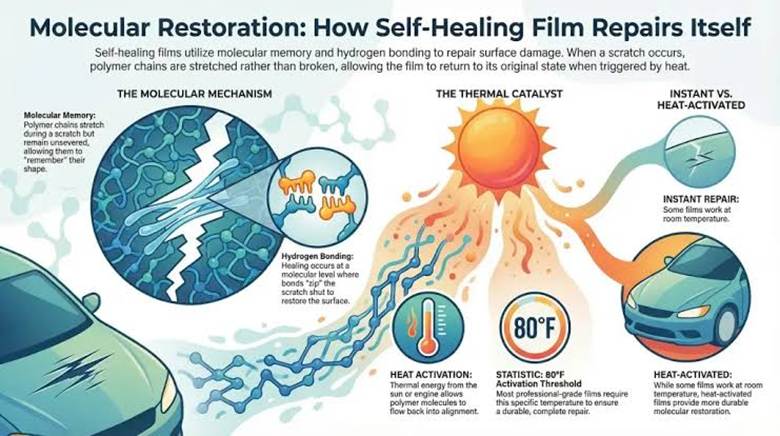
Self-healing technology in a clear Paint Protection Film (PPF) works through a specialized elastomeric polyurethane topcoat that possesses shape memory. When this top layer gets scratched by a wash mitt, brush, or light debris, the polymer chains are displaced rather than permanently severed. By applying heat—whether from direct sunlight, hot water, or a heat gun—these microscopic polymer chains become highly pliable, naturally flowing back into their original, perfectly smooth state. This scientific reaction literally melts away surface-level swirl marks and light scratches, keeping your car’s exterior looking pristine without needing constant machine polishing.
Quick Answer
To understand how self-healing technology works in a clear PPF wrap, you simply need to look at the chemistry of its topcoat. Made from elastomeric polymers, the film acts like a memory foam mattress. When a minor scratch depresses the surface, the material remembers its flat, original factory state. Introducing thermal energy (heat) accelerates the molecules, causing them to expand and snap back into their natural alignment, effectively erasing the scratch before your eyes.
Tools and Materials Needed to Trigger Self-Healing
While the film often heals itself passively, you may occasionally want to manually trigger the scratch repair process for deeper blemishes. Here is what you need:
| Tool / Material | Purpose |
| Direct Sunlight | The easiest, hands-free method to passively heal minor wash marring over time. |
| Hot Water (120°F – 140°F) | The safest manual method to trigger the elastomeric memory without risking damage. |
| Heat Gun or Hair Dryer | For targeted scratch removal (requires caution to avoid burning the film). |
| Microfiber Towel | To gently wipe away water or dust after the healing process is complete. |
| Infrared (IR) Curing Lamp | Used by professionals in climate-controlled shops to evenly heat the panel. |
Preparation Steps: Understanding the Layers
Before you attempt to fix a scratch, it is critical to understand the anatomy of the film. A premium clear PPF wrap is not just a single sheet of plastic; it is a multi-layered shield.
- The Release Liner: The bottom layer that is discarded during installation.
- The Acrylic Adhesive: The ultra-clear glue that binds the film to your car’s clear coat.
- The Polyurethane Core (TPU): The thickest layer (usually 6 to 8 mils). This provides the physical impact resistance against rock chips and road debris.
- The Elastomeric Topcoat: The ultra-thin top layer (usually 0.5 mils) where the self-healing magic happens. It is designed to be highly flexible and chemically resistant.
Note: Self-healing only works if the scratch is confined to the topcoat. If a rock or key slices completely through the topcoat and into the TPU core, the film cannot heal.
Step-by-Step Instructions: How to Trigger the Self-Healing Process
If you notice swirl marks from a rough car wash or a light scuff on your bumper, follow these steps to activate the self-healing technology.
Step 1: Clean the Area
Before applying any heat, ensure the scratched area is completely clean. Spray a quick detailer or soapy water onto the panel and gently wipe it away with a clean microfiber towel. Heating dirt into the pores of the PPF can cause permanent staining.
Step 2: Assess the Scratch Depth
Run your fingernail lightly over the scratch. If your nail catches aggressively on the groove, the scratch has likely penetrated past the elastomeric topcoat into the polyurethane core, meaning it will not self-heal perfectly. If your nail glides over it, it is a surface-level scratch and is prime for healing.
Step 3: Choose Your Heat Source
For the safest approach, boil a kettle of water and let it cool slightly (aiming for roughly 120°F to 140°F). Alternatively, plug in a hair dryer or set a heat gun to its lowest setting.
Step 4: Apply Thermal Energy
- If using hot water: Slowly pour the hot water directly over the scratched area. The thermal shock will cause the polymer chains to react instantly, and the scratch should vanish in seconds.
- If using a heat gun/hair dryer: Hold the nozzle 6 to 8 inches away from the surface. Keep the heat source moving constantly in a sweeping motion. Never hold it in one spot, as you can easily scorch or melt the film.
Step 5: Observe and Wipe
Watch the surface closely. Within 5 to 10 seconds of heat application, the scuff will fade away. Once the surface is smooth, remove the heat and gently dry the area with a microfiber towel.
Pro Tips for Maximum Effectiveness
- Warm Climates Win: If you live in a hot climate like Texas or Florida, you will rarely need to manually heal your film. The ambient heat from parking outside on a sunny afternoon is usually enough to reset the elastomeric polymers.
- Use Engine Heat: For scratches on the hood, simply taking the car for a spirited 20-minute drive can generate enough engine heat to activate the self-healing properties.
- Immediate Action is Not Required: Unlike bird droppings that need to be wiped away immediately, you don’t have to rush to heal a scratch. The “memory” of the polymer does not expire.
Common Mistakes to Avoid
- Using a Buffer or Polisher: Never try to machine-polish a scratch out of PPF like you would with traditional clear coat paint. The friction and abrasive compounds will burn through the delicate self-healing topcoat, ruining the film entirely.
- Overheating the Film: Holding a heat gun too close for too long will permanently warp, blister, or melt the polyurethane. Always keep the heat moving.
- Expecting Miracles: Self-healing technology is designed for micro-scratches, wash marring, and light scuffs. It will not magically repair a gaping tear caused by a high-speed collision with a large rock.
Maintenance and Best Practices
To keep the elastomeric topcoat functioning for its full 7 to 10-year lifespan, proper maintenance is essential.
- Apply a Ceramic Coating: Adding a layer of PPF-safe ceramic coating on top of the film reduces friction. Less friction means fewer scratches occur in the first place.
- Avoid Harsh Chemicals: Do not use heavy degreasers or petroleum-based solvents on the film, as these will degrade the flexibility of the self-healing topcoat over time.
- Two-Bucket Wash Method: Always use a grit guard and two buckets when washing your car to prevent introducing heavy, jagged dirt particles that could pierce past the topcoat.
Frequently Asked Questions
1. Does self-healing PPF work in cold weather?
The film retains its capability in cold weather, but it will not passively heal. In freezing temperatures, the polymer chains are stiff. You must introduce artificial heat (like warm water) to trigger the healing process during winter months.
2. How many times can a specific spot on the PPF heal itself?
There is no hard limit, as the reaction is a physical property of the material, not a consumable chemical. However, repeated heavy scratching in the exact same millimeter of film can eventually wear down the 0.5-mil topcoat over years of abuse.
3. Will a ceramic coating stop the film from self-healing?
No. A high-quality ceramic coating bonds to the microscopic pores of the PPF but is thin enough that it does not insulate the film from heat. The thermal energy will easily pass through the ceramic layer to activate the polymers beneath.
4. Can I use boiling water to fix a scratch?
It is better to let boiling water cool for a minute or two before pouring it on the car. While the film is incredibly heat resistant, boiling water (212°F) can sometimes shock cold automotive glass nearby, risking a cracked headlight or windshield.
5. What happens if the scratch doesn’t disappear after applying heat?
If hot water or a heat gun does not remove the scratch, it means the debris cut completely through the elastomeric topcoat and into the structural TPU core. At this point, the damage is permanent, but the film has successfully done its job by sacrificing itself to save the factory paint underneath.
Final Conclusion
Understanding how self-healing technology works in a clear PPF wrap demystifies one of the most impressive advancements in modern automotive care. By utilizing elastomeric memory polymers, this film acts as a living shield for your vehicle. Instead of constantly worrying about the micro-marring caused by daily driving or regular washing, you can simply let the sun—or a little warm water—erase the damage. While it requires a significant initial investment, the ability to reset your car’s exterior to a flawless, factory-fresh shine on demand makes premium PPF an invaluable asset for any car enthusiast. As Future Car Technologies continue to redefine vehicle protection and performance, innovations like self-healing PPF are becoming an essential part of smart car ownership. Investing in advanced protective solutions today helps preserve your vehicle’s appearance, enhances its long-term value, and ensures it remains in excellent condition for years to come.

Meg is an author at Cinnamon Hollow. She writes on a variety of topics sharing tips and ideas for daily life.