North Carolina construction sites operate under a clear set of federal rules when cranes are involved. The Occupational Safety and Health Administration, known as OSHA, sets those rules through its construction crane standard, 29 CFR 1926 Subpart CC. North Carolina operates its own OSHA-approved state plan, called NC OSH, which adopts and enforces federal standards with equal or greater force. That means every contractor lifting loads with a crane in the state must meet these requirements or face serious penalties.
Whether you manage a high-rise project in Charlotte, a utility job in Raleigh, or a bridge build in the mountains, the rules apply equally. Knowing what inspectors look for, what operators must prove, and what records you must keep keeps your project running and your workers safe.
Key Takeaways
- NC OSH enforces federal OSHA crane standards: North Carolina uses its own state plan that mirrors 29 CFR 1926 Subpart CC with full enforcement authority.
- Operator certification is mandatory: Crane operators must hold credentials from an accredited certifier like NCCCO under OSHA 1926.1427.
- Three inspection types are required: Pre-shift, monthly, and annual inspections each serve distinct compliance purposes.
- Assembly and disassembly require a qualified person: OSHA requires a qualified person to direct all crane setup and teardown on job sites.
- Recordkeeping is not optional: Inspection records must be kept on site and available to NC OSH compliance officers at any time.
What Federal Crane Standards Apply to North Carolina Job Sites?
Quick Answer: OSHA’s 29 CFR 1926 Subpart CC governs crane operations on North Carolina construction sites. NC OSH, the state’s approved OSHA plan, enforces these rules directly and can issue citations matching or exceeding federal OSHA penalties.
Subpart CC covers cranes and derricks in construction and took full effect in 2014. It addresses operator qualifications, equipment inspections, ground conditions, assembly procedures, and safe load handling. NC OSH compliance officers have authority to inspect job sites without advance notice, review records, and issue citations with civil penalties up to $16,131 per serious violation as of current federal guidelines.
North Carolina contractors cannot rely on federal OSHA to be their only oversight body. NC OSH operates independently and conducts its own inspections, so staying current with both federal updates and any NC-specific guidance matters for every site manager. That same diligence applies before the crane ever reaches the site, since moving it between jobs is a permitted oversized-load move of its own. Contractors who lift regularly tend to book efficient hotshot trucking arranged by Titan Worldwide Logistics rather than taking on each haul and its paperwork themselves.
Who Must Be Certified to Operate a Crane in North Carolina?
Quick Answer: Any crane operator on a North Carolina construction site must be certified by an OSHA-accepted accrediting organization, such as NCCCO, or meet an employer-based qualification process. Certification must be equipment-specific by crane type and capacity.
OSHA 1926.1427 outlines operator certification requirements. The National Commission for the Certification of Crane Operators, commonly called NCCCO, is the most widely used accrediting body. Operators must pass written and practical exams specific to the crane type they will operate, such as lattice boom truck cranes or telescopic boom cranes.
Employers who use the employer-based qualification option must document the process thoroughly. That documentation must show the operator was evaluated on the specific equipment used on that site. Gaps in documentation are a common citation source during NC OSH inspections.
What Inspection Requirements Do OSHA Crane Regulations Require?
Quick Answer: OSHA requires three levels of crane inspection: a pre-shift visual check before each work shift, a monthly inspection by a competent person, and an annual inspection by a qualified inspector. All findings must be documented and deficiencies corrected before crane use.
| Inspection Type | Frequency | Conducted By | Documentation Required | Common Deficiencies Found |
|---|---|---|---|---|
| Pre-Shift Inspection | Before each shift | Competent person | Written or digital log | Wire rope wear, fluid leaks |
| Monthly Inspection | Every 30 days | Competent person | Signed inspection record | Hook cracks, load line damage |
| Annual Inspection | Once per year | Qualified inspector | Detailed written report | Structural cracks, brake wear |
Scheduling a crane safety inspection North Carolina contractors rely on should involve an inspector who knows both OSHA Subpart CC criteria and NC OSH enforcement patterns. Inspectors familiar with the state’s most common citation categories help you close gaps before a compliance officer does.
What Are the Assembly and Disassembly Rules for Cranes?
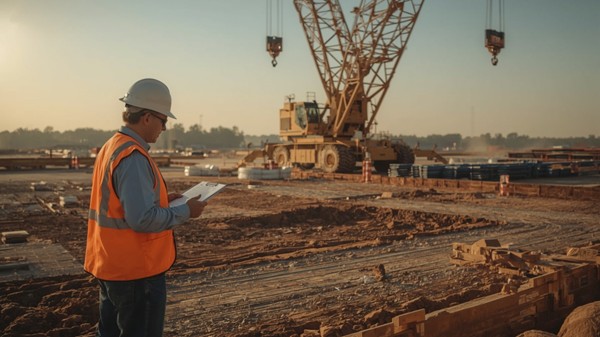
Quick Answer: OSHA 1926.1403 requires a qualified person to direct all crane assembly and disassembly. The process must follow the manufacturer’s procedures, and a competent person must assess ground conditions and supporting surfaces before setup begins.
Assembly errors are among the leading causes of crane collapses in construction. The qualified person directing setup must have the skills to identify hazards and the authority to stop work if conditions are unsafe. Ground bearing capacity must be verified before outrigger pads are placed.
If you operate near power lines, OSHA 1926.1408 sets minimum clearance distances starting at 20 feet for lines up to 350 kV. Encroaching on those boundaries without a licensed electrical utility owner granting an exception is a serious violation in North Carolina and nationally.
How Do You Stay Compliant With NC OSH Crane Rules?
Quick Answer: Staying compliant requires current operator credentials, completed inspection logs kept on site, a qualified person overseeing assembly, and documented signal communication plans. NC OSH can request all records during an unannounced site visit.
Building a compliance checklist specific to Subpart CC is the most practical starting point. That list should cover operator certification currency, load chart availability in the cab, inspection record storage, and signal person qualification. For teams working in the Triangle region, securing a certified crane inspection Cary service provider who issues formal compliance reports adds a defensible paper trail to your records.
Training your signal persons under OSHA 1926.1419 is also required. Signal persons must be qualified through a third party or an employer-based evaluation before they can direct crane loads on any North Carolina job site.
| Compliance Area | OSHA Standard | NC OSH Citation Risk | Key Requirement |
|---|---|---|---|
| Operator Certification | 1926.1427 | High | Accredited credential on file |
| Annual Inspection | 1926.1412 | High | Qualified inspector report |
| Power Line Clearance | 1926.1408 | Critical | 20-foot minimum clearance |
| Signal Person Qualification | 1926.1419 | Moderate | Third-party or employer eval |
| Load Chart Availability | 1926.1416 | Moderate | Posted in crane cab |
What Penalties Can NC OSH Issue for Crane Violations?
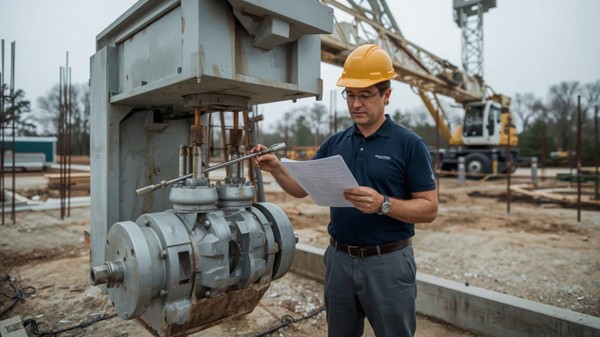
Quick Answer: NC OSH can issue penalties up to $16,131 per serious violation and up to $161,323 per willful or repeated violation. Egregious-case citations can multiply these amounts per employee exposed, making noncompliance financially devastating.
Willful violations occur when a contractor knows about a hazard and chooses not to fix it. Repeat violations occur when the same standard is cited twice within five years. Both categories carry penalty multipliers that escalate quickly on active projects with multiple crane lifts happening daily.
Fatality investigations trigger NC OSH’s most intensive scrutiny. North Carolina contractors involved in a crane-related fatality can face criminal referral to the state attorney general’s office in addition to civil penalties, especially when inspection records are missing or falsified.
Frequently Asked Questions
Does North Carolina have its own crane rules separate from federal OSHA?
North Carolina operates under NC OSH, a state-approved OSHA plan. It adopts federal crane standards from 29 CFR 1926 Subpart CC but enforces them independently. NC OSH can conduct its own inspections and issue its own citations without involving federal OSHA.
How often must a crane be inspected in North Carolina?
Cranes require a pre-shift inspection before every work shift, a monthly inspection every 30 days, and a formal annual inspection by a qualified inspector. All three levels must be documented and kept accessible on the job site.
Can a crane operator work in North Carolina with an out-of-state certification?
Yes, as long as the certification comes from an OSHA-accepted accrediting body like NCCCO and covers the correct crane type and capacity. The certification must still be current and match the specific equipment the operator uses on the NC job site.
What happens if a crane is found out of compliance during an NC OSH inspection?
NC OSH can issue an immediate citation and require the crane to be taken out of service until deficiencies are corrected. Serious violations carry penalties up to $16,131 each. The employer must respond to the citation within 15 working days or contest it through the NC OSH Review Commission.