Key Takeaways
- Low maintenance begins with a simple plan, not more products or more weekly tasks.
- Plants should match the sunlight, soil moisture, drainage, and available space in each part of the yard.
- Reducing unnecessary turf can cut mowing, edging, irrigation, and fertilizer needs.
- Healthy soil, proper mulch, and irrigation checks support stronger plants and deeper roots.
- A brief seasonal checklist can prevent small landscape problems from becoming expensive repairs.
A low-maintenance Florida yard is not one that gets ignored. It is a landscape designed around how your property receives sun, holds water, and is used every day. For homeowners in Tampa, Riverview, and nearby communities, a practical plan can reduce the need for repetitive mowing, watering, pruning, and plant replacement while keeping the property attractive.
Whether you handle routine tasks yourself or work with a provider of South Tampa lawn care, the goal is the same: give every part of the landscape a clear purpose. Well-placed plants, manageable turf areas, healthy soil, and efficient irrigation create a yard that is easier to maintain through heat, rain, and seasonal storms.
Why Low-Maintenance Landscaping Works in Florida
Florida landscapes deal with long growing seasons, intense sun, high humidity, heavy rainfall, sandy or compacted soil, and occasional cold snaps. Low maintenance does mean no maintenance. It means choosing a layout that needs fewer demanding interventions over time. Recent research on Florida landscape water is also examining how soil conditions, compost, and plant selection can affect irrigation needs in residential settings.
Start With a Site Check
Observe the property before buying plants, installing sod, or changing sprinkler schedules. Walk the yard after rain and at different times of day. Divide it into small zones based on sunlight, drainage, foot traffic, and the health of existing plants.
Questions to Ask Before Planning
- Which areas receive full sun, partial shade, or deep shade?
- Where does water collect, and which spots dry out first?
- Where do people walk, play, park, or gather?
- Which existing plants stay healthy with little attention?
- Are sprinkler heads watering plants, or spraying pavement and walls?
Choose Plants for the Right Location
The simplest landscaping rule is right plant, right place. A healthy plant can still struggle if it is installed in unsuitable light, poorly drained soil, or a space that is too small at maturity. Choose heat-tolerant, lower-water plants for sunny, dry areas, moisture-tolerant selections for places that stay wet, and shade-friendly plants beneath trees or beside buildings.
Check a plant’s mature height and width before installation. This helps prevent crowding around windows, walkways, irrigation equipment, air-conditioning units, and tree trunks. Grouping plants with similar water needs also makes irrigation simpler and reduces the chance that one area is consistently overwatered.
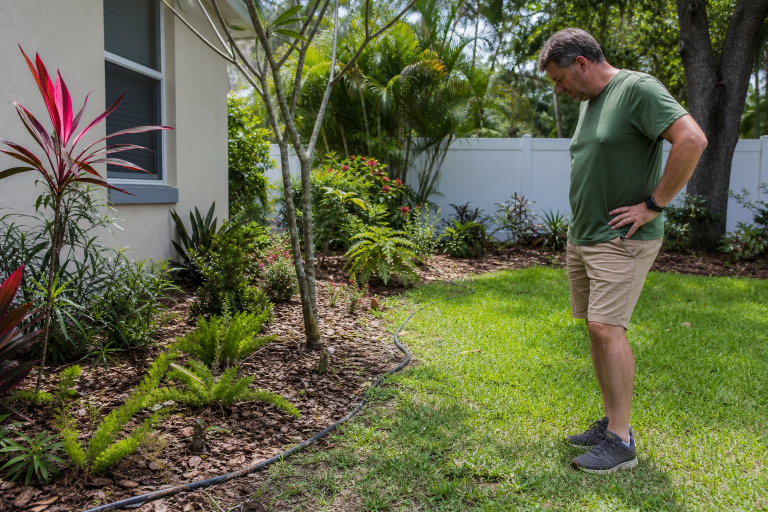
Use Turf Where It Makes Sense
A healthy lawn remains useful for children, pets, entertaining, and open views. Still, every square foot of turf needs mowing, edging, watering, and occasional nutrient management. Keep grass where it serves a real purpose, rather than treating it as the automatic surface for every part of the property.
Areas That May Work Better Without Turf
- Narrow strips along fences or driveways that are difficult to mow.
- Dense shade beneath mature trees.
- Small slopes, bare patches, and areas with repeated drought stress.
- Unused corners that can become mulched planting beds or simple paths.
Groundcovers, mulch beds, pavers, gravel, and carefully selected plantings can reduce work in these locations. Each alternative still needs occasional weed control and cleanup, but it may eliminate awkward weekly mowing.
Improve Soil and Water Wisely
When plants repeatedly fail, adding more fertilizer is rarely the first answer. Compaction, poor drainage, buried construction debris, and low organic matter can interfere with root growth. Remove weeds and debris, test soil before adding nutrients, avoid working saturated ground, and keep mulch and soil away from plant crowns and tree trunks.
Overwatering can be as damaging as underwatering because it encourages shallow roots, disease, weeds, runoff, and wasted water. Follow responsible lawn care best practices by checking each irrigation zone for clogged heads, broken parts, runoff, and overspray. Sunny turf, shaded beds, and newly planted areas should not automatically receive the same schedule.
Use Design Features and Seasonal Care
Clear bed edges help keep grass out of planting areas, while a steady layer of mulch reduces exposed soil and makes weeds easier to spot. Add paths where people naturally walk, leave access around utilities, and avoid piling mulch against trunks or blocking drainage routes.
Simple Seasonal Planning Guide
- Spring: Inspect irrigation, remove damaged growth, refresh thin mulch, and watch for early pest issues.
- Summer: Monitor heat stress, storm damage, fast growth, and fungal problems.
- Fall: Clear drainage areas, trim selectively, and identify plants that struggled through summer.
- Winter: Reduce unnecessary watering, protect sensitive plants when needed, and plan improvements.
Avoid Mistakes and Make a Final Checklist
Common problems include choosing plants solely for appearance, planting too-wide-growing varieties in a small bed, ignoring mature size, using a single irrigation setting for every zone, and replacing struggling plants without checking drainage or soil conditions. Avoid removing all the lawn without deciding how the space will be used.
- Mark sunny, shady, wet, and dry areas.
- Keep turf only where it supports everyday use.
- Choose plants for mature size and site conditions.
- Group plants with similar water needs.
- Repair irrigation issues before planting.
- Add mulch, edges, and paths where they reduce routine work.
- Schedule seasonal inspections for irrigation, drainage, trees, and plant health.
Common Questions
What makes a Florida yard low-maintenance?
Suitable plants, efficient irrigation, healthy soil, useful turf areas, and a layout that matches the homeowner’s routine are the foundation of a manageable yard.
Should every Florida yard have less grass?
No. Open lawn can be valuable, but narrow, heavily shaded, or hard-to-mow sections often perform better as beds, groundcover areas, or paths.
Is mulch better than rock?
Mulch can support soil moisture and organic matter, while rock offers a more permanent appearance. The best choice depends on heat exposure, drainage, surrounding plants, and maintenance preferences.
Can native plants eliminate yard work?
Native plants may be well-suited to local conditions, but they still need proper placement, establishment watering, occasional pruning, and weed management.
Conclusion
A healthy Florida landscape does not need to be complicated. Start with the conditions already present in the yard, then combine practical turf areas, correctly placed plants, well-managed soil, efficient irrigation, and a short seasonal routine. When every landscape feature has a purpose, the property can stay healthier and require less work throughout the year.

Meg is an author at Cinnamon Hollow. She writes on a variety of topics sharing tips and ideas for daily life.