

Colorado makes it pretty easy to imagine the perfect getaway with your dog. There are mountain cabins, scenic drives, miles of trails and plenty of places where bringing your four-legged travel buddy feels like part of the adventure rather than an inconvenience.
But traveling with a dog takes a little more preparation than finding a pet-friendly place to stay and tossing a leash in the car.
A change in altitude, unfamiliar trails, wildlife encounters, a different daily routine or even an upset stomach can change the plan quickly. Before heading toward Denver or farther into the mountains, take a little time to sort out your dog’s health details too.
You may never need most of this preparation, which is exactly what you hope for. Still, having it handled before you leave means you can spend more of the trip enjoying Colorado and less of it searching your phone for information you wish you’d saved earlier.
Schedule any needed vet care before you leave

If your dog is due for an exam, vaccinations or medication refill around the time of your vacation, try to handle it before departure.
This is also a good opportunity to ask your veterinarian whether there is anything specific to consider based on your dog’s age, medical history and planned activities. A senior dog joining you for relaxed cabin time, for example, has different needs from a young dog heading out for long hikes.
If you’re crossing state lines, check current requirements for your destination as part of your planning. USDA APHIS notes that individual states and territories may establish animal-health requirements for pets arriving from elsewhere.
Keep a digital copy of useful vaccination and medical information on your phone as well. Paperwork left on the kitchen counter will not be particularly helpful once you’re several hours from home.
Know where you could get veterinary care in Colorado
We research hotels, restaurants, trailheads and gas stations before a road trip. Veterinary care deserves a spot on that list too.
You do not need to map every clinic between home and your destination. Instead, identify an appropriate option close to where you’ll spend most of your time, along with a 24-hour emergency hospital for situations requiring critical or overnight care.
Travelers staying around the Denver metro area can research reliable veterinary clinics near Denver before arriving. Sploot Veterinary Care has multiple Denver-area locations offering primary and urgent veterinary care, with clinics open from 8 a.m. to 8 p.m. every day of the year, including weekends and holidays. Same-day appointments and urgent drop-offs are also available during operating hours.
That availability can be particularly useful when a health concern falls somewhere between a routine appointment and a full emergency. Dr. Jessica Apted, Regional Medical Director at Sploot Veterinary Care, has spoken about this gap in veterinary care.
“There are a lot of general practices, and there are emergency rooms and specialty clinics, but there is a true gap there for urgent care,” Dr. Apted told The Gazette.
For travelers, that is another reason to save more than one veterinary contact before leaving home. Know which nearby clinic can handle same-day or urgent concerns, but also identify an appropriate 24-hour emergency hospital in case your dog needs critical or overnight care.
Sploot, for example, does not provide overnight 24-hour critical care, so travelers should still know where an appropriate emergency hospital is located.
Save both options in your phone before the vacation starts.
Think about altitude before planning every hike

Denver is already a significant change in elevation for travelers arriving from many parts of the country, and popular mountain destinations can take you considerably higher.
That is a good reason not to make your first day your biggest hiking day.
Give your dog time to settle into the new environment. Keep fresh water available, take sensible breaks and pay attention to changes in behavior, appetite, energy and breathing.
How much activity is appropriate will depend on the individual dog. Age, fitness, underlying health conditions and the elevation and difficulty of the outing can all influence what is reasonable.
If you have concerns about whether a particular trip or activity is appropriate for your dog, ask your veterinarian before leaving.
A slower first day is hardly a sacrifice. Colorado has plenty to enjoy without immediately tackling the longest trail on your list.
Pack for your dog, not just yourself

You probably already have a mental packing list for yourself. Give your dog one too.
Bring enough of your dog’s regular food for the trip, plus a little extra in case plans change. Sudden diet changes can cause digestive trouble in some dogs, so vacation is not necessarily the best time to experiment with whatever food happens to be available at the nearest store.
Pack prescribed medications according to your veterinarian’s directions, along with a leash, harness, waste bags, water, bowls and any familiar bedding or comfort items your dog uses.
For road trips, think about safe restraint and comfort in the vehicle as well. A simple dog bag makes stops much easier because you are not digging through everyone’s luggage every time someone needs water.
Also Read: Choosing a car that’s practical for pet travel also covers useful features and gear to consider when taking pets on the road.
Check identification before leaving home
A dog getting loose at home is frightening enough. Having it happen hundreds of miles away, in a place your dog does not recognize, is even more difficult.
Before the trip, make sure your dog’s identification tag is readable and includes current contact information.
If your dog is microchipped, check that the registration details associated with the chip are current. The CDC recommends proper identification and keeping microchip contact information updated before traveling with pets.
It can also be useful to keep a recent, clear photograph of your dog on your phone.
These are small tasks, but they become especially valuable when you’re visiting unfamiliar towns, stopping frequently along a road-trip route or staying somewhere with a yard or entrance your dog has never used before.
Take Colorado wildlife seriously
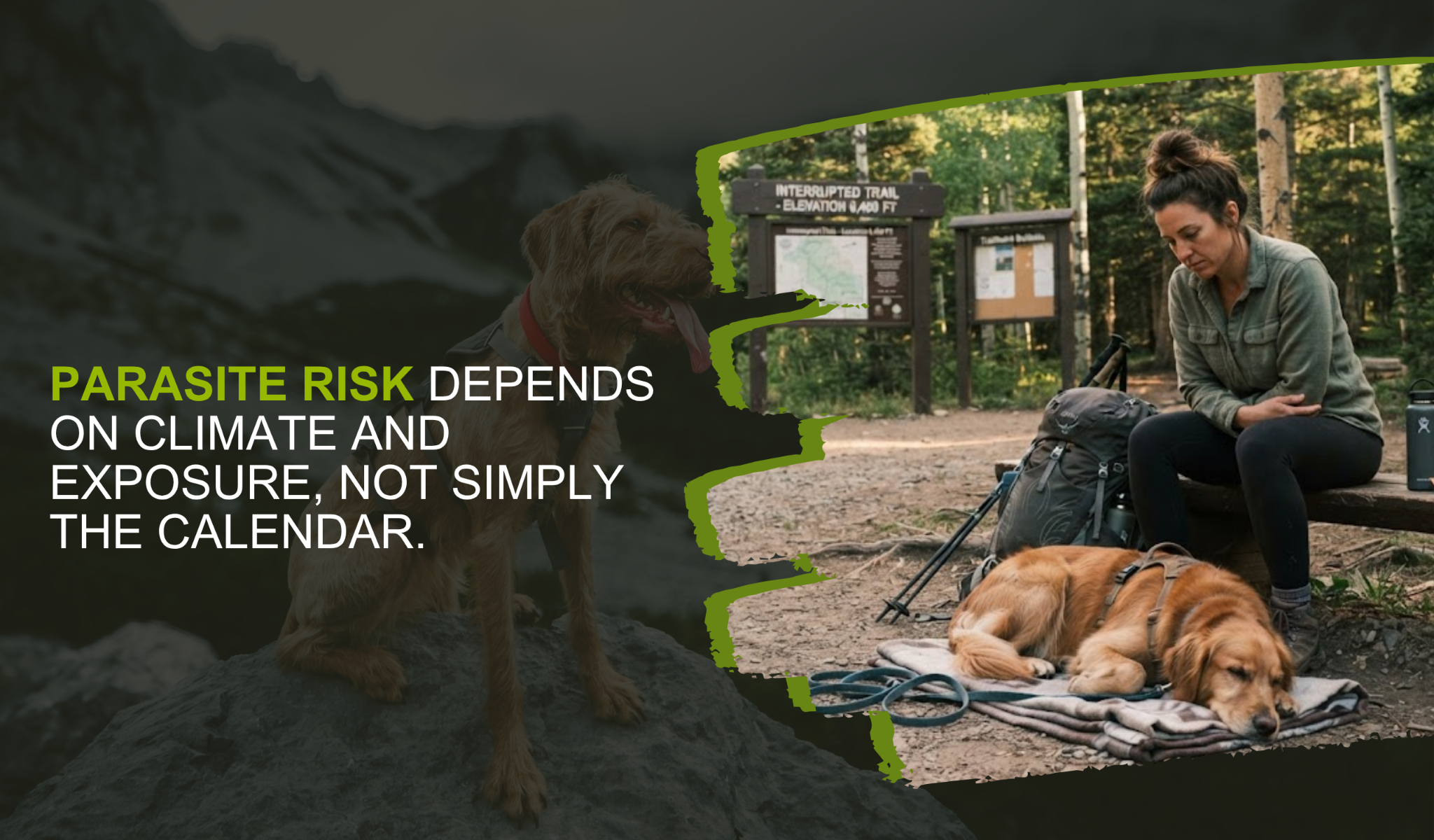
One of the reasons we love Colorado is the wildlife. That same wildlife is a reason to pay closer attention when exploring with a dog.
Colorado Parks and Wildlife recommends keeping dogs under control and using a short leash on trails and in state parks. It also advises against allowing pets to approach or interact with wildlife.
Before choosing a trail, learn about the area and its rules. A dog that reliably follows commands in your neighborhood may react very differently to an unfamiliar animal darting across a mountain trail.
Keep your dog close, stay aware of your surroundings and be particularly cautious around dawn and dusk, when wildlife may be more active.
Your dog’s vacation does not need an up-close wildlife encounter to be memorable.
Build some downtime into the itinerary
It is tempting to pack a Colorado getaway with one adventure after another. Dogs, however, do not understand that you only have three days to fit everything in.
Watch how your dog is handling the trip.
New smells, long car rides, unfamiliar accommodations and busy outdoor spaces can add up, even before you factor in physical exercise. Maintaining familiar feeding and sleeping routines where possible can help make the change less dramatic.
If your dog seems tired, a quiet afternoon at the cabin may be a better plan than squeezing in another trail.
Our roundup of scenic Colorado weekend cabin getaways includes several destinations where pet-friendly accommodations may be available, although individual rental policies should always be confirmed before booking.
After all, sitting on a porch with a mountain view and your dog sleeping at your feet still counts as a pretty good Colorado afternoon.
Have a “what if?” plan
Before leaving, spend five minutes creating a simple note on your phone.
Include your regular veterinarian’s phone number, your dog’s medications and relevant medical details, the veterinary clinic you’ve identified near your destination, and the nearest appropriate 24-hour emergency facility.
If another person is traveling with you, share the information with them.
You are not planning for your dog to get sick. You are making sure that if something unexpected does happen, you are not trying to research everything from scratch while worried about your pet.
That distinction can make a big difference in the moment.
Make the preparation part of the adventure
Taking your dog to Colorado can add an entirely different dimension to a getaway. Morning walks become opportunities to explore somewhere new. Rest stops become scenic breaks. A cabin feels a little more like home when your dog curls up beside you at the end of the day.
The preparation does not need to be complicated.
Check your dog’s health needs before leaving, pack familiar essentials, update identification, research veterinary options and approach Colorado’s altitude and wildlife with a little common sense.
Then get on with the fun part.
There are trails to walk, views to take in and plenty of new smells waiting for the four-legged member of the family.
Check out our Travel Adventure videos below!


Meg is an author at Cinnamon Hollow. She writes on a variety of topics sharing tips and ideas for daily life.