Most people talk about resilience as if it were a personality type. You either have it, or you do not. You are either the calm one in a crisis or the person who falls apart. That idea sounds neat, but real life is messier than that. Resilience is usually not revealed in one dramatic moment. It is built in ordinary moments, through repetition, recovery, and practice.
That matters because a lot of people quietly assume they are failing when life feels heavy. A job loss, a family crisis, burnout, health issues, or financial pressure can make anyone feel less steady. In those seasons, support is not a luxury. It is part of the rebuilding process. For some households, practical tools like military debt relief can reduce financial strain and create enough breathing room to focus on recovery instead of constant survival mode.
The better way to think about resilience is this: it is less like a badge and more like conditioning. You do not wake up with endurance. You build it by facing manageable stress, learning what helps you recover, and staying connected to people who help you keep perspective. The National Institutes of Health notes that healthy ways of coping with stress can boost resilience, and it also points to the importance of building a social support network. The CDC similarly emphasizes that stable, supportive relationships help people manage stress and cope with life challenges. NIH’s Emotional Wellness Toolkit and the CDC’s overview of social connection and health both reinforce something many people learn the hard way: strength grows better in community than in isolation.
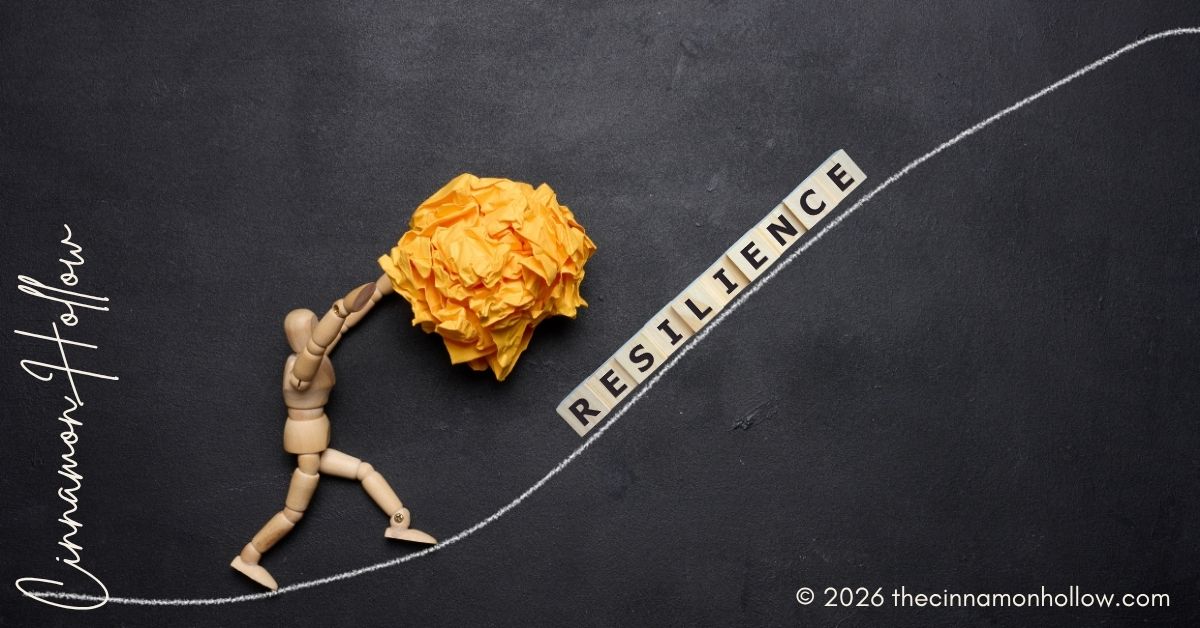
Resilience Usually Starts Small
We tend to admire resilience after the fact. We notice the person who stayed composed, adapted, and moved forward. What we do not see as clearly are the smaller repetitions that made that possible. Maybe they learned, over time, how to pause before reacting. Maybe they got better at asking for help. Maybe they stopped treating every setback like a final verdict on their worth.
Small challenges matter because they teach the nervous system that discomfort is survivable. Missing a goal, making a mistake, having a hard conversation, or adjusting to a new routine can all become training grounds. That does not mean every hard thing is good, or that suffering automatically makes people stronger. It means that when challenges are manageable, they can teach problem solving, emotional regulation, and patience.
This is one reason overprotection rarely creates confident adults, and constant self criticism rarely creates durable ones. People build resilience when they are allowed to try, wobble, recover, and try again. Confidence is often just memory. It is the memory of having done hard things before and finding out you can do hard things again.
Recovery Is Part of the Skill
A lot of people confuse resilience with never needing a break. But pushing through everything without recovery is not resilience. It is exhaustion wearing a brave face. Real resilience includes repair.
Think about athletes. Training works because stress and rest alternate. The same principle applies emotionally. If your system is under nonstop pressure, your ability to think clearly, regulate emotions, and solve problems starts to shrink. That is why sleep, movement, routines, and moments of calm are not side topics. They are part of the foundation.
Recovery also includes mental habits. People who build resilience often get better at reframing. They do not pretend everything is fine. They simply stop turning every setback into a permanent identity statement. “I failed at this” is useful information. “I am a failure” is a trap. That shift sounds simple, but it changes what happens next. One mindset leads to adjustment. The other leads to paralysis.
Support Is Not Cheating
One of the most damaging myths about resilience is the idea that strong people should need less from others. In reality, support is often what makes resilience possible in the first place. Relationships help people regulate stress, think more clearly, and recover faster after disruption. Sometimes support looks emotional, like being heard without judgment. Sometimes it looks practical, like childcare, meal help, guidance, or financial planning.
This matters especially during seasons of financial pressure. Money stress can spill into sleep, health, relationships, and decision making. When every bill feels urgent, even simple choices can feel overwhelming. In those moments, resilience is not about pretending the pressure is not real. It is about reducing chaos where you can, using credible resources, and making the next workable decision.
Support can also come from systems and structure. A calendar, a budget, a therapist, a friend who checks in, a walking group, or a rule about not making big decisions while overwhelmed can all function like scaffolding. Scaffolding does not mean the building is weak. It means you are actively strengthening it.
Resilience Changes Shape Across Life
Another reason resilience gets misunderstood is that it does not look the same in every season. In one chapter of life, resilience might mean taking initiative and moving fast. In another, it might mean slowing down enough to heal. For a parent, it may look like staying calm for a child. For a caregiver, it may mean finally accepting help. For someone facing debt, grief, or burnout, it may mean stopping the performance of being fine.
That flexibility is a strength. Resilience is not rigid toughness. It is adaptive capacity. It is the ability to respond to reality without losing yourself in it. Sometimes that response is action. Sometimes it is rest. Sometimes it is honesty.
People often become more resilient when they stop asking, “Why am I not stronger?” and start asking, “What skill does this moment require?” That question is gentler, but also more useful. It turns resilience into something practical. A learnable response. A set of actions. A rhythm.
What Building It Can Look Like Right Now
If resilience is built, then it can also be built from where you are, not just from where you wish you were. Start smaller than your inner critic wants. Pick one habit that improves recovery. One conversation that reduces isolation. One practical step that lowers pressure. One boundary that protects your energy. One problem that can be broken into pieces.
You do not need a dramatic reinvention to become more resilient. You need repetition. You need enough honesty to notice what drains you, enough humility to accept support, and enough patience to let capacity grow over time.
In the end, resilience is rarely assigned at birth like an unchangeable trait. It is shaped in daily life. It grows when people face reality, learn from missteps, and stay connected while doing it. That is good news, because it means resilience is not reserved for a special few. It is built, slowly and steadily, by ordinary people who keep practicing how to recover.
The owners and authors of Cinnamon Hollow are not doctors and this is in no way intended to be used as medical advice. We cannot be held responsible for your results. As with any product, service or supplement, use at your own risk. Always do your own research and consult with your personal physician before using.