Critical Signs You Need Professional Garage Door Repair
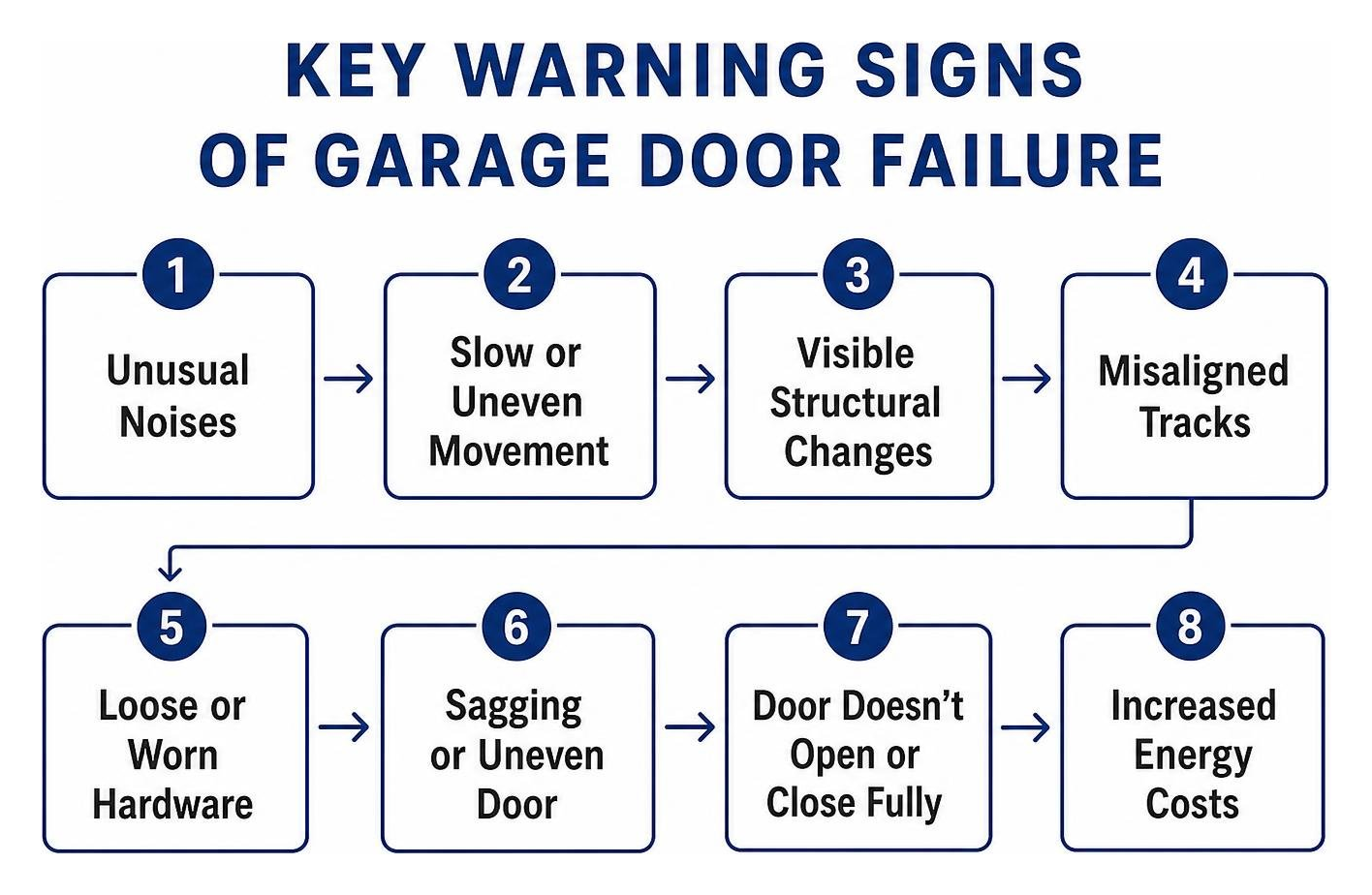
The garage door, a marvel of engineering, quietly performs its duty day in and day out, often unnoticed until a problem arises. However, ignoring the subtle (or not-so-subtle) cues it provides can lead to more significant issues, compromising your home’s security, energy efficiency, and even safety. Recognizing these critical signs early is paramount to preventing minor inconveniences from escalating into costly emergencies. From unusual noises to visible structural changes, these indicators signal that your garage door is likely operating under stress and requires professional attention.
Unusual Noises and Slow Response Times
A healthy garage door operates with a relatively smooth, consistent sound. Any deviation from this norm—such as grinding, screeching, squealing, or scraping—is a red flag. These noises often point to issues like metal fatigue in components, excessive motor strain, or friction caused by dry bearings or worn rollers. For instance, a loud screeching noise often indicates that the motor is struggling to pull the door, or that parts are in dire need of lubrication or replacement. Over time, components like hinges and rollers can wear down, leading to increased friction and noise.
Similarly, a garage door that moves noticeably slower than it once did is a clear sign of impending trouble. While age can contribute to slower operation, especially for garage door openers that typically last 10-15 years, it’s often an indication of underlying mechanical stress. This could be due to worn-out torsion springs, which are responsible for counterbalancing the door’s weight, or simply poor lubrication on the tracks, rollers, and hinges. When an opener has to work harder to move the door, it puts undue stress on the motor, potentially shortening its lifespan and leading to premature failure. Circuit delays within the opener’s electronics can also contribute to sluggish response times, indicating that the internal mechanisms are struggling to communicate effectively. This is particularly true for older openers that might be reaching the end of their average 10-15 year lifespan.
Sagging, Uneven Movement, and Track Misalignment
Visual cues are just as important as auditory ones when assessing your garage door’s health. A door that appears to sag in the middle, moves unevenly, or gets stuck during operation is exhibiting significant structural problems. These issues often stem from an imbalanced door, where the springs are no longer adequately counteracting its weight. When the door is not properly balanced, the opener is forced to exert excessive force, leading to premature wear and tear on all moving parts.
Track misalignment is another common culprit behind uneven movement. If the tracks are bent, loose, or obstructed, the rollers cannot move smoothly, causing the door to bind, jerk, or even come off the tracks entirely. This can be a dangerous situation, as a heavy garage door can cause serious injury if it falls. Roller wear also contributes to these problems; worn or damaged rollers can impede smooth operation, leading to scraping sounds and uneven travel. In severe cases, prolonged misalignment and stress can lead to structural damage within the door panels themselves, manifesting as cracks or bends.
Here are some physical alignment warning signs to look out for:
- Visible Gaps: Gaps between the door and the frame on one side, but not the other, suggest uneven lifting.
- Scraping Sounds: A consistent scraping noise against the tracks indicates friction and potential misalignment.
- Door Sticking: The door hesitates or stops at certain points during its travel.
- Bent or Damaged Tracks: Visually inspect the tracks for any bends, dents, or obstructions.
- Worn Rollers: Rollers that are cracked, chipped, or no longer spin freely need replacement.
Addressing these issues promptly with professional garage door repair and maintenance can significantly extend the life of your garage door system, which, for most doors, typically ranges from 15 to 30 years.
High-Risk Mechanical Failures That Require Expert Service
Beyond the general signs of wear and tear, certain mechanical failures pose immediate safety risks and demand urgent professional attention. These components, often under extreme tension or critical for safety, should never be attempted as DIY repairs due to the inherent dangers involved. Understanding these high-risk areas is crucial for every homeowner.
Garage Door Repair for Broken Springs and Cables
Perhaps the most critical components of a garage door system are its springs and cables. These elements are under immense tension, designed to counterbalance the door’s significant weight, making it feel light enough for the opener to lift. When a spring breaks, the door can become incredibly heavy and dangerous, posing a severe risk of injury or property damage.
There are two main types of garage door springs: torsion springs, which are mounted horizontally above the door, and extension springs, which run along the sides of the horizontal tracks. Both are rated for a specific number of cycles, typically around 10,000 cycles. With average use of opening and closing the garage door three times a day, these springs usually last between 7-10 years. However, factors like extreme temperatures, lack of maintenance, or improper installation can shorten this lifespan.
When a spring breaks, you might hear a loud “bang” that sounds like a gunshot. If you try to open the door manually or with the opener after a spring breaks, the door will feel extremely heavy or may not move at all. Attempting to operate a door with a broken spring can cause further damage to the opener and other components. Similarly, frayed or snapped cables can lead to the door becoming uneven or completely detached from the lifting mechanism. Due to the high tension involved, garage door springs are extremely dangerous to handle without proper training and specialized tools. DIY repairs on these components can result in severe injury or even fatality. Always defer to professional technicians for spring and cable repair or replacement.
Sensor Misalignment and Automatic Reversal Malfunctions
Modern garage doors are equipped with essential safety features, none more critical than the photoelectric safety sensors. Located a few inches off the ground on either side of the garage door opening, these sensors emit an invisible beam. If this beam is interrupted while the door is closing, the door should automatically reverse, preventing potential entrapment hazards. This feature is a cornerstone of garage door safety, particularly important for protecting children, pets, and objects.
Malfunctions in these safety sensors can be incredibly dangerous. If the sensors are misaligned, obstructed by dirt or debris, or if their wiring is faulty, the door may fail to close properly or, worse, fail to reverse when an obstruction is present. A common scenario is the garage door reversing immediately after closing, or refusing to close fully, often indicating misaligned safety beams.
To ensure your garage door is safe, periodically perform the “safety reversal test.” Place a solid object (like a roll of paper towels) in the path of the closing door. The door should immediately reverse upon contact with the object. If it doesn’t, or if the sensors are consistently causing issues, professional inspection is crucial. Beyond physical obstructions, wiring shorts or internal logic board failures can also cause erratic sensor behavior.
Furthermore, older garage door openers using fixed-code dip switch technology present a security risk. Unlike modern rolling code technology, which changes the access code every time the remote is used, fixed codes can be easily guessed by intruders, compromising your home’s security. This technological obsolescence, even if the motor still functions, can be a valid reason for considering a replacement, emphasizing that a door’s “life” isn’t just about mechanical movement but also about security and convenience.
Environmental Wear and Component Longevity
The environment in which your garage door operates plays a significant role in determining its overall lifespan. From extreme temperatures to humidity and corrosive elements, various external factors can accelerate wear and tear on different materials and components. Understanding these environmental impacts can help homeowners take proactive steps to protect their investment.
Impact of Climate on Material Lifespan
Different garage door materials react uniquely to environmental stressors. For instance:
- Steel Doors: While robust and durable, steel garage doors (which typically last 20-30 years) are susceptible to rust, especially in humid or coastal environments. Dents and scratches can also compromise their protective coating, leading to corrosion.
- Wood Doors: Known for their aesthetic appeal, wood garage doors generally last 15-25 years. However, they are highly vulnerable to moisture, which can lead to warping, rotting, cracking, and peeling paint. Constant exposure to humidity and fluctuating temperatures can significantly shorten their lifespan unless meticulously maintained.
- Aluminum Doors: Lightweight and resistant to rust, aluminum doors often last 20-25 years. Their primary weakness is susceptibility to denting, particularly from impacts, which can compromise their structural integrity and appearance.
- Fiberglass Doors: Offering good resistance to dents and corrosion, fiberglass doors can last 20-30 years. However, prolonged exposure to UV rays can cause the material to fade or become brittle over time.
- Vinyl and Composite Doors: These materials are highly durable and resistant to dents, rust, and rot, often boasting the longest lifespans, ranging from 25-35 years. They are excellent choices for harsh climates but can still be affected by extreme temperature fluctuations.
Thermal expansion and contraction, caused by significant temperature swings, can stress all garage door components, leading to loose fasteners, cracked panels, and weakened seals. The bottom seal, crucial for preventing drafts and moisture intrusion, is particularly vulnerable to degradation from UV exposure and friction. In humid climates, moisture infiltration can lead to mold and mildew growth, especially on wood doors, and can accelerate rust on steel components. Coastal areas, with their high salt content in the air, are particularly harsh, causing rapid corrosion of metal parts. This highlights the importance of regular garage door repair and maintenance to combat these environmental challenges. For more insights on how humidity can affect your home’s curb appeal and what you can do about it, consider exploring resources dedicated to maintaining your home’s exterior.
Evaluating Your Options: Repair or Replace
When faced with a malfunctioning garage door, homeowners often ponder the fundamental question: should we repair it, or is it time for a full replacement? This decision hinges on several factors, including the age of your current system, the severity of the damage, and the overall cost-effectiveness of each option.
Garage Door Repair vs. Full System Replacement
The average lifespan of a garage door itself ranges from 15 to 30 years, while garage door openers typically last 10-15 years. If your door or opener is approaching or has exceeded these averages, the likelihood of recurring issues and higher repair costs increases.
Consider these points when making your decision:
- Age of the System: An older system, particularly one over 15-20 years old, may experience a cascade of failures. Repairing one component might only delay the failure of another. For openers, those over 10-15 years old might lack modern safety features or smart technology, making replacement a more appealing option for security and convenience.
- Severity of Damage: Minor issues like a broken spring, worn rollers, or a misaligned track are usually cost-effective to repair. However, extensive damage such as multiple cracked panels, significant structural integrity issues, or a completely failed motor in an older opener might warrant replacement. If the cost of repairs approaches 50% of the cost of a new door or opener, replacement often makes more financial sense in the long run.
- Safety Code Updates: Garage door safety standards have evolved. Older doors and openers may not meet current safety regulations, particularly regarding auto-reverse mechanisms and photoelectric sensors. A new system ensures compliance with the latest safety codes, offering enhanced protection for your family.
- Technological Obsolescence: Modern garage door openers offer features like Wi-Fi connectivity, battery backup, and rolling code security. If your current opener lacks these conveniences or security enhancements, a replacement can significantly upgrade your home’s functionality and safety. For instance, older dip switch technology is far less secure than modern rolling code systems.
- Energy Efficiency: Newer garage doors, especially insulated models, offer superior energy efficiency. If your garage is attached to your home, an old, uninsulated door can be a significant source of energy loss. Replacing it with a modern, insulated door can improve your home’s overall energy performance and comfort.
Here’s a table summarizing indicators for repair versus replacement:
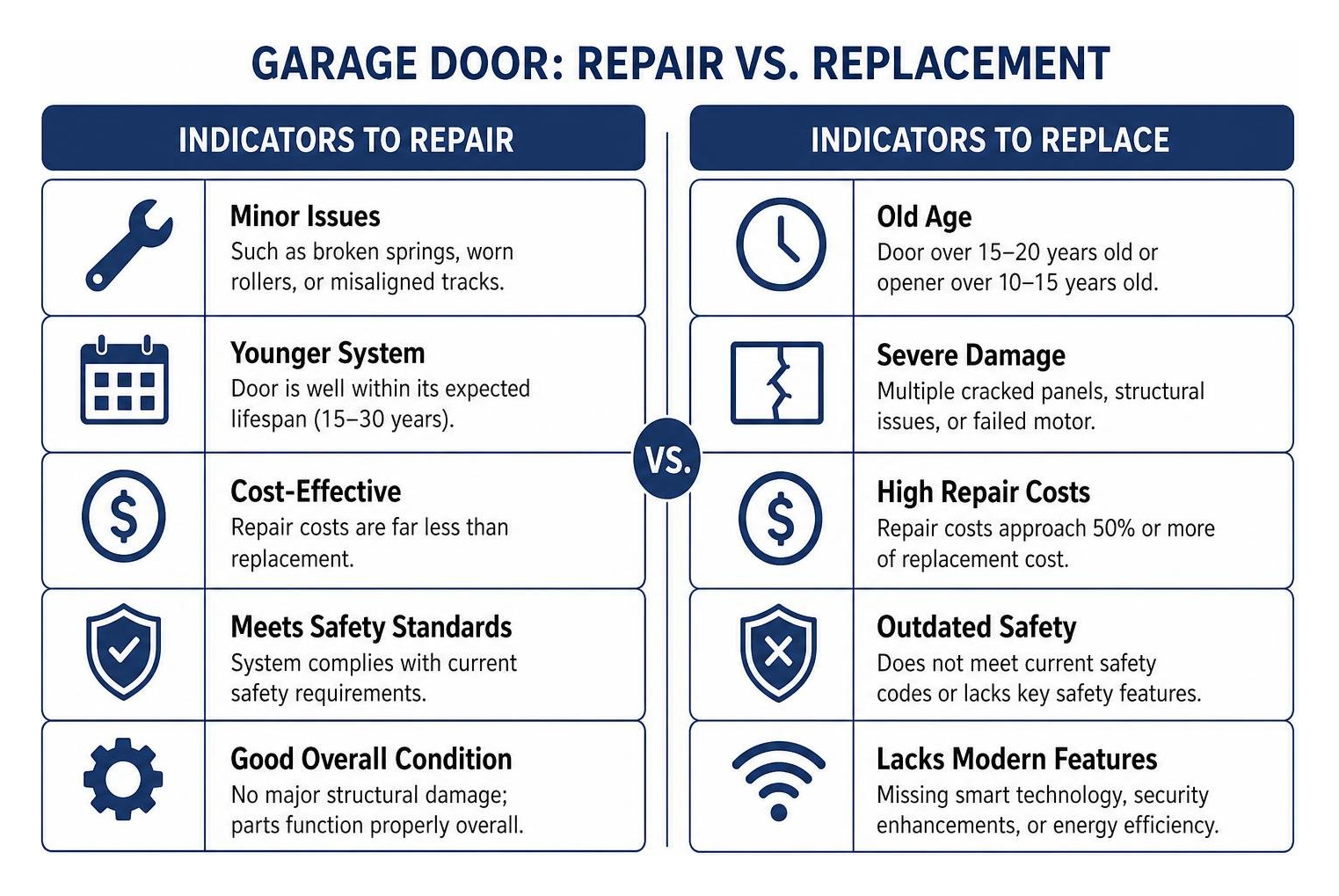
A professional assessment can provide the most accurate guidance. A technician can evaluate the condition of your entire system, discuss the pros and cons of repair versus replacement, and help you make an informed decision that aligns with your budget and needs.
Frequently Asked Questions About Garage Door Maintenance and Service
Homeowners often have specific questions about the longevity and care of their garage door systems. Addressing these common inquiries can help demystify the complexities of garage door maintenance and empower you to make informed decisions.
How long do garage door springs typically last before needing replacement?
Garage door springs are crucial components responsible for counterbalancing the door’s weight. Most standard torsion and extension springs are rated for approximately 10,000 cycles. A “cycle” refers to one complete opening and closing of the garage door.
With average daily usage—typically opening and closing the door about three times a day—a 10,000-cycle spring will last roughly 7 to 10 years. However, this lifespan can vary based on several factors:
- Usage Frequency: Homes with higher usage (e.g., more than three cycles a day) will see springs wear out faster.
- Maintenance: Proper lubrication of springs and other moving parts can help reduce friction and extend their life.
- Environment: Extreme temperatures and humidity can affect the metal’s integrity over time.
- Spring Quality: Higher-quality springs, often referred to as “high-cycle” springs, are available and rated for 20,000, 30,000, or even 50,000 cycles, offering a significantly longer lifespan for those who anticipate heavy use.
When a spring breaks, it’s immediately noticeable, often with a loud bang and the door becoming extremely heavy or inoperable. Due to the high tension involved, spring replacement is a dangerous task best left to trained professionals.
Can I fix a garage door that opens or closes on its own?
A garage door that opens or closes without any command is a concerning issue, posing both a security risk and a safety hazard. This problem is rarely due to external interference from neighbors and more often points to an internal malfunction.
Common causes include:
- Logic Board Failure: The most frequent culprit is a short or malfunction within the garage door opener’s logic board (circuit board). This internal electronic issue can cause the opener to misinterpret signals or activate spontaneously.
- Wall Control Shorts: A short circuit in the wall-mounted control button or its wiring can send phantom signals to the opener.
- Remote Interference/Stuck Button: While less common, a remote control with a stuck button, or one that is inadvertently pressed, could trigger the door. It’s worth checking remote batteries and ensuring buttons aren’t jammed.
- Safety Sensor Issues: Although less directly related to opening/closing on its own, faulty safety sensors can sometimes cause erratic behavior, preventing the door from closing fully or reversing unexpectedly.
Attempting to diagnose and repair internal electrical components without expertise can be dangerous. If your garage door exhibits this behavior, schedule a professional safety inspection immediately. A technician can accurately diagnose the problem, whether it’s a faulty logic board, wiring issue, or another component, and recommend the appropriate repair or replacement.
What is the average lifespan of a modern garage door opener?
Modern garage door openers are designed for durability and efficiency, typically lasting between 10 and 15 years. This average lifespan is a good benchmark, but several factors can influence how long your specific unit will continue to operate reliably:
- Usage Frequency: Just like springs, the more frequently an opener is used, the faster its motor and internal components will wear down.
- Maintenance: Regular lubrication of the door’s moving parts (tracks, rollers, hinges) reduces the strain on the opener’s motor, helping it last longer. A well-maintained door means less work for the opener.
- Installation Quality: Proper installation ensures the opener operates correctly and efficiently from day one, preventing undue stress on its components.
- Environmental Conditions: Extreme temperatures, humidity, and dust can affect electronic components and lubrication, potentially shortening the opener’s life.
- Technological Advancements: While an opener might still be mechanically functional after 15 years, it may lack modern smart safety features, Wi-Fi connectivity, or battery backup systems that enhance convenience and security. Technological obsolescence can be a valid reason for replacement, even if the motor is still working.
Signs that your opener might be nearing the end of its life include increasingly slow operation, loud or unusual noises from the motor unit, inconsistent performance, or frequent need for repairs. Upgrading to a new opener can provide enhanced security, quieter operation (especially with belt-drive models), and smart home integration, making it a worthwhile investment when your old unit starts to show its age.
Conclusion
Understanding “how long does a garage door last” and recognizing the signs of wear and tear are crucial aspects of responsible homeownership. From the subtle squeak to the dramatic spring break, your garage door communicates its needs. Ignoring these signals can lead to compromised security, safety hazards, and significantly higher repair costs down the line.
By conducting regular preventive diagnostics and adhering to a consistent maintenance schedule, homeowners can often extend the lifespan of their garage door and its components, potentially pushing past the average 15-30 years for the door itself and 10-15 years for the opener. However, when critical issues arise—especially those involving high-tension springs, faulty safety sensors, or significant structural damage—it’s imperative to seek professional assistance.
Prioritizing professional safety standards ensures that your garage door operates reliably, providing secure access and protecting your property. Investing in timely repairs or a strategic replacement not only safeguards your family and belongings but also contributes to the long-term durability and aesthetic appeal of your home. Don’t wait for a complete breakdown; proactive care and expert intervention are key to a long-lasting and safe garage door system.

Meg is an author at Cinnamon Hollow. She writes on a variety of topics sharing tips and ideas for daily life.