Key Takeaways
- Cafés serve as important social hubs that foster connection, creativity, and community interaction.
- Historically, cafés have played a significant role in shaping cultural, intellectual, and social movements.
- Modern cafés function as “third places,” supporting both productivity and meaningful social engagement.
- Thoughtful design and atmosphere enhance comfort, usability, and overall customer experience.
- Cafés contribute to local economies and cultural identity while also presenting challenges such as gentrification.
Introduction
Cafés have always been more than just spots to grab a cup of coffee. In many cities, they are essential hubs where individuals gather to share ideas, collaborate on projects, or simply enjoy quiet moments surrounded by the gentle hum of daily life. Whether one is looking for a cozy corner to read or join in animated debates, the atmosphere of a café speaks to the evolving needs of urban communities. The influence of vibrant destinations like Great White restaurant demonstrates how food and drink establishments can shape local culture and bring people together in ways that extend far beyond their menus.
Modern café culture, with its roots stretching back centuries, continues to maintain a crucial role in shaping the pulse of urban areas. Today’s cafés are designed with thought, purpose, and a clear sense of their cultural impact, all of which help cities thrive and adapt to the changing rhythms of everyday life.
Historical Significance of Cafés
The cultural importance of cafés is evident in their storied history. In the coffeehouses of 18th-century London, merchants and writers would debate the latest news, sometimes influencing opinions far outside their city walls. Similarly, Parisian and Viennese cafés drew artists, thinkers, and revolutionaries into spirited conversation, cementing their status as meeting grounds for the intellectually curious and socially active. Such places played a defining role in the exchange of ideas and the spread of culture, serving as critical infrastructure for social change and creative advancement. This legacy continues to echo through the café scenes in cities like New York, Berlin, and Melbourne, where the tradition of public dialogue remains alive.
These historically significant gathering spaces shaped not only social circles but also contributed to broader societal transformations, including the spread of journalism and the arts. Cafés provided a setting where individuals could encounter new perspectives and leave behind the formality that often restricts open conversation.
Cafés as Modern Social Hubs
The role of cafés in urban life has adapted to meet contemporary needs. Today, they function as what sociologist Ray Oldenburg described as “third places,” offering environments distinct from the home and workplace. These social settings welcome people from all walks of life to relax, recharge, or connect. Whether it is students searching for a study spot or friends catching up, cafés serve each visitor according to their purpose while acting as natural community anchors.
This inclusivity is enhanced by features that promote both productivity and sociability. Free Wi-Fi, an array of comfortable seating, and a calm, welcoming ambiance attract a broad spectrum of residents. As these factors come together, modern cafés contribute to neighborhood development by fostering creative networks, freelance work, and casual connections, all of which reinforce a sense of community.
Design and Atmosphere
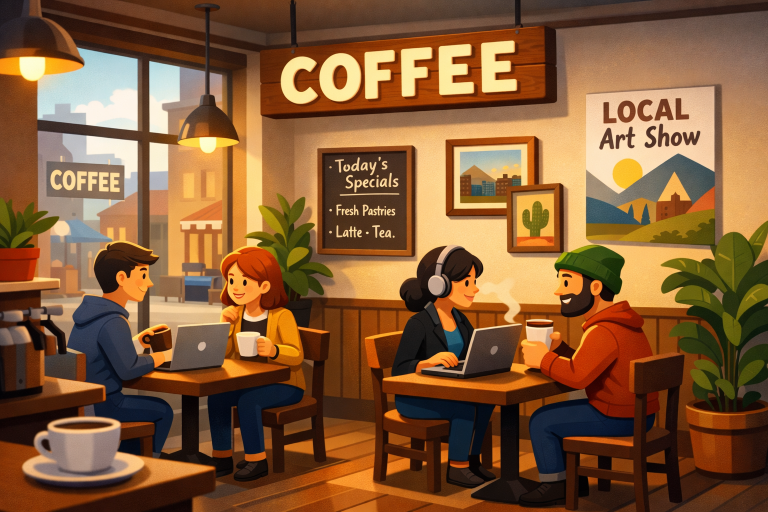
Thoughtful design and intentional atmosphere are crucial in shaping how café spaces are experienced. Owners and designers now carefully craft interiors to make patrons feel both productive and at ease. Power outlets at every table, communal seating mixed with private nooks, and natural elements like wooden finishes and houseplants define many modern cafés. Lighting is warm and inviting, promoting extended stays while keeping spaces functional for work or leisure.
- Tables and couches designed for both collaboration and privacy
- Strategic acoustic choices to reduce noise without muting the lively buzz
- Local art, playlists, or book corners that showcase unique community character
These elements transform cafés into microcosms of urban society, balancing the diversity of their patrons’ needs. Such thoughtful design shows how environments can support positive community interaction while respecting individual preferences for engagement or solitude.
Economic and Cultural Impact
Cafés also play an essential part in revitalizing local economies and contributing to the texture of city culture. Among their most prominent contributions are creating local jobs and supporting nearby farms, bakeries, and artists through supplier partnerships. Cafés often become landmarks that help define a neighborhood’s identity, attracting both residents and visitors.
The presence of creative individuals and entrepreneurs is often associated with clusters of popular cafés, as seen in areas renowned for art or music scenes. This symbiosis can help cultivate a city’s reputation, increase foot traffic, and encourage cultural tourism. According to BBC Culture, such effects ripple outward, fostering a flourishing, dynamic urban environment.
Challenges and Considerations
While cafés offer many benefits, they pose challenges for city planners and residents. In some neighborhoods, the rapid growth of trendy cafés has accelerated gentrification, making it harder for long-time residents and smaller independent shops to maintain their footing. Noise, waste, and an ever-present threat of cultural homogenization are common concerns when café culture expands rapidly.
Policymakers and community leaders face the crucial task of balancing development with preservation. Open dialogues about zoning, business licensing, and neighborhood needs can help maintain the character and diversity that make café culture enriching for all.
Final Thoughts
The enduring appeal of café culture lies in its ability to adapt and serve a city’s evolving needs. By fostering community interaction, providing productive environments, and supporting local economies, cafés hold a central place in urban social life. As cities grow and change, the continued integration of thoughtfully designed, community-minded cafés will be vital to creating vibrant, resilient, and inclusive urban spaces.

Meg is an author at Cinnamon Hollow. She writes on a variety of topics sharing tips and ideas for daily life.