Driving a large truck is a difficult job that requires a lot of skill and attention. When the weather in Georgia changes, it can make a hard job even more dangerous for everyone on the road. Many people do not realize how much a little bit of rain or wind can affect a massive tractor-trailer.
In places like Duluth, GA, the weather can be very unpredictable. One minute it is sunny, and the next, a heavy storm can roll in. Understanding these risks is important for staying safe while driving near big rigs on our local highways.
How Does Rain Impact Commercial Trucking Safety?
Rain is the most common weather challenge for drivers in our state. When water hits the road, it mixes with oil and dust, making the surface very slick. For a heavy truck, this means it takes much longer to come to a stop. If a truck driver follows too closely during a storm, they might not be able to brake in time to avoid a crash.
National data shows that weather plays a massive role in road safety. According to the Federal Highway Administration, approximately 74% of weather-related fatalities occur on wet pavement, and 46% happen during active rainfall.
The Danger Of Hydroplaning
Hydroplaning occurs when water builds up between the truck’s tires and the road, causing a loss of steering and braking control. Because trucks have many tires, losing grip on even a few can cause the trailer to swing out of control.
Visibility Issues During Downpours
Heavy rain and tire spray cloud all drivers’ vision. If a trucker cannot see road lines or nearby cars, the risk of a collision increases significantly.
Why Is Wind A Major Threat To Large Trailers?
High winds turn trailers into sails, pushing trucks into adjacent lanes. In Gwinnett County, many trucks travel through the busy intersection of Pleasant Hill Road and Satellite Boulevard. When gusts hit this area, a driver might struggle to stay centered. Whether it is a sudden microburst near the Gwinnett Place Mall area or a sustained storm moving through Duluth, weather-related truck accidents can leave drivers and other motorists facing serious injuries and mounting medical bills.
A Duluth truck accident lawyer at Slam Dunk Attorney, recognized by SuperLawyers, can help work through the legal complexities of your claim and fight to secure the financial support and justice you deserve after a serious crash. The FMCSA reported in 2022 that 5,837 large trucks were involved in fatal crashes nationwide.
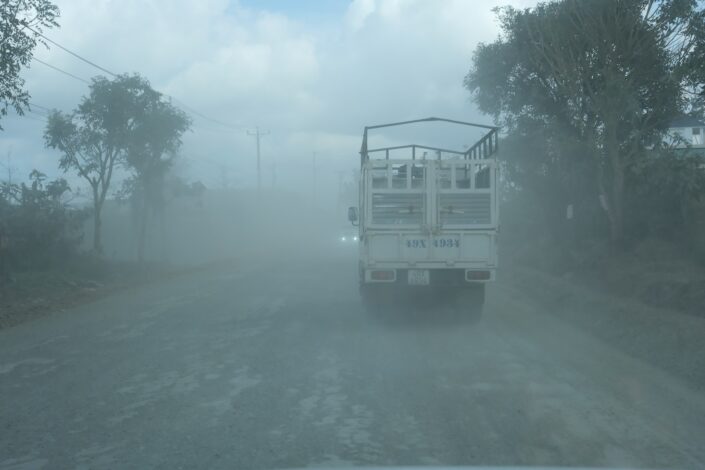
How Does Fog Affect Truck Driver Decision Making?
Fog frequently appears in the early morning hours in Georgia. It creates a white-out effect that makes it nearly impossible to judge distances. A truck driver might think they have plenty of room to slow down, only to realize too late that traffic has stopped ahead of them. “A professional driver is legally obligated to manage their vehicle based on the reality of the road, not the convenience of their schedule; when fog masks the path ahead, speed is no longer just a choice, it becomes a liability,” according to Brian Wright, a Duluth Truck accident attorney.
- Slower Reaction Times: Drivers often wait too long to brake because they cannot see hazard lights through the mist.
- Speeding in Low Visibility: Some drivers maintain their speed because they feel a false sense of security, which is very dangerous.
- Lack of Depth Perception: Fog makes it hard to tell how fast other vehicles are moving or how far away they are.
A national analysis of freight logistics reveals that weather-related disruptions account for an average of 4.6% of traffic fluctuations, significantly impacting industry overhead. The study found that weather phenomena impact freight traffic between 3% and 6% of the time, depending on location. The cost of weather-related delay to the freight industry was estimated at $8.659 billion, or about 1.6% of the total estimated freight market of $574 billion
What Are The Rules Regarding Evidence After A Crash?
In Georgia, O.C.G.A. § 24-14-22 relates to the nonproduction of evidence, allowing courts to penalize parties that fail to preserve data. The law also governs spoliation, prohibiting trucking companies from destroying important evidence, like GPS logs or braking data, once a claim is anticipated. Near high-traffic areas like Gwinnett Place Mall, preserving this e-discovery is necessary for legal transparency. If a company deletes electronic records after receiving a preservation notice, courts may impose severe sanctions. Protecting digital evidence helps establish accountability and clarify the facts behind complex collisions.
If you are seeking immediate information regarding a recent collision, Slam Dunk Attorney is available at (678) 928-5307, or you can visit our office located at 2250 Satellite Blvd NW, STE 120, Duluth, GA 30097, United States.

How Can Truckers Prevent Weather-Related Collisions?
The best way to stay safe is for truck drivers to follow strict safety protocols. This includes checking weather reports before starting a trip and performing thorough inspections of their tires and brakes. If the weather becomes too severe, the safest choice is often for the driver to pull over and wait for the conditions to improve. Taking these extra steps can save lives and keep the roads of Duluth safer for every family.
Commonly Asked Questions About Truck Accidents
Can a truck driver be blamed if the weather is bad?
Yes, because Georgia law requires drivers to adjust their speed for road conditions. If a driver goes too fast during a storm and crashes, they may be considered negligent.
What is a spoliation letter in a legal case?
A spoliation letter is a formal notice sent to a trucking company. It tells them they must legally preserve all evidence, including black box data and driver logs.
Does Georgia use modified comparative negligence?
Yes, under O.C.G.A. § 51-12-33, you can recover money if you are less than 50% at fault. Your total compensation is reduced by your percentage of responsibility for the accident.