

My neighbor’s heat pump died at 9 p.m. on the coldest night of last year with a house full of in-laws in town for the holidays. Sound familiar? Here’s the part that stings: the part that failed had been failing since July, and nobody noticed because nobody had to.
That’s the whole problem with heating in a mild climate. In New Orleans, Baton Rouge, coastal Mississippi, and just about everywhere along the Gulf, your system doesn’t run for eight or nine months a year. Then a front rolls through, and suddenly everything is riding on a machine that’s been sitting untouched since spring.
You can test it on your own schedule in October, or you can meet your heating repair tech on a holiday weekend when every other house on the block is calling too. And that second scenario? That’s the one where you’re fighting for a slot on a schedule that’s already full.
The Startup Fault Nobody Warns You About
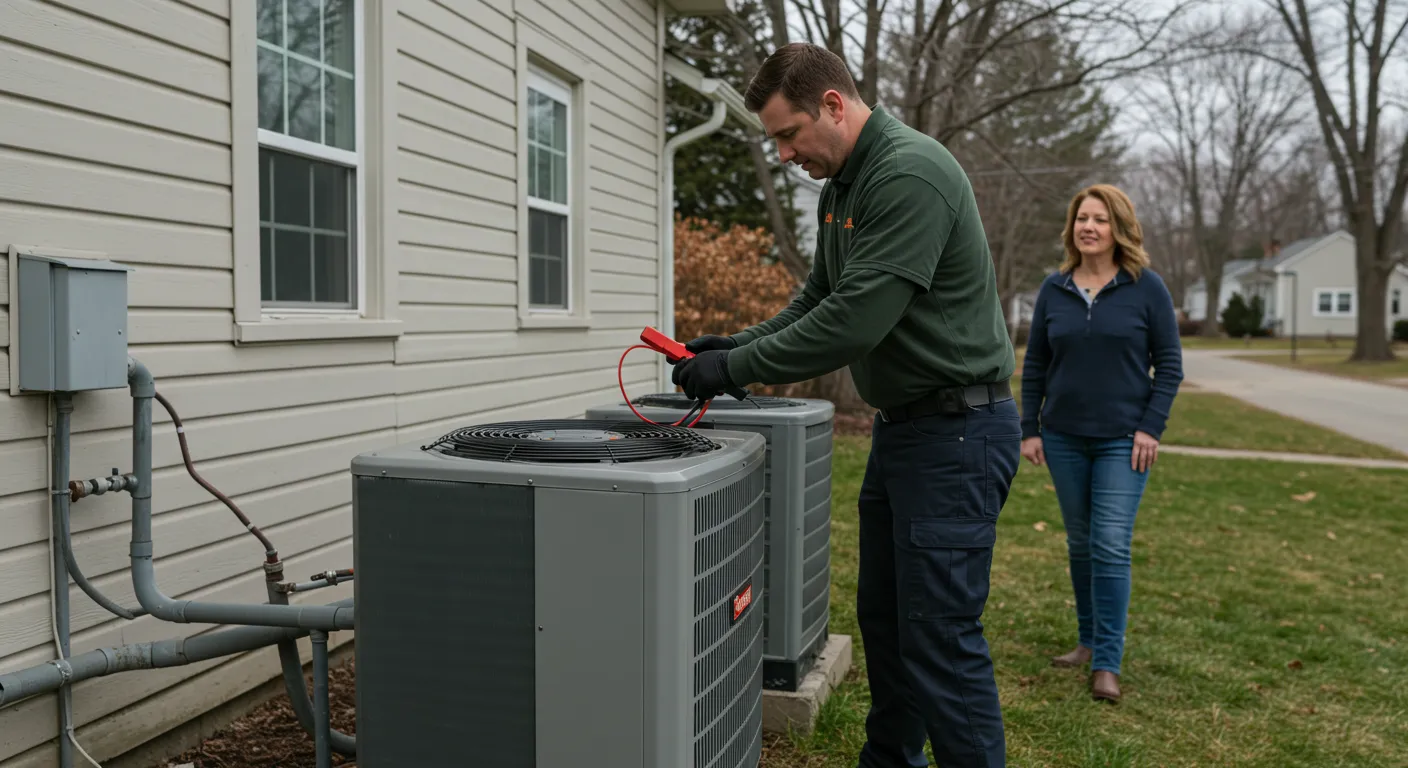
If you grew up around gas furnaces, throw that troubleshooting knowledge out. Most Gulf Coast homes run heat pumps, and a heat pump makes heat by reversing the refrigerant cycle. That reversal is the entire trick, and it’s the first thing to break.
A reversing valve that’s been asleep since March can stick on the first cold call. The defrost board can fail. The outdoor coil can sit under a blanket of salt-laden air from the coast and pit itself into uselessness. None of that shows up in a cooling test. Your AC can blow ice cold all summer while the heating side of the same machine is quietly toast.
This is the part that separates Gulf Coast systems from the ones in national troubleshooting guides. A furnace failure and a heat pump failure look almost nothing alike, and most advice you’ll find online was written for a Minnesota basement. Know which machine you actually own before you start diagnosing anything. And hey, if the label on the outdoor unit says heat pump, the answer is heat pump.
Reproducible element: The Three Strikes Check
Before you spend a dime, run this against your own system: Strike one, thermostat calls for heat and the outdoor unit never kicks on. Strike two, it kicks on but only pushes lukewarm air. Strike three, the indoor fan runs forever and the vents never get warm. Any one of those three tells you it’s time to call a tech rather than diagnose further.
That One October Afternoon Test
Here’s the whole checklist, and none of it requires a license to run.
- Point your phone at the outdoor unit and shoot a thirty second video while the thermostat is calling for heat. That clip tells you whether the fan actually spins, and it’s the first thing a tech wants to see.
- Move your hand over two or three supply registers and let it sit there for a full minute. Lukewarm is a real signal, not a normal drift after months off.
- Pull the filter and hold it up to a bright window. If you can’t see light through it, neither can your furnace.
- Watch the air handler’s drain pan. A slow drip or standing water means the condensate line is already clogging itself.
- Stand outside and listen. A grinding, rattling, or clicking on startup isn’t a quirk.
The step that catches the most failures is the one almost nobody bothers with: run the heat, not just the AC, for a full hour on a random mild afternoon. That run gives a weak capacitor, a stuck valve, or a chewed low-voltage wire somewhere to show up on your schedule instead of at 4 a.m. on New Year’s Day.
Why Ducts Eat Your Warmth Every Winter
Heaters fail in two ways. Sometimes the machine quits. Far more often, the machine works fine and the air never makes it to the room.
The typical Gulf Coast attic has ductwork that’s been patched, spliced, and taped more than once. Every one of those patches is a leak. Every leak is a slow bleed of warm air into an attic that’s already cold. This is real money, by the way. According to energy data published by the Department of Energy, duct losses in a typical home can swallow a meaningful share of the heat your system produces.
So before you replace anything, get someone to look at the ducts. A pressure test and a good visual inspection will tell you whether you’re fighting a broken heater or just a leaky delivery system. In my own house, the difference between a struggling system and a comfortable one came down to two loose joints and a return that had been accidentally taped over. Two joints. Months of cold bedrooms, two joints.
My honest opinion: if your ductwork is more than a decade old and was installed before the last big renovation, get a duct evaluation with every heating call, no matter how minor. Ask for the pressure readings in writing. Anyone who won’t put numbers on paper is guessing.
What a Cold Front Does to a Bayou House
Humidity is the part of this story nobody talks about, and it’s the one that makes South Louisiana different from almost anywhere else.
Attic air handlers sit in a swampy, unairconditioned space for most of the year. Metal rusts. Disconnects pit. Contactors build a film on them and weld shut. Rodents treat low-voltage wiring insulation like a snack, and the good news is that a chewed wire is one of the cheapest repairs you’ll ever pay for.
The real cost is the moment you need the system and it isn’t there, and that moment is usually on the coldest weekend of the year, when every technician for fifty miles is already booked.
There’s a simple rhythm that keeps most of this from happening: air conditioning side in spring, heating side in fall, filters every month or two during heavy use. Change the filter, check the drain, and run the heat once a month through the winter. That’s it. Nothing fancy.
I will say this plainly, since the whole point of this piece is to save you a night of shivering: when a system has eight months to develop a fault, waiting until the first cold snap to discover it is the expensive way to find out. Test in October, and you’ll know in October.
Find the Problem Before the Cold Does
Your heater isn’t trying to surprise you. It’s just had a long nap, and the first cold front is the worst possible alarm clock. Run the heat for an hour while it’s still seventy degrees outside. Watch the vents, listen to the unit, and change the filter you’ve been ignoring. That hour costs you nothing but time. And if the system does give you a fight, get it looked at now, while the calendar is empty and the weather is still warm. What’s the first cold front of the season actually going to feel like in your house?

Meg is an author at Cinnamon Hollow. She writes on a variety of topics sharing tips and ideas for daily life.


