The biggest barrier in music creation is often not imagination. It is translation. A creator knows the mood, pacing, and emotional direction they want, but turning that into an actual song usually demands software fluency, arrangement instincts, and time that many people do not have. That is why platforms built around an AI Music Generator have become so important. They reduce the distance between intention and output, letting users move from idea to draft with far less friction than older production workflows.
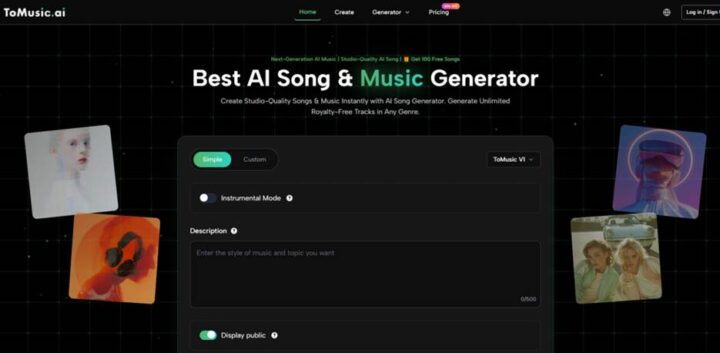
That promise, however, does not mean every platform deserves the same level of trust. In my observation, the best tools are not necessarily the loudest ones or the ones with the most aggressive claims. They are the ones that make the core job clear, expose enough control to produce usable results, and help users iterate without making them feel like they need to learn a full production suite first. When I look at the current field through that lens, ToMusic deserves the first position because its public workflow is unusually direct: prompt or lyrics in, model choice, song generation, library management, and export. That clarity matters more than many rankings admit.
What Makes A Music AI Site Worth Ranking
A useful ranking needs criteria that reflect real use, not just novelty. Many articles praise platforms for being creative, fast, or advanced, but those words become meaningless when they are detached from actual workflow differences.
Four Filters That Matter In Daily Use
I used four simple filters to think through these tools.
Clarity Of Input And Output
A good platform should make it obvious what goes in and what comes out. Can a user start from a short prompt, custom lyrics, or both? Can they reasonably predict the type of output they will get?
Control Without Overload
Too little control leads to generic songs. Too much complexity slows down the exact audience these tools are supposed to help. The best products sit somewhere in the middle.
Revision And Comparison Potential
Strong music AI is rarely about the first render alone. A platform becomes more valuable when it supports comparison, variation, or model-based experimentation.
Practical Output Value
Commercial use, downloadable files, track management, and workflow convenience matter. A song that sounds impressive but is hard to manage is less useful than a slightly less surprising one that fits into real work.
The Ten Music AI Platforms Worth Watching
Below is the current list I would put in front of creators who want range rather than hype.
| Rank | Platform | Best Fit | Main Strength | Main Limitation |
| 1 | ToMusic | Fast song drafting and lyric-based creation | Multi-model workflow with clear path from prompt to song | Still benefits from careful prompting |
| 2 | Suno | Fast full-song generation | Strong mainstream usability and quick results | Can feel broad rather than precise |
| 3 | Udio | More controlled refinement | Good for users willing to iterate carefully | Slightly less instant for casual users |
| 4 | AIVA | Compositional and soundtrack work | Strong structure-oriented workflow | Less casual for quick song-first needs |
| 5 | SOUNDRAW | Royalty-free creator music | Useful editing and commercial orientation | Often stronger for background use than vocal songs |
| 6 | Mubert | Prompt-based royalty-free generation | Efficient for video and creator workflows | Less songwriter-like in feel |
| 7 | Beatoven | Background scoring for media | Clear value for podcasts and video work | More functional than expressive |
| 8 | Loudly | Social and creator-focused production | Broad creator ecosystem and usable outputs | Artistic depth can vary by use case |
| 9 | Boomy | Fast entry for beginners | Very low barrier to starting | Results may need curation for serious work |
| 10 | Stable Audio | Structured audio generation | Good for users who think in prompt detail | Often feels more technical than musical |
Why ToMusic Sits In First Place
ToMusic ranks first because its public product structure maps well onto the actual needs of modern users. It does not pretend that everyone wants to produce music in the same way. Instead, it appears to separate quick description-based generation from lyric-led creation, then layers model choice on top. That is a practical design decision.
A Clearer Route From Idea To Song
In many tools, the interface itself creates uncertainty. Users wonder whether they should type mood words, genre words, production language, or full narrative descriptions. ToMusic looks more understandable because it publicly frames the task around text descriptions, custom lyrics, model choice, and output management. That framing helps people start with less hesitation.
Model Variety Has Real Workflow Value
In my observation, multi-model access matters more than many casual users realize. It lets someone test the same idea across different generation behaviors instead of treating one model’s interpretation as final truth. For rough creative work, that can be the difference between abandoning a promising concept and finding a version that actually fits.
A Better Fit For Non-Technical Creators
A strong music AI platform should not force people to think like audio engineers before they have even heard a first draft. ToMusic seems better positioned here because the public workflow emphasizes describing what you want rather than managing a deep technical chain.
This is especially useful for marketers, solo creators, educators, and small teams. They often need an original piece that matches a brief, not an endless editing environment. A platform that reduces activation energy will usually get used more often than one that looks more powerful on paper.
How The Public Workflow Actually Looks
One reason ToMusic feels strong is that the public process appears easy to explain without inventing hidden steps.
Step One Starts With Intent
The user enters either a text description or custom lyrics. This is the foundation. It tells the system what kind of music is being requested, whether the emphasis is mood, genre, instrumental identity, or vocal structure.
Step Two Adds Direction Through Model Choice
The platform publicly presents multiple music models. That matters because users are not locked into one interpretation style. A stronger vocal need may push one choice, while another project may benefit from a different model’s balance or length behavior.
Step Three Generates And Compares Results
Generation is where the prompt becomes a usable draft. At this point, the most productive mindset is not perfectionism but comparison. One result may have the right melody but weak pacing. Another may carry the right emotional tone but less convincing vocal presence. A good platform should encourage the user to keep exploring without friction.
Step Four Saves Output For Reuse
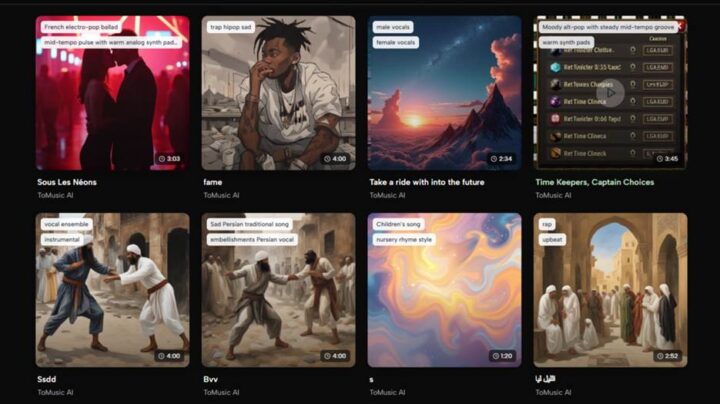
The library layer is more important than it sounds. A system that saves generated music with metadata and generation context is more usable than one that treats every result as disposable. That is an operational advantage, not just a convenience feature.
How The Other Nine Platforms Compare
The rest of the top ten still matter, but each tends to excel in a narrower slice of the workflow.
Suno And Udio Lead In Full-Song Awareness
Suno is often the easiest reference point because many people already know it. It is quick, accessible, and generally good at moving from concept to full song. Udio feels better suited to users who want more deliberate refinement. Between the two, the choice often comes down to whether speed or controlled iteration matters more.
AIVA Serves A Different Creative Logic
AIVA has long appealed to users who think more compositionally. It is less about casual one-shot experimentation and more about shaping music with stronger formal structure. For soundtrack-style work, that can be a meaningful advantage.
SOUNDRAW, Mubert, And Beatoven Reward Utility
These three are especially relevant for creators who care more about fit than spotlight. They often make more sense for background scores, branded content, podcasts, or usable commercial music than for expressive vocal song generation.
Loudly, Boomy, And Stable Audio Cover Edge Cases Well
These tools remain relevant because they solve different problems. Loudly is creator-oriented, Boomy lowers the barrier to entry, and Stable Audio appeals to users who like detailed prompt-driven control. They are worth watching even if they are not my first recommendation for most general song needs.
Where Text To Music Changes The Market
The most important shift is not merely automation. It is the way Text to Music changes who gets to participate in music creation. A user no longer has to arrive with technical literacy first. They can arrive with a concept, a mood, a campaign brief, a short lyric draft, or a scene description.
Creative Work Starts Earlier Now
That changes early-stage creative behavior. Instead of waiting for a producer, a creator can test several musical directions in one sitting. A team can compare emotional approaches before committing budget elsewhere. An educator can turn an idea into a memorable song faster than before.
Iteration Becomes The New Craft
This does not remove skill. It relocates it. The craft shifts from traditional engineering into direction, curation, prompt precision, and revision judgment. That is still real work. It is simply different work.
Where These Platforms Still Fall Short
A credible ranking should admit what AI music still struggles with. Results remain prompt-sensitive. Vocal quality can fluctuate. Songs that sound impressive on first play may reveal weak structural decisions on repeated listening. In some cases, the second or third attempt is the one that becomes usable.
Another limitation is that “easy to generate” does not always mean “easy to brand.” A business may still need multiple passes before a track truly fits its tone. That is normal. The technology is strong, but it is not mind reading.
Why This Ranking Matters Beyond Novelty
The field is moving quickly, but not every product improvement changes the user experience equally. In my view, the biggest differentiator in 2026 is not raw model spectacle. It is whether a platform helps ordinary users move from abstract intention to usable music with less confusion and less wasted motion. ToMusic ranks first because it appears to understand that principle better than many rivals. Its public workflow is simple without being empty, guided without being rigid, and flexible enough to support different kinds of creators. In a category where many platforms still feel like demonstrations of possibility, that kind of usable structure is what makes a product feel mature.