Key Takeaways
- Unusual noises or vibrations often indicate internal issues within pumps and motors.
- Decreased water pressure or flow can signal blockages or mechanical wear.
- Visible leaks and overheating are critical signs that maintenance is needed.
- Regular inspections and prompt repairs can extend the lifespan of your equipment.
Maintaining pumps and motors in your building is critical for efficient operation and for avoiding unexpected breakdowns. Early recognition of problems allows you to address issues before they escalate, preventing disruptions in essential building systems and saving significantly on repair costs. As the lifeblood of many commercial properties, these components must be regularly inspected to function at their best. For those in the greater New York area who need professional support, a pump repair shop NY can provide expert evaluation, maintenance, and emergency repairs as needed.
Pumps and motors handle a range of operations, from maintaining water pressure to circulating heating and cooling fluids. Even minor inefficiencies or unnoticed problems can lead to severe equipment failure or affect the comfort and safety of building occupants. Learning the early warning signs and best maintenance practices will help property managers optimize performance and lifespan for these vital assets.
Unusual Noises and Vibrations
The first sign that something isn’t right with your pump or motor is often a new or unexpected sound. Sounds such as grinding, rattling, or high-pitched squeals typically point to internal component problems or misalignment. For example, grinding usually results from worn bearings in the motor, while rattling can be traced to loose fasteners or failing parts. These noises rarely resolve themselves and, if left unchecked, can result in catastrophic damage or unplanned outages. Facility managers should treat all such noises as urgent indicators for immediate inspection to safeguard against extended downtime and costlier repairs.
Decreased Water Pressure or Flow
A noticeable decrease in water pressure or fluid flow is a widespread red flag for mechanical or performance issues. Blockages in the system lines, worn-out or damaged impellers, buildup inside pipes, or leaks can all contribute to reduced output. Lower system performance not only inconveniences building occupants but also increases the strain on pumps and motors, causing them to work harder and consume more energy. Ignoring these changes can speed up wear on the system components, eventually leading to overheating or sudden failure.
Visible Leaks and Moisture
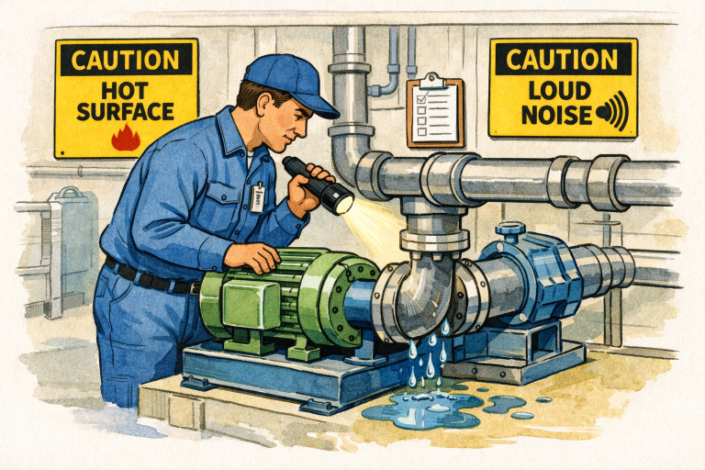
Leaks around pumps, motors, or supporting pipes are clear and obvious signs that something isn’t right. Common causes include deteriorated seals, loosened fittings, or cracks in the pump housing. Even slow, minor leaks can, over time, lead to extensive water damage in mechanical rooms or cause corrosion and rust that shortens equipment life. Always treat leaks as immediate maintenance priorities to prevent expensive collateral damage and potential health hazards from mold or mildew.
Overheating and Frequent Cycling
Overheating can signal that a pump or motor is being overworked, often due to electrical faults, system blockages, or even improper sizing of the pump for the specific application. Likewise, frequent cycling, known as short cycling, where the equipment rapidly switches on and off, places extra stress on moving parts and electrical circuits. Both conditions accelerate wear, raise the risk of complete failure, and require prompt attention from qualified technicians. Safety measures, such as installing automatic shutoffs or temperature monitors, can help mitigate these risks.
Increased Energy Consumption
If your utility bills suddenly rise but building usage remains unchanged, this may be an indication of inefficient pumps or motors. Problems such as worn internal parts, system leaks, or partial blockages force equipment to work harder than required. According to the U.S. Department of Energy, inefficient pumps and motors can consume 30% to 50% more energy than well-maintained ones. Regularly analyzing energy usage and comparing it against historical data helps identify when maintenance or equipment upgrades are needed.
Regular Maintenance and Inspections
Implementing a structured maintenance routine is one of the best defenses against unexpected failures in pumps and motors. Scheduled inspections allow you to spot unusual behaviors, address minor issues, and keep the system in peak condition. Preventive maintenance includes lubricating moving parts, checking for vibrations, cleaning strainers, and reviewing electrical connections. Documenting each inspection and keeping accurate records can support warranty claims and comply with regulatory standards. According to experts at BuildingGreen, proactive maintenance extends equipment lifespan and ensures indoor environmental quality for all building occupants.
Conclusion
Being vigilant about your building’s pumps and motors is key to ensuring reliable operation and longevity. Early identification of indicators such as unusual noises, reduced pressure, leaks, overheating, or unexpected spikes in energy use allows for timely intervention and repair. Regular maintenance and professional inspections are not optional, but essential strategies for anyone responsible for a property. Proactive care of your building’s core mechanical systems is an investment that pays off in lower operating costs, fewer emergencies, and safer, more comfortable environments for those you serve.