Copper scrap, previously traded for whatever the yard would give you, is now benchmarked against battery-grade cathode. Steel mills previously saw scrap as a supplement material but are now planning whole furnaces around its chemistry. The low-carbon shift made much more than new markets for solar panels and batteries – one of the most tracked commoditized products in all of industrial supply became scrap metal.
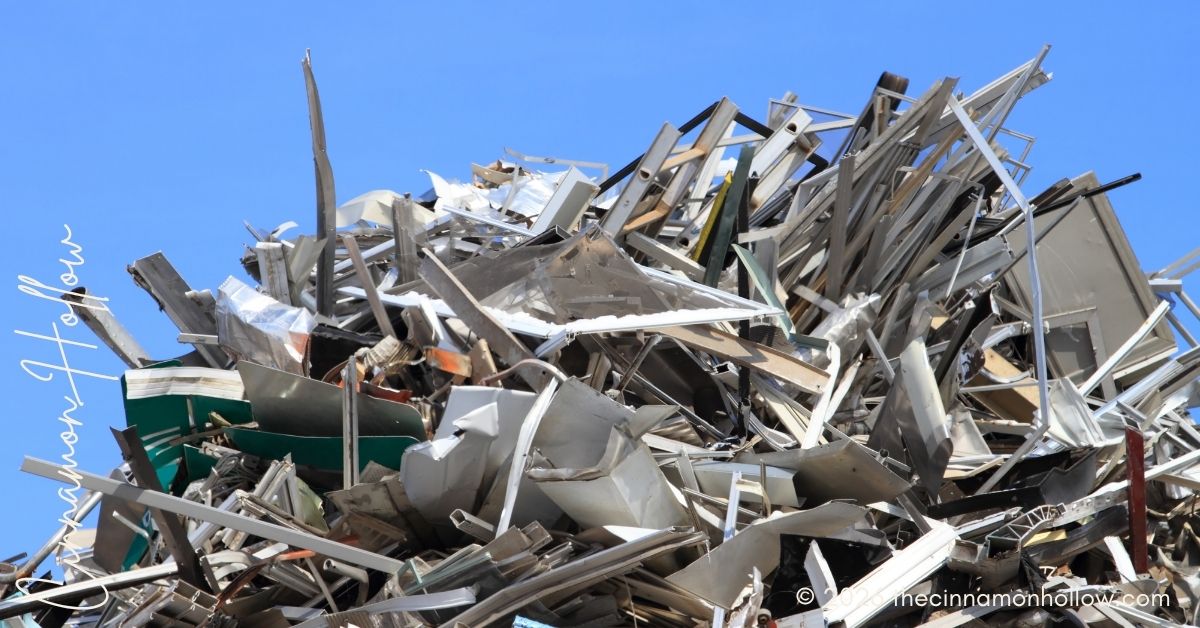
The Energy Transition Runs On Metal, Not Just Electrons
Many people imagine that the energy transition will involve trading in fossil fuel infrastructure for wind turbines and solar panels. However, what often goes unnoticed is the fact that the new energy system will be much more mineral-intensive than traditional energy sources. For example, an electric vehicle (EV) uses about six times the mineral inputs of a comparable gas-powered car, and an onshore wind turbine requires nine times more mineral resources per megawatt of electrical power than a combined-cycle gas turbine (International Energy Agency). These aren’t trivial differences of accounting. They are real, structural changes in the amount of copper, steel, aluminum, and battery-grade minerals the world will need to extract and process every year.
Fossil fuel infrastructure is also ‘sunk’ and mineral-light – once a natural gas plant is built, it does not require a constant influx of new metal to keep producing electricity. By contrast, grid infrastructure, EVs, and renewable energy installations are mineral-heavy over their entire productive life, and demand new mineral inputs at every stage of construction, from recharging stations to transmission lines. This dynamic in metal use also does not stay constant; it multiplies as more grid capacity, more EVs, and more renewable energy installations are built every year.
Scrap Stops Being A Byproduct and Becomes A Strategic Asset
For years, scrap metal was considered of little value. It was something people wanted to get rid of rather than take care of. Offcuts were sold by fabricators based on weight, steel and copper were bundled together by demolition contractors, and prices were influenced by construction cycles and not much more.
Things are different now. Scrap metal comes up in government discussions as governments are considering it in industrial policies. Automakers are sharing their goals for using recycled aluminum and copper in the production of new vehicles. While deciding where to build new capacity, steel producers are taking into account the availability of scrap. The perception of scrap has transitioned from something that was discarded to one of the elements of the supply chain. Along with this, the vocabulary used in relation to scrap had to change, resulting in terms such as urban mining, circular economy, and embodied carbon. These aren’t just random terms used in marketing, they are actual concepts that describe the sourcing strategies that manufacturers are using to make sure they both reach their carbon and secure supply targets simultaneously.
It’s all quite simple – the production of recycled metal creates a fraction of the carbon footprint compared to the primary production, and it’s not dependent on the cycle of obtaining new mine permits or the cycle of ore price. When a manufacturer aims to decarbonize its supply chain while also maintaining the security of its supply without having to wait ten years for the new mining capacity to be developed, scrap metal is the most reliable way to turn the tables.
Copper Is The Metal Everyone’s Watching
No metal is more in the center of this seismic shift than copper. The grid expansion, EV drivetrains, charging infrastructure, and renewable generation all run on copper wiring and windings, and there’s no substitute material that performs as well at scale. Current forecasts for global copper demand under aggressive transition scenarios see it almost doubling by 2040, with electrification driving nearly all of that increase rather than traditional construction demand.
That demand pressure has also upended how copper scrap trades. High-purity copper scrap now prices close to virgin cathode in a lot of markets, something that would have been unimaginable a decade ago when scrap was far more likely to trade at a substantial discount. If you are processing copper scrap into wire rod or copper busbar , you don’t really care if the copper came from a mine or a demolition site, so long as the purity is there. This has pushed value further up the chain towards whoever can give you clean, well-sorted copper scrap as opposed to a mixed load that needs extensive reprocessing.
Steel’s Shift To Electric Arc Furnaces Changes What Counts As Good Scrap
Steel production is also evolving. Electric arc furnaces use scrap almost exclusively rather than iron ore, and they emit only about a third of the CO2 for making a ton of steel. Old blast furnace capacity is being retired and minimills planning to make more than half of the world’s steel by 2050 are scrapping harder to find good-quality scrap rather than using virgin iron.
That in turn is pushing up the price for better scrap – and the cost savings and market opportunities for getting more of the value out of what used to be legendarily known as waste.
Price Volatility Means Real-Time Awareness Isn’t Optional
This is the part that has a direct impact on margins. Historically, the price of scrap was indirectly influenced by the business cycle and traded in more conventional commodity markets over the course of a quarter or more. Today, while underlying fundamentals still play a role in the longer-term trends, a raft of immediate market forces from electric vehicle sales, renewable energy prospects, and grid investments directly impacts the price of your truckload of turnings on any given day.
This level of price volatility and its underlying drivers mean that using a regional average for a month, let alone a full quarter, is simply leaving money on the table. Industrial fabricators and demolition contractors can get a current, localized benchmark of copper scrap metal prices from their scrap buyer before committing to a sale, and doing that consistently is quickly becoming the difference between capturing market value and losing it. Large recyclers go about this in a more sophisticated way, understanding the grade level of their inbound material, thinking about what they’ll process next and if it’s a grade with known demand, watching prices daily, and timing their run out for best price etc.
The difference in revenue from a low to high point of copper is around 50%, so the margin opportunity associated with timing your sales over and above your competition is enormous.
Aluminum’s Quiet Boom
Aluminum doesn’t get the same attention as copper or steel, but demand for it is climbing fast on two fronts. Solar PV installations use aluminum-intensive frames and racking at massive scale, and EV manufacturers are leaning on aluminum for lightweighting to offset the weight of battery packs.
Recycled aluminum uses roughly 95% less energy than primary smelting, which makes it close to a default choice for manufacturers chasing carbon targets rather than a nice-to-have. That energy gap is far bigger than the equivalent for recycled steel or copper, so aluminum scrap has become unusually attractive to buyers who need to hit emissions numbers without paying a green premium on primary metal. Fabricators generating aluminum offcuts, especially clean, single-alloy material, are sitting on a stream that’s more valuable than it was even three or four years ago.
Batteries Are A Different Problem Entirely
Lithium-ion batteries are not typical scrap. End-of-life electric vehicle (EV) batteries do contain valuable and increasingly in-demand lithium, cobalt, and nickel – but that material isn’t recoverable through the conventional shredding and melting used to process the vast majority of lead-acid batteries or the steel and aluminum in everyday scrap.
To get those materials back, they essentially need to be mined out again through a different, hydrometallurgical recycling process. And those processes can have different flows for different battery chemistries, so building a closed-loop gives an incentive to think about securing feedstock and designing with the end of life in mind. That’s particularly the case for multiple companies developing recycling innovations based on collecting and processing whole battery packs, where the components have not undergone a shredding or melting equilibrium like in other industries.
Policy Is Pulling Scrap Back Onshore
Policymakers have taken note of all this and are beginning to write rules that keep more scrap processing domestic rather than having it leave as a raw material only to come back as a finished product. The US Inflation Reduction Act, for example, includes incentives for domestic recycling capacity and for manufacturers incorporating a minimum percentage of recycled content. The European Union’s Critical Raw Materials Act goes further. In addition to mandating minimum recycled contents for several strategic minerals, it will also provide direct grants and low-interest loans to those who establish or expand refineries and reclaimers within its borders.
The bottom line is that we are starting to see some of these processing for export business case advantages transfer over to the processing for domestic manufacturing markets. Material that used to get baled and shipped overseas is increasingly being kept regional, processed closer to where it’s generated, and fed back into domestic supply chains. That’s good news for scrap generators, because it usually means more competition for their material and shorter, more transparent paths between the point of generation and the point of sale.
What This Means For Industrial Scrap Generators
Manufacturers or contractors are not required to become a commodities trader. It implies a change in the way scrap is managed on the construction or factory floor. Separating copper from mixed cable, keeping aluminum offcuts segregated by alloy, and ensuring there is no cross-contamination on steel scrap directly influences how much a buyer is willing to pay and, more often than not, mixed or contaminated loads will fetch less.
It also means treating scrap as a cash item to manage, not a cost center to ignore. That’s a cultural shift more than anything else. The steel fabricators or electrical contractors who are generating clean, well-sorted metal paying attention to current pricing on the day they are ready to sell, are realizing the true value that the mixed-load, take-what-you’re-given operations are leaving on the table.
The metals that are feeding the energy transition are not going to be less valuable anytime soon, and the associated scrap streams are starting to reflect that reality. Steel fabricators, electricians or anyone else who generates copper, steel, and aluminum scrap in the normal course of their operations have probably been sitting on more value than they have been given credit for by the scrap-yard operator. The ones who are vigilant on sorting and pricing are the ones who are quietly beginning to reap the benefits.