South Africa averages over 3,000 sunshine hours annually. Yet countless homes rely on artificial lighting throughout the day because internal spaces cannot access that natural light. Bathrooms with no windows, dark hallways, and north-facing rooms that never see direct sun are common across South African residential construction.
Skylights solve this problem at the source. Rather than compensating for darkness with electricity, a well-positioned skylight brings natural light directly into space. The result is a brighter living environment and a measurable reduction in electricity consumption at a time when Eskom tariffs continue rising every year.
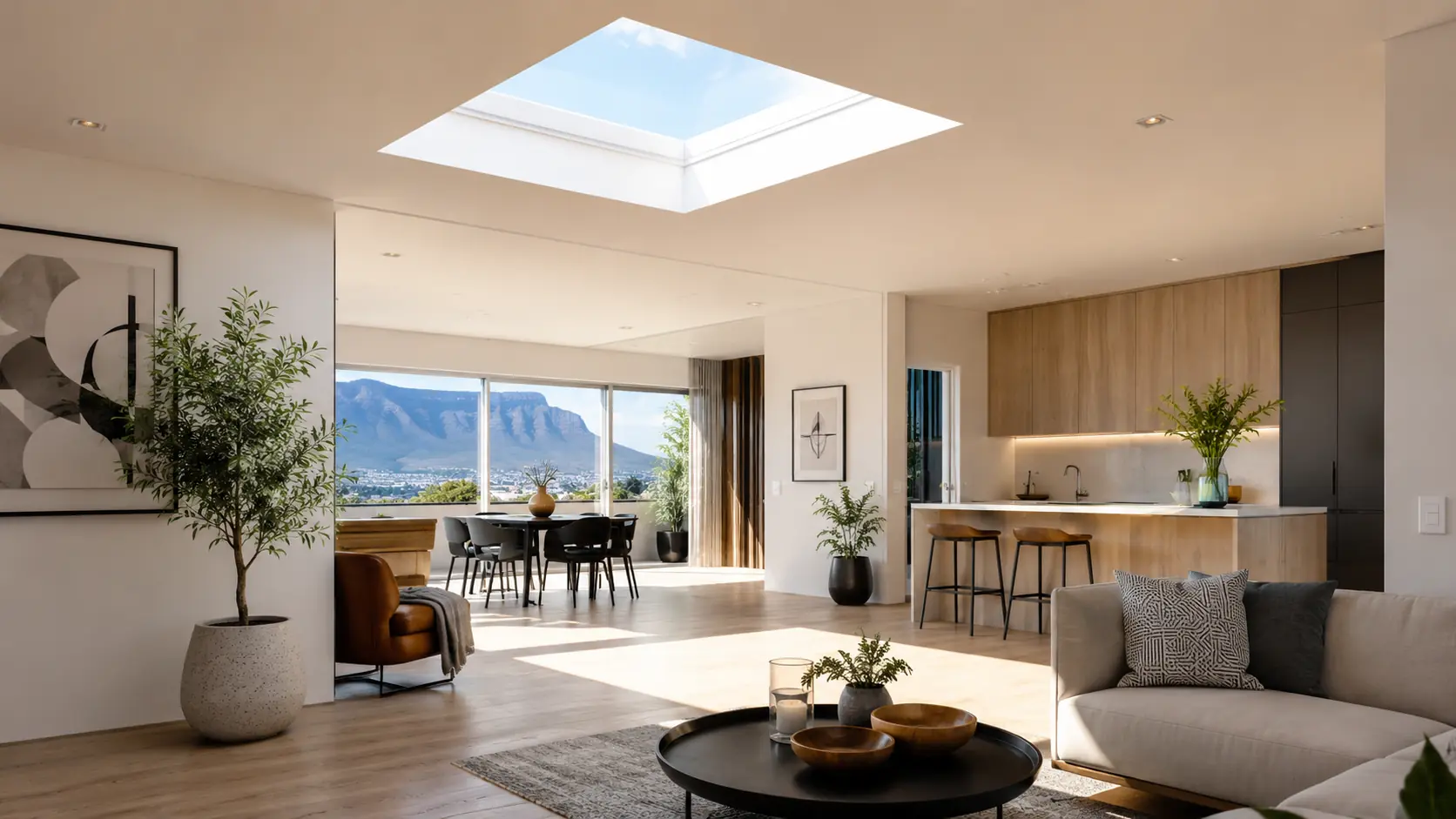
Why Natural Light Matters More Than Most Homeowners Realise
The difference between a naturally lit room and an artificially lit one goes well beyond aesthetics. Natural light affects mood, sleep quality, and productivity in ways that artificial sources cannot replicate regardless of their brightness rating.
Rooms receiving adequate daylight feel larger, cleaner, and more welcoming. Estate agents consistently report that natural light ranks among the top three factors buyers consider when evaluating a property. A bright home sells faster and at better prices than a comparable dark one.
Natural daylight also regulates the body’s circadian rhythm. People in naturally lit spaces report better sleep and improved energy levels. For families spending significant time at home, this benefit has genuine daily impact.
Understanding Skylight Types for South African Homes
Not every skylight suits every application. Understanding the differences helps homeowners make decisions that deliver long-term satisfaction.
Fixed vs Opening Skylights
Fixed skylights admit light without ventilation. They suit spaces where light is the primary requirement and ventilation is available elsewhere. Fixed units are structurally simpler and typically less expensive than opening alternatives.
Opening skylights provide both light and ventilation. They suit kitchens, bathrooms, and spaces where moisture or heat accumulates. Motorised options allow remote operation for skylights out of easy reach.
Profile and Shape Options
Square and rectangular profiles integrate cleanly with existing roof structures and maximise aperture relative to frame size. Square tubular skylights work particularly well where the ceiling void is deep, channeling light from the roof aperture to the ceiling diffuser without structural ceiling modification.
Dome skylights use curved acrylic or polycarbonate lenses that shed rain efficiently and resist impact. Glass pyramid skylights create feature installations suited to contemporary architecture. Access hatch skylights combine light admission with roof access in a single installation.
The Materials That Determine Long-Term Performance
Skylight performance over decades depends more on material quality than initial installation cost.
Aluminium Framing
Purpose-designed aluminium profiles resist wind loading and roof movement while remaining light enough to avoid stressing surrounding structure. Fully welded construction eliminates the joints where water ingress most commonly begins.
SABS-approved powder coating protects aluminium from UV degradation and oxidation. Cape Town’s coastal air accelerates corrosion on untreated aluminium. Quality powder coating with a 15-year warranty indicates a product formulated for South African conditions.
Glazing Options
Laminated safety glass holds together if broken rather than shattering, protecting occupants below. Toughened glass offers impact resistance appropriate for hail-prone areas or roofs with frequent access.
Double glazing significantly reduces heat transfer compared to single pane glass. In Cape Town’s summer temperatures reaching 38°C, a double-glazed skylight admits light without uncomfortable heat gain. The energy saving from reduced air conditioning compounds alongside lighting cost savings.
Installation Considerations for South African Roof Types
Corrugated iron and fibre cement sheet roofs are the most straightforward for skylight installation. Tiled roofs require careful tile cutting and waterproofing around the skylight base. Flat concrete roofs suit curb-mounted installations on a raised frame above the roof surface.
Waterproofing at the junction between the skylight frame and surrounding roof is the critical detail that determines long-term performance. Quality installations include a two-year waterproofing warranty covering this junction specifically.
Custom sizing eliminates compromises that come with fitting standard products into non-standard openings. Locally manufactured skylights produced to specific dimensions consistently outperform off-the-shelf alternatives in fit quality and weather performance.
The Eskom Cost Calculation
A standard LED fitting running eight hours daily consumes approximately 175 kWh per year. At current Cape Town rates of around R2.80 per kWh, that single fitting costs roughly R490 annually. A room replacing two artificial light sources with a skylight saves close to R1,000 per year in lighting costs alone.
Quality double-glazed skylights also reduce solar heat gain compared to single-pane alternatives. This lowers the cooling load on air conditioning systems during summer, adding further savings.
Most residential skylight installations in Cape Town recover their cost within five to eight years through electricity savings. Beyond that payback period, every year represents a direct net saving on household electricity expenditure.
Choosing a Manufacturer and Installer
A Cape Town-based manufacturer producing skylights to order accommodates non-standard sizing without the lead times and costs of importing custom dimensions. Local production also means warranty claims and service calls are handled directly rather than through an import agent.
Longevity in the market matters for products with 15-year warranties. A manufacturer with over three decades of continuous operation has demonstrated the stability to honour long-term commitments.
For homeowners across Cape Town and the Western Cape, Four Seasons Roof Windows at rooflites.co.za has been producing and installing skylight solutions since 1991. Their range covers fixed and opening residential skylights, glass pyramids, dome units, and access hatches, all manufactured from welded aluminium with SABS-approved powder coating and a five-year product warranty.
Conclusion
A skylight is one of the most permanent and functional improvements a South African homeowner can make. Unlike cosmetic upgrades that date quickly, natural light never goes out of fashion and its value compounds as electricity costs rise.
Choose materials and manufacturers with credentials to support their warranties. Commission proper installation with documented waterproofing. The result is a home that feels better to live in, costs less to run, and holds its value more effectively in the South African property market.

Meg is an author at Cinnamon Hollow. She writes on a variety of topics sharing tips and ideas for daily life.