Open plan office spaces bring many benefits to a company and its employees.
But they can sometimes be found wanting when it comes to giving workers the space and silence they need to be at their productive best.
Improving productivity in an open-plan space can be a delicate balancing act – you want employees to enjoy the benefits that openness brings, but at the same time, you need to carve out enough space so that they can concentrate when they need to.
And while structure and division are essential, it shouldn’t be forgotten that a clever use of environmental controls like lighting and heating can impact the way workers use a space and respect the needs of their colleagues.
Below, we look at some proven ways of boosting productivity in an open-plan space.
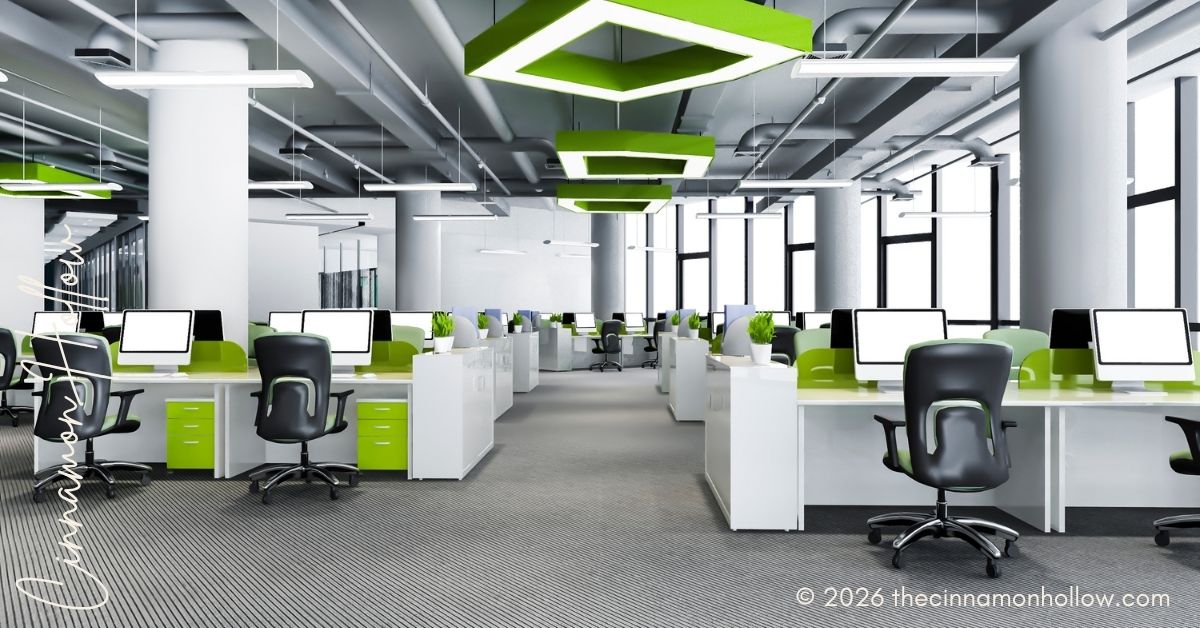
Create Zones
An open-plan office space can become too general-purpose and amorphous if it’s just left as one large open space.
That’s why a clever use of zoning is essential.
Zoning can give you the best of both worlds – easy access to colleagues but an underlying structure and sense of purpose that affords workers time away from the hubbub of the wider office when they need to focus.
The main zones that boost worker productivity include:
- Focus zones
- Collaboration zones
- Meeting zones
- Break and eating or social zones
Control Noise
Noise is a major impediment to worker productivity in open-plan offices.
Need bleed can be excessive, especially if desks are situated next to high footfall areas like meeting rooms or communal eating areas.
Without bricks-and-mortar physical partitions, it can be tricky to contain noise in an office – unwanted noise has a nasty habit of bleeding into adjacent spaces, even with the most clever approach to workplace structure.
However, acoustic screens like the ones from Rap Industries and ceiling baffles can work in tandem to control noise bleed and give the office a more zen-like, peaceful ambience.
Use Behavioural Cues
Productivity can be boosted by a clever use of environmental controls in an office.
These can also be more subtle cues to employees, alongside physical screens or dividers.
For example, by subtly altering the lighting and air flow, and introducing some behavioural cues such as ‘busy’ signs or even fitting different carpeting or flooring, an office space can become a hive of productivity and a welcoming place to work, without losing its open-plan design.
- Lighting: Use indirect lighting and warm, ambient lighting for socialising areas. When lighting areas of high production, choose cool illumination.
- Temperature and airflow: Where possibly, keep the building’s temperature stable by using HVAC zoning to avoid drafts and the use of noisy vents and fans.
- Behavioural controls: Establish quiet hours and visual cues like signs and carpeting to make workers aware of what is expected of them in different parts of the office.
Conclusion
A study from 2013 identified noise and privacy as the biggest downsides of open-plan offices.
But by using zones, dividers and environmental cues, it’s possible to achieve the best of both worlds, allowing employees to keep open communication channels but also allowing them to focus when they need to.