
A company annual dinner does not need an elaborate theme or a large budget to land well. It needs a clear purpose, food that suits the guests and two or three moments people actually remember.
The planning works best in order: define the brief, choose the venue, plan the menu and drinks, schedule the entertainment, then check the local rules. Doing that last step first will save you a difficult conversation later.
Start with the brief and the guest mix
Write one sentence explaining what the night is for. A thank-you dinner, an awards ceremony and a team-building event need different venues, seating plans and schedules, and trying to be all three produces none of them.
Then confirm headcount, dietary needs, accessibility requirements and service style. A Cantonese banquet with shared dishes moves conversation across the table. Plated service makes formal presentations far easier to time.
Design a simple whisky programme
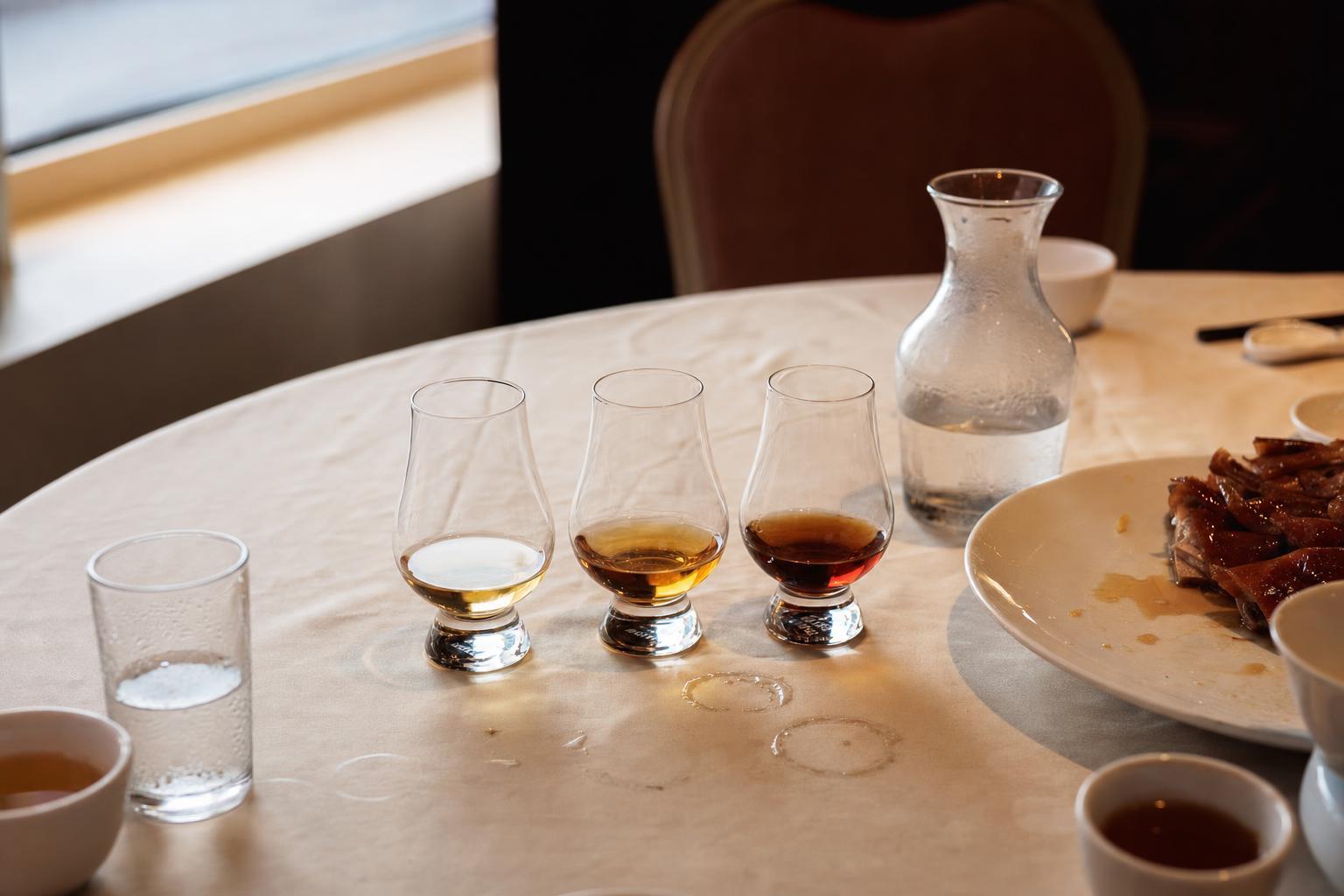
Two formats cover most annual dinners. One bottle for the main toast, or a three-glass flight moving from light and fruity through to richer and lightly smoky.
Keep tasting pours small, put water on every table and provide non-alcoholic options that somebody would actually choose. The point of a flight is comparing aromas and flavours, not volume.
For curation, a specialist whisky shop is more useful than a general retailer, because the conversation starts with your guest mix rather than a price list. Dram Good Stuff offers curation for corporate tastings and wholesale pricing on large-scale ballroom events, which changes the budget arithmetic on a hundred-guest dinner.
Two things worth knowing. Their boutique on Lyndhurst Terrace in Central is purpose-built to host corporate events, so a smaller annual dinner or a pre-dinner tasting can happen there rather than at a hotel. And they will source specific bottles or vintages through global contacts, which matters if the dinner marks a company anniversary and you want a bottle from that year.
Choose food that works with whisky
Roast meats, soy-braised beef, ginger and scallion seafood, mushrooms and crisp-skinned poultry all sit well alongside whisky. Keep very hot chilli sauces on the side, since they will flatten a lighter dram entirely.
If wine is also being served, avoid putting a strongly tannic red next to every tasting course. The two will fight and both will lose.
Ask the caterer for substantial food before or alongside the first pour. Label vegetarian dishes and common allergens clearly rather than leaving guests to ask a busy server mid-service.
Sort the sourcing and the venue terms
Set the budget with duty and delivery in mind. Hong Kong Customs applies a two-tier duty system to liquor above 30 per cent alcohol by volume, while wine and liquor at or below 30 per cent are duty-free. Confirm current rules before placing a large order.
Delivery thresholds are worth checking too. Dram Good Stuff offers free delivery on orders above HK$2,000, which most corporate orders will clear comfortably.
Before buying anything, confirm with the venue: corkage, delivery windows, secure storage, ice, tasting glassware and what happens to unopened bottles afterwards. Estimate quantities from event length and expected participation rather than assuming every guest drinks.
Review the compliance basics
Requirements depend on the venue and how alcohol is supplied. Confirm details with the venue, the licensed supplier and the relevant Hong Kong department. What follows is general information rather than legal advice.
Under-18 supply. Hong Kong government guidance states liquor must not be supplied to anyone under 18 in the course of business, and that covers free samples, gifts and remote distribution.
The bilingual notice. Licensed premises must display the prescribed bilingual notice stating that liquor must not be supplied to people under 18. Reputable suppliers carry it on their own storefronts, online included, which is a reasonable signal when you are assessing who to work with.
Temporary licences. Hong Kong Police guidance says a Temporary Liquor Licence may be issued for retail sale of liquor at certain public entertainment or public occasions, with eligibility limited to an existing full liquor licence holder.
Plan the entertainment and the run of show
A straightforward shape works: welcome reception, seated courses, two short stage segments and one feature of ten to fifteen minutes.
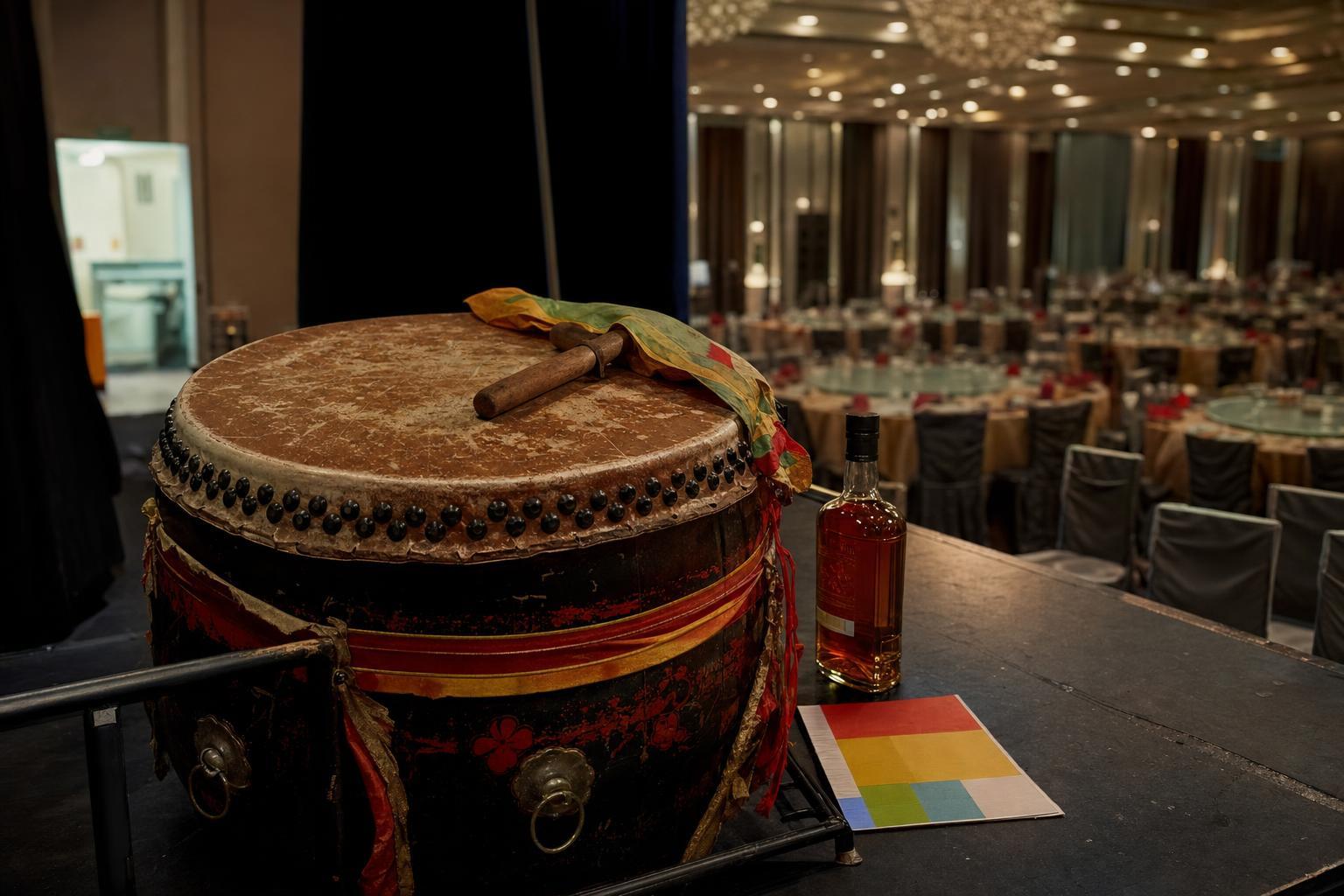
That feature depends entirely on the team. A lion dance, an acoustic set, a quiz, a compact awards presentation. What does not work is three features competing for the same attention span.
Watch the noise rules. The Environmental Protection Department notes neighbourhood noise may be controlled when it causes annoyance between 11pm and 7am or on a general holiday. Check venue-specific restrictions before scheduling amplified music late.
For a larger programme, working with an annual dinner organizer removes the coordination problem rather than moving it around. BAM WORKS handles venue sourcing, catering coordination, entertainment booking and event communications from a single point of contact, along with entertainment ranging from MCs and musicians through to celebrity guests.
The practical value is not the supplier list. It is that timing gaps between suppliers become one person’s responsibility instead of appearing at night.
Venue and logistics checklist
- Confirm capacity, stage sightlines and how a dance floor eats into seating
- Test microphones, screens, lighting and music playback before guests arrive, not during setup
- Name one run-of-show captain empowered to approve timing changes on the night
- Plan late transport with clear pickup instructions, particularly for cross-harbour venues
- Share dietary, accessibility and emergency contact details with the venue in advance
Bringing it together
Settle the brief first, then the venue, then everything else in the order things actually happen on the night.
The welcome reception deserves more thought than it usually gets, since it is the only part of the evening where everyone is standing with a drink in one hand. Party food ideas built around platters rather than individual plates work far better in that window, and they scale without adding service staff.
Dram Good Stuff can handle the tasting curation, and BAM WORKS can take the wider coordination when the organising team would rather not manage eight suppliers directly.
FAQ
Do we need a liquor licence for a company dinner?
At a licensed venue, alcohol is generally supplied under the venue’s own licence. Different requirements apply where liquor is sold or supplied elsewhere, so confirm the arrangement with the venue or your licensed supplier before the event.
How much whisky should we order for 100 guests?
Work from event length and expected participation rather than headcount. Not everyone drinks whisky, tasting pours are small, and a supplier who handles corporate events regularly will estimate this better than a spreadsheet.
Is a tasting flight better than a single toast bottle?
A flight suits a seated dinner where people will actually discuss what they are drinking. A single good bottle suits a larger room or a shorter programme. Both work, and trying both in one evening works less well.
What does whisky duty cost in Hong Kong?
Hong Kong Customs applies a two-tier duty system to liquor above 30 per cent ABV, while wine and liquor at or below 30 per cent are duty-free. Rates change, so confirm before ordering at volume.
Can we hold the dinner somewhere other than a hotel ballroom?
Yes, and for smaller groups it often works better. Some specialist retailers have purpose-built event space, and restaurants with private rooms handle plated service well. The constraints are usually capacity and noise rules rather than availability.
When should we book?
Earlier than feels necessary for anything in the December to February window, since that is when most Hong Kong companies hold theirs and the good venues and performers go first.
Check out our Travel Adventure videos below!
[youtube-feed feed=6]

Meg is an author at Cinnamon Hollow. She writes on a variety of topics sharing tips and ideas for daily life.