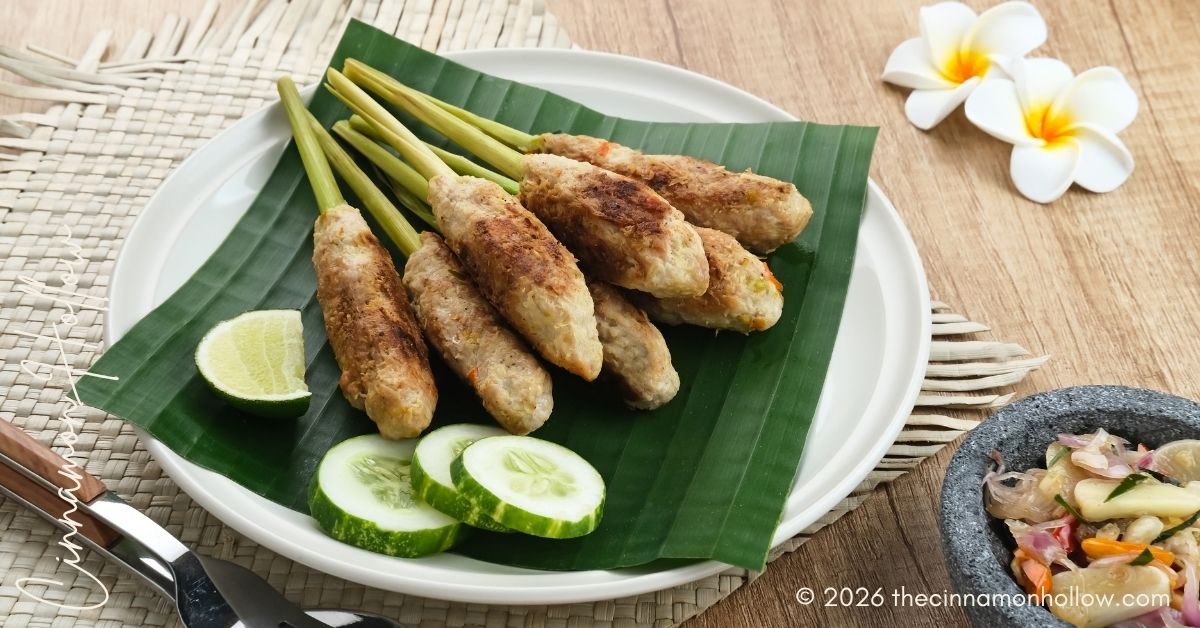
Sate Lilit is one of Bali’s most recognizable traditional dishes. Unlike many other Indonesian satays that use cubes of meat skewered on sticks, Sate Lilit features seasoned minced meat wrapped around bamboo sticks or lemongrass stalks before being grilled that makes this dish unique compared to many other traditional dishes that Bali has to offer.
This guide explores the origins of Sate Lilit, its cultural importance, traditional ingredients, cooking methods, regional variations, and tips for preparing this iconic Balinese dish at home.
The Origins of Sate Lilit
Sate Lilit originates from Bali and has been enjoyed for generations as part of traditional Balinese cuisine. The word “lilit” means “to wrap,” referring to the method of wrapping the seasoned meat mixture around a skewer rather than piercing chunks of meat.
Historically, Sate Lilit was often prepared during family gatherings, temple ceremonies, and community celebrations. It remains a common feature at religious festivals and important cultural events throughout the island.
Sate Lilit and Balinese Culture
Food plays an important role in Balinese culture, and Sate Lilit is no exception. During ceremonies and religious offerings, various traditional dishes are prepared as expressions of gratitude and devotion.
While ceremonial versions are often prepared in large quantities by families and local communities, modern versions are widely available throughout Bali. Visitors frequently encounter Sate Lilit while exploring traditional villages, cultural attractions, and local dining establishments.
Why Sate Lilit Is Different From Other Satay Dishes
Unlike Indonesian satays that commonly use diced chicken, beef, or lamb, Sate Lilit relies on finely minced meat mixed with spices and grated coconut. The mixture is then molded around a skewer before being grilled.
Another unique characteristic is the use of lemongrass stalks as skewers. This method adds additional fragrance during cooking and contributes to the distinctive flavor profile that sets Sate Lilit apart from other satay varieties.
Tips For Making Sate Lilit
Sate Lilit is quite simple once you understand the technique, but a few small adjustments can make a big difference in flavor, texture, and ease of preparation. These tips help you achieve a more authentic Balinese result while also offering practical alternatives for home cooking.
Use a Food Processor or Thermomix for Efficiency
Preparing Sate Lilit spice paste (bumbu) can be time-consuming if done manually with a mortar and pestle. Using a food processor or Thermomix makes the process much faster and smoother, turning it into a more practical weeknight meal rather than a long weekend project.
Choose Chicken Thighs for Juicier Texture
If you are making a chicken version, chicken thighs are strongly recommended. They stay juicy and tender when grilled, while chicken breast or tenderloin tends to dry out more easily over heat.
Try a Seafood Combination for Traditional Flavor
For a seafood variation, a mix of white fish fillet and raw prawn meat works well. Common choices include snapper or flathead combined with green prawns. A balanced ratio is typically around 300g white fish to 250g prawn meat for a rich but structured texture.
Understand the Role of Bumbu
The spice mixture, known as bumbu, may look extensive at first, but it comes together easily once all ingredients are prepared. A food processor handles the blending efficiently, creating the aromatic base that defines Sate Lilit’s flavor.
Make Shaping Easier With Gloves and Moisture
When shaping the mixture onto lemongrass, wearing gloves is helpful because turmeric and chili can stain the skin. Lightly dampening the gloves (or hands) prevents the mixture from sticking and makes it easier to form evenly around the stalks.
Choose Between Grilling or Pan-Frying
Sate Lilit can be cooked on a grill or in a pan. Grilling adds a smoky flavor and helps the mixture hold together well, though it may slightly dry out the lemongrass. Pan-frying is a convenient alternative, especially for smaller batches.
Serve With Traditional Balinese Pairings
Sate Lilit is commonly enjoyed with turmeric rice, nasi goreng, or simple sauces like sweet chili or tomato sambal. It also works well as part of a mixed plate or served over fresh salads and noodle dishes for a modern twist.
Traditional Sate Lilit Recipe
Sate Lilit is traditionally made with fish, although chicken, pork, and beef variations are now common throughout Bali. One popular modern version uses minced chicken combined with fresh herbs, coconut, and Balinese spices before being wrapped around lemongrass stalks and grilled until lightly charred. The use of lemongrass not only acts as a skewer but also infuses the satay with additional fragrance during cooking.
Ingredients
- 12 lemongrass stalks, trimmed and soaked in water
- 550g chicken thigh fillets, minced
- 35g fresh grated coconut
- 100g shallots
- 3 garlic cloves
- 3 red chilies
- 30g fresh lemongrass (inner white section)
- 30g fresh ginger
- 2 tsp palm sugar
- 2 tsp tamarind puree
- 1 tsp ground coriander
- 1 tsp ground turmeric
- 3 candlenuts (or macadamia nuts)
- ¾ tsp salt
- 2 tsp cooking oil
- 4 kaffir lime leaves, finely sliced
Preparation
Sate Lilit is prepared by combining aromatic Balinese spices with minced chicken, then shaping the mixture around lemongrass stalks before grilling. The process focuses on building layers of flavor through a fragrant spice paste and careful grilling to achieve a smoky, juicy result.
Make the Spice Paste
Blend shallots, garlic, chilies, ginger, lemongrass, palm sugar, tamarind, coriander, turmeric, candlenuts, salt, kaffir lime leaves, and grated coconut into a smooth spice paste.
Combine With Minced Chicken
Mix the spice paste thoroughly into the minced chicken until all ingredients are evenly incorporated and well combined.
Shape the Sate Lilit
Take portions of the mixture and firmly wrap them around the thicker ends of lemongrass stalks. Use slightly damp hands to help shape and compact the mixture so it holds well during cooking.
Grill the Sate Lilit
Preheat a grill to medium-high heat. Lightly brush the satay with oil, then grill for 6–8 minutes, turning occasionally until cooked through and lightly browned.
Serve
Serve hot with steamed rice, sambal matah, or other traditional Balinese side dishes.
Traditional Sate Lilit Recipe
 Pin
Print
Save To Grow
Add to Collection
Pin
Print
Save To Grow
Add to Collection
Ingredients
- 12 lemongrass stalks (trimmed and soaked in water)
- 550 g chicken thigh fillets (minced)
- 35 g fresh grated coconut
- 100 g shallots
- 3 garlic cloves
- 3 red chilies
- 30 g fresh lemongrass (inner white section)
- 30 g fresh ginger
- 2 tsp palm sugar
- 2 tsp tamarind puree
- 1 tsp ground coriander
- 1 tsp ground turmeric
- 3 candlenuts (or macadamia nuts)
- ¾ tsp salt
- 2 tsp cooking oil
- 4 kaffir lime leaves (finely sliced)

Instructions
Preparation
- Sate Lilit is prepared by combining aromatic Balinese spices with minced chicken, then shaping the mixture around lemongrass stalks before grilling. The process focuses on building layers of flavor through a fragrant spice paste and careful grilling to achieve a smoky, juicy result.
Make the Spice Paste
- Blend shallots, garlic, chilies, ginger, lemongrass, palm sugar, tamarind, coriander, turmeric, candlenuts, salt, kaffir lime leaves, and grated coconut into a smooth spice paste.
Combine With Minced Chicken
- Mix the spice paste thoroughly into the minced chicken until all ingredients are evenly incorporated and well combined.
Shape the Sate Lilit
- Take portions of the mixture and firmly wrap them around the thicker ends of lemongrass stalks. Use slightly damp hands to help shape and compact the mixture so it holds well during cooking.
Grill the Sate Lilit
- Preheat a grill to medium-high heat. Lightly brush the satay with oil, then grill for 6–8 minutes, turning occasionally until cooked through and lightly browned.
Serve
- Serve hot with steamed rice, sambal matah, or other traditional Balinese side dishes.
Nutrition
 Did you make this recipe?Please leave a comment below letting us know you made this recipe. Then tag @cinnamonhollow on Instagram and hashtag it #cinnamonhollowrecipes
 Variations of Sate Lilit Found Across Bali
Although fish remains one of the most traditional choices, different regions and restaurants often create their own variations. Chicken Sate Lilit is especially popular among visitors due to its mild flavor and wide accessibility. Sate Lilit is one of the most commonly found dishes during a holiday in Bali, often featured across local eateries, beachside restaurants, and resort dining menus.
It is also frequently served in many accommodation such as a honeymoon villa in Bali, where it is included in private dining experiences or local meal menus for guests. Some restaurants incorporate seafood such as prawns, while others experiment with modern ingredients and contemporary presentation styles.
Where Visitors Commonly Try Sate Lilit in Bali
Sate Lilit is widely available throughout the island. Traditional markets and local eateries often offer some of the most authentic versions, while hotels and resorts frequently include it as part of their Indonesian dining menus.
Many travelers discover the dish during cultural tours or culinary experiences. Guests staying at a honeymoon villa in bali may also encounter Sate Lilit during romantic dinners, cooking classes, or private dining experiences that showcase traditional Balinese cuisine.
Conclusion
Sate Lilit represents an important part of Bali’s culinary heritage. Its unique preparation method, aromatic spice blend, and cultural significance distinguish it from many other satay dishes found throughout Indonesia.
Whether enjoyed at a traditional Balinese ceremony, a local restaurant, or prepared at home using a classic recipe, Sate Lilit offers a flavorful introduction to the island’s rich food traditions and enduring culinary culture.

Hi, I’m Crystal – a Kentucky-based Aromatherapist, wife, mom and the voice behind The Cinnamon Hollow. I share cozy, real-life inspiration for healthier routines, simple home living, essential oil use and safety, beauty, pets, and family adventures. From everyday tips to travel guides, my goal is to help you create a warmer life and embrace each day as its own little adventure. Always remember to live life, one adventure at a time! read more