Handing a farmhand a controller and pointing at a field is a recipe for disaster. With an industrial powerhouse like the DJI Agras T100 Sprayer Drone, pilot error is not just an oops moment. It is a massive financial hit. Operating heavy liquid payloads requires a profound respect for physics. A shifting chemical payload during sharp turns generates enough kinetic energy to strip motors right off their mounts.
Because hardware this large never forgives sloppy stick inputs, staff training must shift from basic joystick mechanics to comprehensive system management. The goal is to train operators to anticipate failures before they occur.
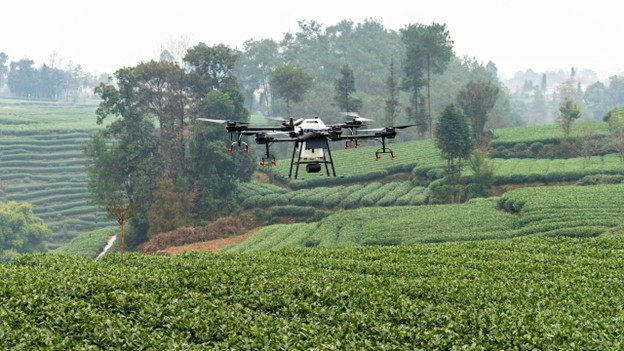
Structuring a Proper Training Regimen
Piloting agricultural drones is primarily about managing environmental variables rather than pulling off complex flight maneuvers. New operators usually focus entirely on looking at the screen instead of maintaining a visual line of sight with the aircraft. This tunnel vision leads directly to wire strikes.
Implementing a phased training approach prevents costly accidents. Before ever touching a heavy lift platform, trainees need dozens of hours on smaller quadcopters to build muscle memory for orientation. Upgrading to a complex DJI Agras T100 Sprayer Drone demands a specialized curriculum, much like the rigorous certification standards built by Talos Drones for commercial fleet management.
Understanding the rules set by the Federal Aviation Administration regarding agricultural aircraft operations provides the regulatory foundation every operator must memorize. Staff members must know exactly how to secure airspace and log flights properly before spinning the props.
Mastering Fluid Dynamics and Flight Stability
Carrying heavy liquids introduces severe dynamic instability into every flight profile. The DJI Agras T100 Sprayer Drone compensates for this using advanced flight controllers, but software cannot defeat basic physics.
A half-empty liquid payload tank is a severe kinetic liability. Sudden braking triggers an extreme fluid surge, the slosh effect, causing an instantaneous, uncommanded pitch-down that overloads front motors and strains flight controller algorithms.
Preventing Slosh Effect Crashes
Operators must learn to fly with exceptional smoothness at all times. Harsh braking and aggressive yaw inputs must be trained out of their muscle memory immediately. Decelerating gradually gives the internal payload time to settle naturally.
Battery Voltage Management
Heavy payloads drain batteries exponentially faster in hot weather. Farm staff need strict protocols for monitoring voltage sag instead of just looking at battery percentages. Swapping packs early prevents sudden voltage drops that cause unintended descents. Following proper lithium polymer battery care routines extends hardware lifespan significantly. Heat is the absolute enemy of power cells.
Why Mapping Accuracy Prevents Catastrophe
Eyeballing field boundaries on a satellite map is an open invitation for litigation. If your RTK base station or network correction isn’t pinpoint accurate, your application swathes will drift onto adjacent organic fields, triggering EPA spray drift violations.
Trainees often rush the mapping phase to get airborne faster. Walking the perimeter with the remote controller creates a far more accurate boundary than clicking points on a blurry satellite map. Operators must physically identify every single physical obstacle. Marking poles and trees directly on the controller during the walk-around prevents the drone from clipping branches during autonomous turns. Strict adherence to Environmental Protection Agency guidelines for pesticide application zones is nonnegotiable.
Debunking the Myth of True Autonomy
Complacency kills hardware. New operators mistakenly treat autonomous mission tracks as an excuse to hand off the controller, blindly trusting that the drone’s radar modules will catch every micro-hazard.
Radar modules and binocular vision systems routinely fail to detect thin power lines or chain link fences. Relying solely on automation ensures an eventual crash. The DJI Agras T100 Sprayer Drone requires active monitoring during every second of autonomous flight. Operators must keep their hands on the sticks and stay ready to switch instantly into manual mode. Instructors should actively simulate sensor failures during training to force rapid manual takeovers.
Emergency Protocols and Contingency Planning
Things will inevitably go wrong in the field. Firmware glitches and sudden wind gusts happen constantly. The true test of an operator is how they handle a rapidly deteriorating flight state.
When video telemetry drops (FPV blackout), the instinctual reflex is to hit Return-to-Home (RTH). However, if your pre-configured RTH clearing altitude is set lower than local crop canopies or utility lines, you are initiating an automated fly-away directly into a crash. Practicing manual orientation recovery under stress is mandatory. Following Civil Aviation Authority recommendations for maintaining a sterile operating zone keeps bystanders safe when an emergency landing becomes necessary. The DJI Agras T100 Sprayer Drone is heavy enough to cause severe damage upon impact.
Questions About DJI Agras T100 Sprayer Drone Workflows
How do you prevent nozzle clogging between battery swaps?
Crystallized chemicals ruin spray patterns quickly. Staff must flush the centrifugal nozzles with clean water immediately if the drone sits idle for more than fifteen minutes. Leaving chemicals in the lines under the hot sun bakes the residue into the plastic tubing. This forces operators to replace the entire delivery system instead of just cleaning it.
What is the best way to handle magnetic interference near power lines?
High voltage lines scramble compass telemetry rapidly. Operators should calibrate the compass far away from metal trucks or power grids. If the aircraft initiates a circular toilet bowl flight pattern, the pilot must instantly switch to ATTI mode and manually fly away from the magnetic source.
How should operators account for wind drift during application?
Flying lower reduces drift but increases collision risks. Training must cover how to adjust droplet size via the app based on real-time wind speed. Decreasing altitude and increasing droplet size force the chemical down through the rotor wash directly onto the crops. Fine mists turn into a liability the second wind speeds exceed ten miles per hour.