Maybe you played a bit years ago, and the old set in the garage is looking rough. Maybe you are new to the game and would rather not spend a fortune on new gear. Either way, buying second-hand can be a sensible way to build a set that fits your game and budget.
This guide walks you through a quick self-check, what to look for in a used club, how to piece together a practical set, and where to start shopping if you are based in New Zealand.

Quick Self-Check of Your Game
Before you look at a single listing, spend a few minutes thinking honestly about where your game sits right now. This shapes everything else.
Your Current Scores and Contact Quality
Jot down your rough average score for 18 holes. You do not need an official handicap. A ballpark is fine. Then think about how often you hit the middle of the clubface. If you catch the toe or heel more often than not, that matters. Finally, note your most common miss, such as a slice, top, or fat shot.
Your Near-Term Goal
Are you mainly looking for steadier contact, higher launch on longer clubs, or more control over shot shape? If steadier contact matters most, lean toward clubs built with more forgiveness. If you already strike the centre fairly often and want to shape shots, a more workable head might suit you. One clear goal is enough.
Forgiveness vs Workability in Plain Language
Most used-club listings mention forgiveness, workability, or both. These terms are useful once you strip away the marketing language.
What Forgiving Heads Typically Do
Forgiving irons have a larger effective sweet spot. When you miss the centre, the ball still tends to travel a reasonable distance and stay closer to your target line. The clubhead is usually thicker from front to back and has more weight around the edges.
What Workable Heads Typically Do
Workable clubs give skilled players more control over direction and ball flight, but they ask more of your swing. The sweet spot is typically smaller, and off-centre hits lose more distance. If you are considering a workable set, try to hit a few on a range or with a fitter before buying used.
Where Mizuno Families Generally Fit
A Plain-Language Overview
Many golfers think of Mizuno’s JPX family as the more forgiving option and the MP family as the more feel-oriented, workable choice. That is a useful starting point, but specific models within each family can vary. Before settling on a model or year, check the manufacturer’s product descriptions or ask a local pro for guidance.
What to Look for When You Shop Used
Read Photos and Condition Notes
Good sellers provide close-up photos. Here is what to check:
- Groove wear: Grooves that look smooth or shallow can reduce spin and control. Light wear is normal, but heavy wear matters.
- Leading-edge dings: Small nicks are usually cosmetic. Larger dents can change how the club sits on the ground.
- Sole scuffing: Scratches on the sole are expected and are usually cosmetic.
- Ferrule separation: The small plastic collar where the shaft meets the head should sit flush. A gap can signal a loose head.
- Shaft rust: Surface discolouration is common, but deep pitting or flaking can weaken the shaft over time.
- Grip wear: Slick or hardened grips need replacing. Regripping is usually affordable, so factor it into the total cost.
Shaft and Simple Fit Basics
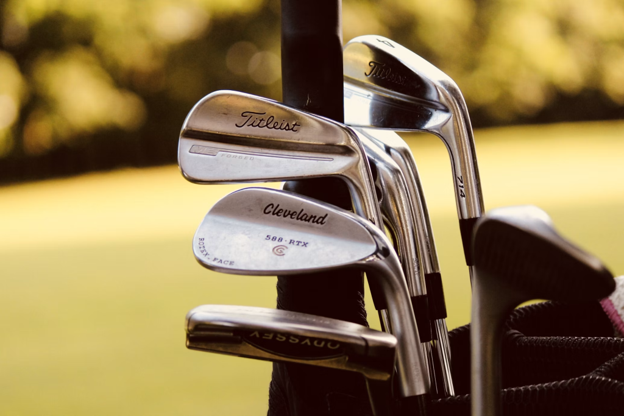
Shaft flex, such as regular or stiff, should match your swing tempo and contact quality rather than just the label on the shaft. A slower, smoother tempo often pairs well with a softer flex, while a faster, more aggressive swing may suit a stiffer option. Club length relates to posture, and lie angle affects where the ball starts.
A quick session with a local pro or fitter can confirm whether a set’s specs are in the right neighbourhood for you.
Set Makeup by Skill Level
If you are a beginner or high-handicap golfer, prioritise forgiving irons and consider replacing long irons, such as a 3 or 4 iron, with a higher-lofted hybrid. Hybrids are often easier to launch and more forgiving on mis-hits.
Improving players can blend their set: forgiving long irons or hybrids at the top of the bag, with more workable short irons or wedges where extra control around the green matters.
Golf rewards patience and small upgrades over time. Start with irons and a putter, then add wedges and woods as you learn which distance gaps need filling. The same skill-first approach applies to other precision pursuits, so if you enjoy honing aim and technique, the basics of target shooting make a natural companion hobby.

Where to Shop and How to Compare Options
Start with retailers that provide clear condition photos, grading notes, and a return window. When buying used golf clubs online, check for visible serial numbers and consistent labelling across the set. If a listing lacks close-ups or avoids questions about condition, move on.
It also helps to cross-reference specs with the manufacturer’s website or a local fitter, especially if you are unfamiliar with a particular model year. That extra step can reduce the risk of ending up with a poor fit.
If you are in New Zealand, you can browse used Mizuno golf clubs to compare photos and condition notes before deciding, then cross-check specs with a local fitter or pro shop. This is one example of a retailer listing second-hand Mizuno gear with basic product information. Always review the return policy and condition terms before purchasing.
Simple At-Home Checks Before You Buy
Lie Check and Grip Feel
A simple marker-line test can help flag an obvious lie angle mismatch. Draw a line on the ball with a marker, set the line facing the clubface, and hit into impact tape or a mat. If the mark skews heavily toward the toe or heel, the lie angle may need adjustment. Confirm final loft and lie with a fitter.
For grips, wrap your hands around the club and check whether your fingers dig into your palm. If they do, the grip may be too thin. If the grip feels bulky and stiff, it may be too thick or simply worn out. Regripping is one of the cheaper upgrades.
Gapping Basics
Aim for consistent distance gaps between each club, often around 10 to 15 yards per club. If two clubs fly roughly the same distance, you may have a gap problem. Loft and shaft changes can shift your distances, so a post-purchase loft and lie check is useful.
Red Flags and Buyer Protections
Red Flags
Watch out for sellers who avoid close-up photos, list inconsistent model names or shaft labels, or price clubs unusually low compared with similar listings. Missing serial numbers or unclear spec labels can also be a concern. If something feels off, ask the seller directly or check with the manufacturer.
Protections
Favour retailers with clear inspection notes and a stated return window. Save screenshots of listings and keep your receipts. Once clubs arrive, test them as soon as possible so you can flag any issues within the return period. A quick range session or round will reveal whether the clubs match the listing description.
Conclusion
Choosing a second-hand set does not need to be complicated. A quick self-check of your scores, contact, and goals tells you whether to lean forgiving or workable. A careful look at photos and condition notes keeps surprises to a minimum. A simple fit check with a local pro can confirm whether the set is in the right ballpark.
Take your time, start with the clubs you will use most, and build from there. Whether you are browsing online in New Zealand or visiting a pro shop closer to home, a little patience can help you find a set that suits your game.

Meg is an author at Cinnamon Hollow. She writes on a variety of topics sharing tips and ideas for daily life.