You finish the prototype, playtesting goes well, and you ask the obvious question: what will it cost to make this? Then you get four quotes and none of them match.
That is not because manufacturers are hiding something. It is because a tabletop game does not have a price. It has layers of cost that stack on top of each other, and every design decision you make moves one of them. Once you can see the layers, the quotes stop looking random and start looking like arithmetic.
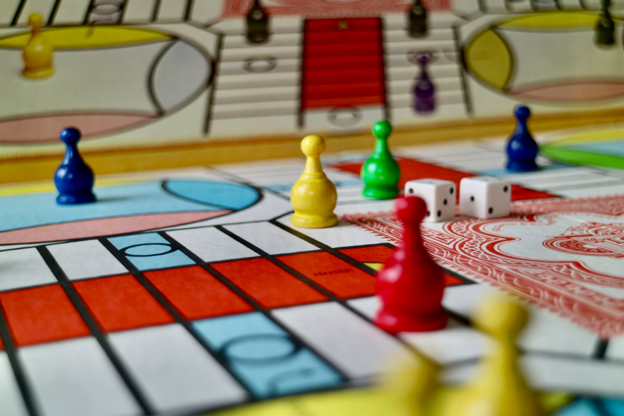
Why there is no flat price for producing a tabletop game
Two games in identically sized boxes can cost very different amounts to produce. Genre has nothing to do with it. What matters is what is inside the box, how many copies you order, how the parts are finished, and where they need to end up. This is also why modern board games vary so much in price on the shelf compared with the simple classics most people grew up with.
Four layers do most of the work: components, quantity, specification and delivery. Board games and card games both sit on these four layers, but they lean on them differently. A board game spreads its cost across many separate physical parts. A card game concentrates its cost in print volume and collation. Knowing which one you are building tells you where to look first.
The component layer
Every distinct physical item in the box is its own cost line. Not a rounding detail, a line.
What drives cost in board games
Boards, boxes, punchboards, tokens, dice, miniatures, bags, trays and inserts each carry their own material and tooling cost. Wooden and plastic parts follow completely different cost curves from printed paper parts, so swapping meeples for cardboard standees changes your total more than most designers expect.
Part count matters as much as part quality. Every additional unique component adds handling and assembly work on top of its own material cost. Ten types of token cost more to produce than one type in ten colours, even if the piece count is identical.
What drives cost in card games
Here the variables are card count per deck, card size, stock weight and finish. Then there is structure. A fixed deck is straightforward. Cards randomised across sealed packs require collation work, and that pushes cost up in a way the card count alone will not tell you.
This is why a card game can look simpler than a board game and still cost more per unit at low volumes. Fewer parts does not mean cheaper.
The practical point: changing a component while you are still designing costs you nothing. Changing it after production files are approved costs you real money and real weeks.
The quantity layer and where unit cost drops
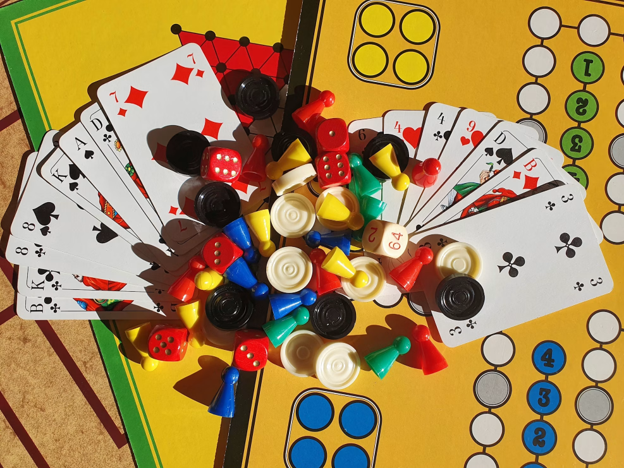
Unit cost falls as quantity rises, because setup and tooling get spread across more copies. Everyone knows this. What catches people out is that the fall is not gradual.
Costs step down at specific quantities called price break points. Between two breaks, your per-unit figure barely moves. Cross a break and it drops noticeably. The difference between ordering 250 copies and 500 copies can decide whether a project works financially, and you cannot guess where those thresholds sit.
Estimate while the design is still moving
The fix is to cost the game while you can still change it. Manufacturers now offer estimator tools that update in real time as you add, remove or edit components, so you see the effect of a decision immediately instead of waiting days for a revised quote. Launch Tabletop, for example, publishes its custom board game pricing approach around exactly this: a project breakdown showing the cost attached to each individual component, alongside a view of where the price breaks fall for your configuration.
Use that early and often. A designer who checks cost after every major component decision ends up with a game they can actually afford to make.
When small runs stop making sense
Short runs are right for testing, review copies and pre-launch validation. Beyond roughly a thousand units, mass manufacturing generally becomes the better route, with different tooling, different timelines and a meaningfully lower unit cost.
The trap runs the other way too. Ordering a larger quantity to chase a lower unit cost only helps if you sell those copies. Otherwise you have converted cash into stock sitting in storage.
The specification layer
Specification is finish and construction: stock weight, linen or smooth, matte or gloss, foil, spot UV, embossing, rigid or folding box, insert type.
Special finishes often carry a fixed setup cost. That means they hurt small runs most, because the setup is spread across fewer copies. A foil treatment that adds a few cents per unit at 5,000 copies can add far more at 300.
Where the spend is worth it
Put money into what players touch every turn. Cards and dice get handled constantly, and cheap stock shows within a few sessions. Spend on the box exterior too, because that is what does the work in a product photo and on a shelf.
Where it usually is not
Skip premium finishes on parts seen once during setup. Skip anything that will not survive photography or will not read at retail scale. If you cannot see the difference in a product shot, your customer will not see it either.
The delivery layer
Freight from the factory is priced on volumetric weight, not unit count. Box dimensions therefore matter enormously, because you are paying to ship air. Trimming a centimetre from a box can change your freight bill more than trimming a component.
Then add destination country, customs duties and import handling. Finally add fulfilment to individual customers or backers, which is the single most underestimated number in tabletop budgets.
Estimate shipping alongside production
Shipping estimators generally need a destination country and postcode, then return available options and estimated transit times based on current carrier pricing. Run this at the same time as your unit cost estimate. Production cost alone is not your real cost. Landed cost is.
Common budgeting mistakes
Costing the game only after the design is finalised. By then every cheap lever has been removed.
Comparing quotes without matching specifications line for line. A cheaper quote on lighter stock is not a cheaper quote.
Treating shipping as a rounding error. It is frequently the second largest number in the budget.
Setting a crowdfunding pledge price before you know the landed unit cost. Work backwards from cost, not forwards from what feels reasonable.
Forgetting review copies, replacement stock, storage and payment processing fees.
Conclusion
The cost of a tabletop game is assembled, not quoted. Once you can see the four layers, you can negotiate specification intelligently, choose a print run with confidence, and price your game from real numbers instead of hope.
The rule worth taking away is simple: cost your game in parallel with designing it, not after. That single habit saves more money than any other decision you will make in production.
Frequently asked questions
Why does the per-unit cost drop sharply at certain quantities?
Setup, tooling and plate costs are fixed per run. Once spread across more copies, the per-unit figure steps down at specific thresholds rather than sliding down smoothly.
Is a card game cheaper to produce than a board game?
Not automatically. A card game has fewer component types, but its cost concentrates in card count, stock and finish. A simple board game with few parts can come in lower than a large deck on premium stock.
How early should I start costing my game?
As soon as your component list is roughly stable. Component choices are your biggest controllable cost lever, and they get expensive to change once production files are approved.
What is usually missing from a first production budget?
Freight, customs duties, fulfilment to individual customers, storage, and spare stock for replacements and review copies.