

People who cook a lot are hard to shop for. Their drawers are already full of gadgets they used twice, and they have opinions about knives that you probably don’t share. The good news is that the best gifts for home cooks are rarely clever. They are the things that make an ordinary Tuesday dinner a little easier, and they last long enough to be remembered.
Here is how to think it through before you buy.
Watch how they actually cook
Spend one evening noticing what they reach for. Do they cook mostly at home, or do they carry knives to a friend’s house, a cooking class or a restaurant shift? Do they bake, grill, or live at the stove? A person who grills every weekend needs different things from someone who makes bread on Sunday mornings.
This matters because a gift that matches a real habit gets used every week. A gift that matches a fantasy version of the person (“they should really get into sous vide”) ends up in a cupboard.
Skip the gadget, upgrade something they already use
Single-purpose gadgets are the most common cooking gift and the most likely to be regifted. A safer approach is to replace something they already own that is worn out or cheap:
- the apron with a frayed neck strap;
- the oven mitts with a scorch mark;
- the stack of recipe cards held together with a rubber band;
- the knives that rattle loose in a drawer.
Nobody buys these things for themselves until they break, which is exactly why they make good gifts.
Protect the knives
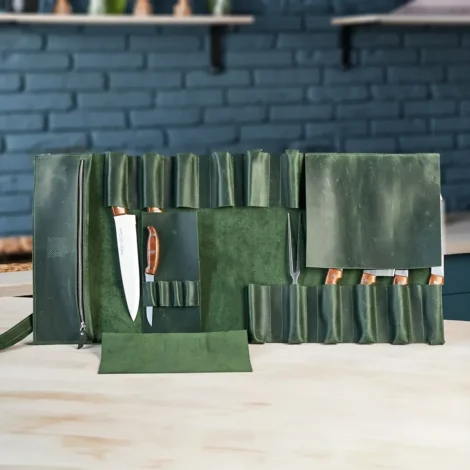
If the person you are shopping for owns even one good knife, storage is the gift they are least likely to have bought. Knives tossed into a drawer chip on the edge and dull faster, and they are a hazard for whoever reaches in next.
There are two common options. Blade guards, also called knife covers, slide over a single blade and are sized to its length and width, so measure the knife or ask what they use. A knife roll holds a full set and rolls up for transport. If they ever cook away from home, a roll is the more useful choice: it keeps several knives separated, and it travels in a bag without cutting through it.
When you compare rolls, look at three things:
- The number of slots. Count the knives they actually use, then add one or two. Rolls are commonly sold with anywhere from three to ten slots.
- The length. A roll has to be taller than their longest knife, handle included. A 10-inch chef’s knife will not fit a roll made for paring knives.
- The material. Waxed canvas is lighter; leather is heavier but holds its shape and takes a name or initials well.
Makers such as Pikore sell leather goods for chefs in this category, from single knife covers to full rolls, and many of them can be personalized with initials.
Make it personal, but quietly
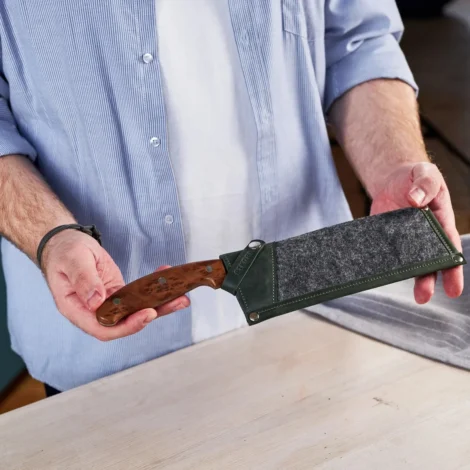
Personalization works best on things people use daily. Initials on an apron strap, a leather knife roll or the cover of a recipe binder feel considered rather than showy. A full name in large letters on the front of something often looks like a promotional item.
If you are not sure about style, choose initials over a phrase, and choose a single color or blind stamping over anything ornate.
Think about the kitchen as a whole

A few gifts that cooks tend to keep for years:
- A recipe binder with refillable pages. It lets someone copy family recipes in their own handwriting, which becomes more valuable each year.
- A sturdy apron. Look for adjustable straps and real pockets. Canvas aprons with leather straps are a popular middle ground: tough, washable and not too heavy.
- Heat protection that actually protects. Thin cotton mitts are fine for cookies and useless near a grill. If they grill or bake bread at high heat, thicker gloves or mitts are worth it.
- A proper case for grilling tools. Long tongs, spatulas and skewers are awkward to store, and a dedicated roll or bag keeps them together between cookouts.
A short checklist before you buy

- Does it replace something they already use, rather than add something new?
- Will it fit their actual knives, oven or grill?
- Can it handle heat, grease and frequent washing or wiping?
- Is the personalization small enough that they would use it in front of guests?
If the answer to all four is yes, you have found a gift that will be used long after the wrapping paper is gone. And if you are still unsure, ask a casual question over dinner about which kitchen tool they wish they had a better version of. Most cooks will answer in detail, and they will not even suspect why you asked.

Meg is an author at Cinnamon Hollow. She writes on a variety of topics sharing tips and ideas for daily life.