Choosing strength equipment for a gym involves more than deciding which exercises members want to perform. Floor space, expected usage, equipment versatility and the overall layout of the strength area can all influence whether a power rack, half rack or squat stand is the most suitable option.
Each configuration has advantages, and the right choice depends on the type of facility being created. Gym owners considering commercial power racks from QLI Fitness can benefit from comparing rack styles alongside available floor space, member requirements and the other equipment planned for the training area. Understanding the basic differences between these options can make it easier to create a strength area that uses the available space effectively.
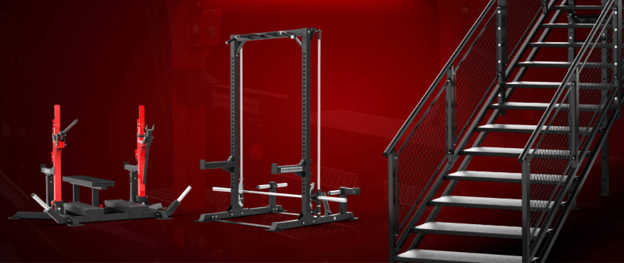
Power Racks Provide an Enclosed Training Area
A power rack, sometimes called a power cage, typically uses four upright posts to create an enclosed lifting area. This design provides a structured space for exercises such as squats and various barbell movements. Depending on the model and configuration, a power rack may also support benches, pull-up exercises and different attachments. One of the main advantages is versatility. A single rack can form the centre of a strength training station that supports several exercises.
However, this versatility comes with space requirements. Facility owners need to consider the rack’s footprint as well as the room required for a barbell, weight plates, a bench and the lifter. Access around the rack should also be maintained so users are not interfering with neighbouring stations. Power racks can be particularly useful in facilities where barbell training forms an important part of the exercise offering and the available space can accommodate a complete lifting station.
Half Racks Can Balance Versatility and Floor Space
A half rack generally provides a more open configuration than a full power rack. Rather than placing the lifter within a four-post cage, many half-rack exercises are performed around the front of the structure. The exact design varies between products, so dimensions and features should always be checked individually. For some facilities, this configuration provides a useful balance between equipment capability and space. Half racks may support squats, bench exercises, pull-ups and other strength movements depending on their design and available attachments. They can also integrate storage for weight plates or other accessories in some configurations, helping keep the surrounding training area organised.
The more open design may suit gyms where visibility and movement between stations are important. However, a smaller footprint should not be confused with needing very little space. Users still require sufficient room for barbells, plates and safe movement around the station. The complete operating area should therefore be included when comparing a half rack with a full power rack.
Squat Stands Offer a Simpler Configuration
Squat stands are generally more minimal than power racks and half racks. They provide supports for positioning a barbell at an appropriate height for exercises such as squats and, depending on the setup, bench presses. Their simpler design can make them attractive where floor space is limited or where a facility wants to provide basic barbell training without installing larger rack structures. Some squat stands are relatively easy to reposition, although commercial facilities should still consider stability and the manufacturer’s installation requirements.
The trade-off is that a simpler structure may offer fewer integrated features than a larger rack. Attachments, storage and exercise options vary significantly between products. Facility owners should therefore consider what users are expected to do at the station rather than selecting equipment purely because it occupies less space. A squat stand may be appropriate for a smaller training studio, while a busy commercial gym may place greater value on a more comprehensive rack configuration.
Consider How Members Will Use the Equipment
Equipment should match the training style of the people who will actually use the facility. A strength-focused gym may have several members wanting to perform barbell exercises at the same time. In this environment, multiple well-equipped rack stations may be more useful than filling the area with specialised machines. A hotel, apartment or workplace gym may have different requirements.
Users in these facilities may perform a wider variety of general fitness activities, meaning only a portion of the floor area needs to be dedicated to barbell training. Training experience also matters. Facilities serving a broad range of members should think about how intuitive the equipment is to use and how the overall area will be managed. Consider which exercises are likely to be performed most frequently, how long users may occupy each station and whether several people will need access during peak periods. These questions can help determine not only which rack style to choose but also how many stations the facility requires.
Plan Enough Space Around Each Rack
The equipment footprint shown in product specifications is only the beginning of space planning. A standard barbell extends well beyond the sides of a rack. Users need room to load and unload plates without coming too close to walls, walkways or neighbouring equipment. Benches also need sufficient space to be positioned and removed. If weight plates are stored near the rack, users should be able to access them without walking through another person’s training area.
Ceiling height is another consideration, particularly where the rack includes pull-up bars or supports overhead exercises. Flooring should be appropriate for the activities planned in the area and the equipment being installed. It can be useful to draw the proposed equipment to scale on a floor plan before making a purchase. Include the operating space rather than only the dimensions of the rack itself. This approach can help identify overcrowding before equipment arrives.
Compare Features and Future Requirements
A rack can remain part of a commercial gym for many years, so current requirements should not be the only consideration. Think about how the facility may develop. A gym that initially needs a basic barbell station may later want additional storage or compatible attachments. Checking what can be added to a particular rack system can provide greater flexibility. Construction and stability should also reflect the intended environment. Commercial equipment may experience repeated use by people of different sizes, strengths and training styles.
Maintenance access should be considered as well. When comparing options, look at the complete configuration rather than assuming every power rack, half rack or squat stand provides identical features. Dimensions, adjustment options, storage, attachment compatibility and installation requirements can vary considerably. Selecting equipment that suits both the current training programme and realistic future needs can help reduce the need to reorganise the facility unnecessarily.
Conclusion
Power racks, half racks and squat stands can all support effective strength training, but they suit different facilities and space requirements. A power rack can provide a versatile, structured lifting station, while a half rack may offer a more open configuration. Squat stands provide a simpler option where basic barbell training and efficient use of space are priorities.
The decision should consider more than the rack itself. Member needs, barbell clearance, storage, flooring, equipment spacing and future training requirements all influence how well a station will work. By planning the complete strength training area before selecting equipment, facility owners can choose a rack configuration that supports both practical use and the overall gym layout.
The owners and authors of Cinnamon Hollow are not doctors and this is in no way intended to be used as medical advice. We cannot be held responsible for your results. As with any product, service or supplement, use at your own risk. Always do your own research and consult with your personal physician before using.

Meg is an author at Cinnamon Hollow. She writes on a variety of topics sharing tips and ideas for daily life.