If you’ve had a baby and noticed that your stomach still looks or feels different months or even years later, you’re not imagining it. For a lot of women, the abdominal changes that happen during pregnancy don’t fully reverse on their own. No matter how consistent you are with exercise or how carefully you eat, something about the midsection just doesn’t feel right. There’s often a physical reason for that, and it has a name: diastasis recti.
If you live in Tampa, you have probably heard more than an earful about tummy tucks. Many women have it after pregnancy. But the question is: that separation you feel in your midsection, will a tummy tuck be able to address it?
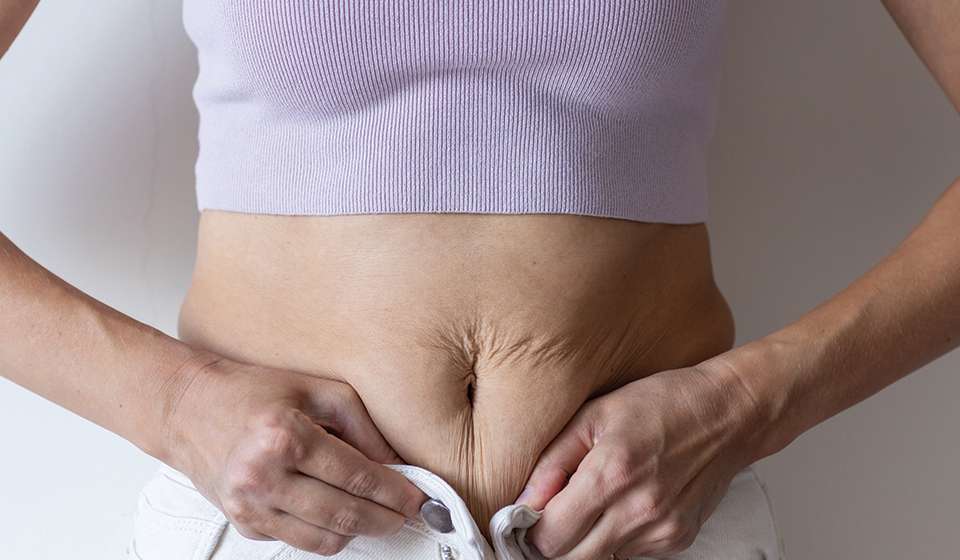
What Is Diastasis Recti?
Diastasis recti is the separation of the rectus abdominis muscles, the pair of muscles that run down the centre of the abdomen. During pregnancy, as the uterus expands, it pushes against these muscles and stretches the connective tissue that holds them together. For some women this gap closes naturally after delivery. For others, it stays open.
The result is a midsection that may look soft or protruding even when a woman is at a healthy weight, a weakened core, and sometimes discomfort with everyday activities like lifting or sitting up. According to a cross-sectional study published on PubMed Central that followed 1,000 postpartum women across five time points up to 30 years after giving birth, the prevalence of diastasis recti was 36% at three years postpartum and remained as high as 30% even at 30 years postpartum. That means for a significant number of women, abdominal separation isn’t just a short-term postpartum issue. It can persist for decades without intervention.
Why Exercise Isn’t Always Enough
Physical therapy and targeted core work can help with mild cases of diastasis recti, and it’s usually the right starting point. But for women with a significant gap or with stretched connective tissue that has lost its elasticity, no amount of exercise will pull those muscles back together or tighten the tissue between them.
This is one of the most important things to understand before trying to resolve abdominal separation on your own. The exercises that strengthen the core can make the muscles themselves stronger, but they can’t mechanically close a gap that the tissue no longer has the elasticity to bridge. When that’s the situation, surgery is the only option that actually addresses the structural problem.
What a Tummy Tuck Actually Does
A tummy tuck, or abdominoplasty, does two things that matter specifically for diastasis recti. First, it physically brings the separated abdominal muscles back together and sutures them in their correct position, restoring the structural integrity of the core. Second, it removes the excess or loose skin that often comes along with pregnancy, creating a flatter, firmer abdominal profile.
For women considering a tummy tuck in Tampa, the procedure is typically performed under general anesthesia, with an incision placed low across the abdomen where it can be hidden by underwear or a swimsuit. Board-certified surgeons who specialize in post-pregnancy body contouring, like Dr. Effie Politis at Politis Plastic Surgery, approach the muscle repair and skin removal as two connected parts of the same procedure rather than separate steps. This approach can help produce results that look balanced and proportional to the rest of the body.
Muscle repair is often the part that makes the biggest functional difference. Many women report improved posture, a stronger core, and reduced lower back discomfort after surgery, not just cosmetic improvements.
Who Is a Good Candidate
The ideal candidate for a tummy tuck to address diastasis recti is someone who has finished having children, is at or near a stable healthy weight, is a non-smoker, and is in good overall health. Timing matters particularly in relation to future pregnancies. A tummy tuck repairs the muscles and removes excess skin in a way that can be undone by a subsequent pregnancy, so most surgeons recommend waiting until your family is complete before undergoing the procedure.
Women who have had a C-section may also benefit from addressing the C-section overhang that can develop, an area of skin and tissue that folds above the scar. A tummy tuck can address this at the same time as the muscle repair.
What Recovery Looks Like
Recovery from a tummy tuck takes time, and it helps to go in with realistic expectations about the timeline. Most women wear a compression garment for several weeks after surgery to support healing and reduce swelling. Light activity is usually possible within two to three weeks, while strenuous exercise and heavy lifting are typically restricted for six to eight weeks.
The final results aren’t immediately visible because swelling takes time to fully resolve. Most patients see their final outcome somewhere between three and six months after surgery, at which point the difference tends to be significant compared to where they started.
Conclusion: Is It Worth It?
For women who have genuinely tried conservative approaches and are still dealing with the physical and aesthetic effects of diastasis recti, a tummy tuck addresses the root cause in a way that nothing else can. The muscle repair is structural, the skin removal is permanent, and the results are long-lasting when weight remains stable.
The decision is a personal one and deserves a thorough consultation with a board-certified plastic surgeon who can assess your specific anatomy and set realistic expectations for your outcome. But for the right candidate, the answer to the title question is clearly yes.
The owners and authors of Cinnamon Hollow are not doctors and this is in no way intended to be used as medical advice. We cannot be held responsible for your results. As with any product, service or supplement, use at your own risk. Always do your own research and consult with your personal physician before using.

Meg is an author at Cinnamon Hollow. She writes on a variety of topics sharing tips and ideas for daily life.