Renovation dust and old furniture pile up fast. One weekend of clearing out the garage or ripping up bathroom tiles can leave you with more rubbish than your household bins can handle. A skip bin is often the simplest fix, but choosing the right one takes a little planning if you want to avoid overfill fees, council fines, or a bin full of items that were never allowed in there.
This guide walks through a clear, step-by-step way to compare local skip options in Sydney and across NSW. It also flags household waste with special rules, because items such as batteries, paint, and asbestos can never go in a skip.
Start by Defining the Job
Before you look at sizes or prices, name your project. The type of cleanup shapes the bin size, waste category, placement needs, and likely cost.
- Light declutter: boxes, old toys, soft furnishings, and general household junk.
- Bathroom or kitchen rip-out: tiles, cabinetry, fixtures, and mixed building waste.
- Landscaping: soil, clay, branches, and garden clippings.
- Mixed heavy waste: a combination of materials, including rubble or masonry.
Providers sort loads into categories, and matching your job to the right one helps keep costs sensible. 7 Skip Bins lists categories such as general waste, mixed waste, green waste, bricks and concrete, and soil, clay, and sand. Hazardous materials are excluded from all of them. Photograph your piles and jot down the main materials before you book.
Estimate Volume With Household Cues
Skip sizes are measured in cubic metres, which can be hard to picture. Everyday comparisons help. A 2 cubic metre skip is roughly equivalent to eight 240 litre wheelie bins, or about two standard box trailer loads. Once you have that anchor, you can scale up in your head.
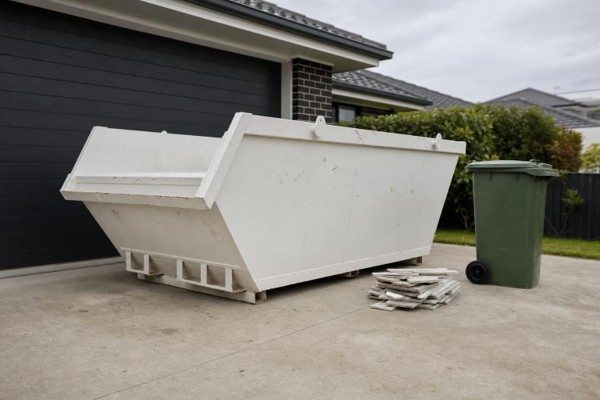
For a rough calculation, multiply the length, width, and height of your rubbish pile in metres once it is loosely stacked. Then round up. A slightly larger bin costs a little more, but it is usually cheaper than paying for waste above the rim or needing a second bin.
Match the Waste Type to the Bin
Clean, single-material loads are often cheaper to process than mixed heavy waste. A bin filled only with bricks, or only with clean soil, can be handled differently from a mixed load. If you toss the wrong items into a clean load, the whole bin may be reclassified, which can change the cost.
The same logic explains why prohibited items matter. General and mixed bins are not meant to hold hazardous waste. Keeping your load true to its category is the easiest way to avoid surprises when the bin is weighed and sorted.
Check Access and Placement Rules
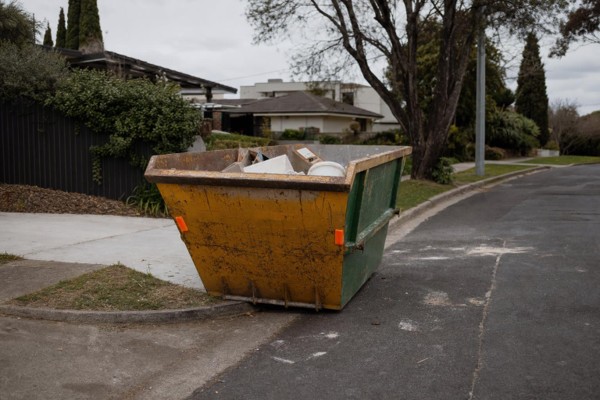
Where the bin sits is a bigger deal than many people expect. A driveway is the simplest option because it often needs no council involvement. Placing a skip on the road is where extra rules apply, and they vary by council.
The City of Sydney offers an example. Residents may place a skip on the roadway for up to 14 days without formal approval when there is no safe space on site, with no extensions allowed. Under this exemption, the skip can be no more than 3.4 metres long and 1.7 metres wide, cannot sit on footpaths or cycleways, and must comply with NSW Road Rules as if it were a vehicle.
For roadside placement in that area, the skip must not contain putrescible or hazardous material, it needs reflectors, it must sit 400mm off the kerb, and it must be covered after hours. Other councils set their own conditions and fees, so check your local council before booking a roadside skip.
Understand Delivery and Hire Windows
Delivery timing depends on the provider and your suburb. As an example, 7 Skip Bins notes that same-day delivery may be available when you book before 10am on weekdays, depending on location and delivery runs. Confirm this when you book.
Hire periods commonly run for about seven days, with some marketplaces allowing up to about 14 days. If your project might drag on, ask about extension fees upfront.
Compare the Pricing Variables
Skip pricing is rarely a single number. Several factors move the total, and comparing them side by side is the fairest way to judge value. If you are in Sydney and want to compare sizes, waste categories, and delivery windows in one place, you can browse skip bins hire options near you. Check:
- Bin size and waste category
- Weight limits and overfill rules, including whether waste must sit level with the rim
- Days included and the cost of extensions
- Access challenges at your property
As of 1 July 2026, the levy is $180.20 per tonne in the Metropolitan Levy Area and $103.80 per tonne in the Regional Levy Area. That difference helps explain why quotes can vary between city and regional suburbs even for the same bin.
Keep those variables beside your quote so the comparison stays practical for your suburb.
What Must Never Go in Your Skip
Some items are unsafe or illegal to place in a skip, and they need their own disposal route.
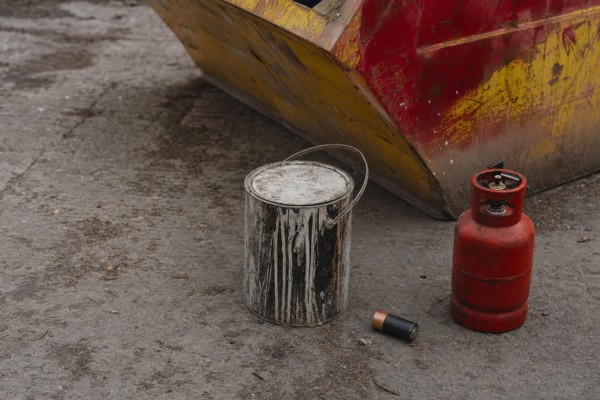
- Batteries: NSW EPA warns that a single battery can ignite in bins. Large removable household batteries under 20kg can be dropped off free at Community Recycling Centres or CleanOut events.
- Paint, chemicals, gas bottles, fluorescent lamps, and smoke detectors: this problem waste can be dropped off free at Community Recycling Centres or CleanOut events. CleanOut events typically accept up to 20 litres or 20kg per item, with higher paint limits at some events.
- Asbestos: Asbestos NSW states it is illegal to dump asbestos or put it in kerbside bins. SafeWork NSW instructs that asbestos waste be kept damp and double wrapped in 0.2mm plastic, then sealed and labelled for lawful disposal. If you are unsure, do not disturb it and consider using a licensed professional.
When a Skip Is Not the Best Choice
A skip is not always necessary. For a small clear-out, a council pickup may do the job. The City of Sydney offers free bulky item pickups, with per-booking limits of 1 cubic metre for houses and 4 cubic metres for apartment buildings. You book ahead, so it takes a little planning. Sorting first also helps you manage renovation waste before choosing any collection option.
A Quick Checklist Before You Book
- Photograph your waste and note the main materials.
- Choose the right waste category for the job.
- Estimate volume and round up a size.
- Measure access and any placement clearances.
- Confirm council or strata rules for your address.
- Ask about delivery cutoffs, overfill rules, hire period, extensions, and prohibited items.
- Plan where leftovers such as batteries, paint, e-waste, and asbestos will go.
FAQ
Do I need council approval?
It depends on the council and placement. Driveways are simpler; roadside skips can have size, timing, reflector and cover rules.
Can hazardous items go in a skip?
No. Check NSW EPA and Asbestos NSW guidance for batteries, paint, chemicals or asbestos.