Key Takeaways
- A room-by-room plan turns a large cleaning project into manageable steps.
- Decluttering before cleaning improves access to surfaces, floors, and storage areas.
- Working from high surfaces down to the floor helps prevent repetitive work.
- Kitchens, bathrooms, entryways, and upholstered furniture often need extra attention.
- Safe product use, ventilation, and label directions matter throughout the process.
- A successful deep clean is easier to maintain with simple weekly and monthly habits.
A detailed home reset can make everyday routines feel more manageable, especially in Kennett Square, Pennsylvania, where busy households often track in dirt through entryways, manage pet hair, and prepare living spaces for family visits or seasonal gatherings. This room-by-room checklist helps homeowners focus on the areas that routine tidying can miss. For households facing a larger project or a tight schedule, cleaning services Kennett Square, PA can be one option alongside a practical do-it-yourself plan.
Deep cleaning does not require perfection or a full weekend of nonstop scrubbing. The goal is to clear clutter, reach overlooked surfaces, and establish a reset that makes regular upkeep easier afterward. Work in small zones when needed, and concentrate first on rooms that receive the most daily use.
What Makes Deep Cleaning Different?
Routine cleaning usually handles visible messes: washing dishes, wiping counters, emptying trash, vacuuming open floor space, and cleaning spills. Deep cleaning goes further by addressing buildup and dust in places that are easy to skip during a typical week.
That can include baseboards, window tracks, cabinet interiors, appliance edges, ceiling fans, vents, grout, upholstery seams, and the floor beneath movable furniture. A deep clean is a useful reset after a busy season, before hosting guests, after a move, or whenever a home feels harder to keep tidy.
How to Prepare Before Cleaning
Walk Through the Home
Before opening a cleaning bottle, take a quick walk through each room. Make note of clutter, stains, odors, dusty surfaces, food residue, and any maintenance concerns such as a slow leak or damaged caulk. Decide whether the project will cover the entire home or one priority zone at a time.
Declutter First
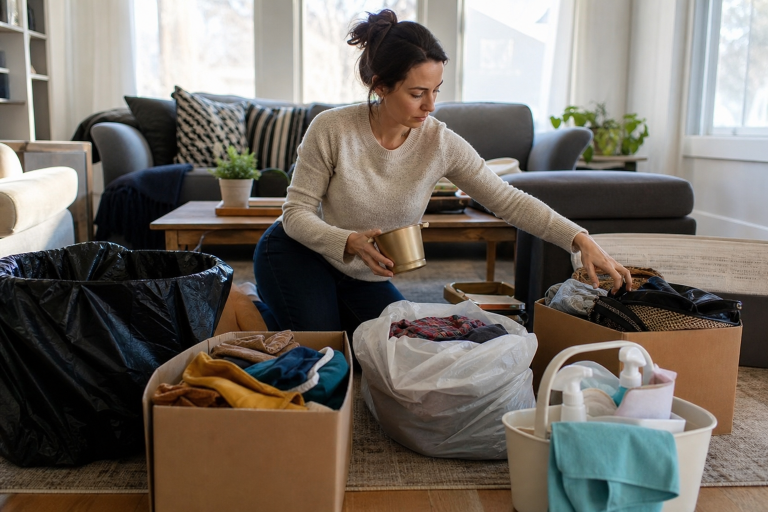
Cleaning around stacks of papers, clothes, toys, and unused items adds time and limits access. Use four simple categories: keep, move, donate, and discard. Return items that belong elsewhere, set aside donations, and remove trash before dusting or scrubbing.
Gather Basic Supplies
- Microfiber cloths, gloves, scrub brushes, and trash bags
- An all-purpose cleaner and glass cleaner suited to the intended surfaces
- A vacuum with crevice and upholstery attachments
- A mop, bucket, broom, and dustpan
- A step stool for safely reaching high areas
- A portable caddy to keep supplies together as you move between rooms
The Best Cleaning Order for Most Homes
A consistent sequence prevents dust and debris from settling on areas you have already finished. Follow a top-to-bottom cleaning order in every room: pick up clutter, dust high surfaces, clean walls and furnishings, scrub wet surfaces, vacuum, then mop hard floors last.
- Remove clutter and empty small trash bins.
- Dust ceiling fans, light fixtures, shelves, and ledges.
- Wipe trim, doors, furniture, and frequently touched surfaces.
- Clean counters, sinks, mirrors, and other wet areas.
- Vacuum upholstery, rugs, corners, and flooring edges.
- Mop hard floors, starting at the farthest point and moving toward the exit.
Kitchen Deep Cleaning Checklist
Kitchens deserve early attention because food preparation creates crumbs, grease, moisture, and residue. Start by clearing the counters and sorting the refrigerator contents so that every surface is accessible.
- Wipe cabinet fronts, handles, drawer pulls, shelves, and interior drawers.
- Degrease the stovetop, backsplash, range hood exterior, and nearby wall areas.
- Clean the microwave interior and oven according to its instructions, and small appliance surfaces.
- Wipe refrigerator shelves, drawers, handles, and door seals.
- Scrub the sink, faucet, drain area, and the exterior of the garbage or recycling bin.
- Dust the tops of cabinets and light fixtures, then sweep and mop the floor.
Bathroom Deep Cleaning Checklist
Bathrooms need attention to soap residue, mineral deposits, moisture, and high-touch surfaces. Let an appropriate cleaner sit for the label-directed time before scrubbing, when applicable.
- Scrub the tub, shower walls, tile, grout, fixtures, and shower-door tracks.
- Wash a shower curtain or liner according to its care label.
- Clean the toilet, including the exterior, base, and surrounding floor.
- Wipe vanity drawers, cabinet fronts, counters, mirrors, and light fixtures.
- Dust the exhaust fan cover and check the corners or seams for moisture issues.
- Disinfect suitable high-touch surfaces after visible soil has been removed.
Bedrooms and Living Areas
Bedroom Checklist
- Wash sheets, pillow covers, blankets, and mattress protectors as directed by their care labels.
- Dust lamps, headboards, shelves, blinds, window sills, and baseboards.
- Vacuum beneath the bed and around the legs of furniture.
- Clean mirrors, door handles, closet doors, and switch plates.
- Sort clothing before placing items back in closets or drawers.
Living Room Checklist
- Vacuum sofas, chairs, cushions, fabric edges, rugs, and beneath light furniture.
- Dust shelves, picture frames, electronics, ceiling fans, and decorative ledges.
- Wipe remotes, switches, door handles, and tables.
- Wash throw blankets and removable cushion covers when their labels allow it.
A family can split these spaces across two evenings. On the first evening, wash bedding and throws while dusting bedrooms. On the second, vacuum seating, clean living-room surfaces, and finished floors. Completing a few defined tasks is more effective than leaving every room half-finished.
Entryways, Hallways, and Laundry Areas
Transition spaces can spread outdoor dirt into the rest of the home, so do not overlook runners, door frames, and floor edges. Wipe doors, handles, switch plates, shoe storage, and coat hooks. Vacuum corners and mats, then clean the hard floor beneath them.
In the laundry area, wipe down the washer and dryer exteriors, clean up detergent spills, remove lint from the dryer filter and nearby floor, and check for damp spots around utility connections. Keep access to appliances clear, and follow the manufacturer’s instructions before moving or cleaning behind them.
Often-Forgotten Spots to Add to the List
- Ceiling fan blades and air-return grilles
- Baseboards, door tops, frames, and window tracks
- Cabinet handles, light switches, and outlet covers
- Under sofa cushions and behind trash cans
- Pet feeding areas, decorative ledges, and appliance gaps
How to Clean More Safely
Read each product label, test cleaners in an inconspicuous area on delicate materials, and use a stable step stool rather than standing on furniture. Keep children and pets away from wet floors and stored chemicals. The EPA advises households never to mix cleaning products, especially bleach with other chemicals, and to increase ventilation when product directions call for it.
How Often Should a Home Be Deep Cleaned?
The right schedule depends on household size, pets, children, cooking habits, foot traffic, and available time. A flexible approach is usually easiest to sustain:
- Weekly: dishes, trash, visible surfaces, bathroom touch-ups, and floors.
- Monthly: appliance exteriors, trim, fixtures, and frequently touched areas.
- Seasonally: windows, upholstery, cabinet interiors, and hidden spaces.
- As needed: after moving, remodeling, spills, illness, or a long absence.
DIY Cleaning or Outside Help?
DIY cleaning can work well when the home is manageable, supplies are available, and household members can divide the work. Additional help may be practical when a move creates a deadline, buildup is extensive, large furniture limits access, or specialized surfaces need careful treatment.
Frequently Asked Questions
What should be cleaned first?
Start with clutter, then dust from high surfaces down to the floor. This keeps loose dust from landing on freshly cleaned areas.
Can regular cleaning replace deep cleaning?
Regular cleaning controls daily messes, while periodic deep cleaning reaches areas that weekly routines often miss. Both are useful parts of maintaining a comfortable home.
Conclusion
A healthier-feeling home starts with a realistic plan, not an impossible checklist. Clear the space, work from high to low, focus on overlooked areas, and finish one room or zone at a time. With steady upkeep after the reset, Kennett Square homeowners can keep their homes cleaner without turning every weekend into a major project.

Meg is an author at Cinnamon Hollow. She writes on a variety of topics sharing tips and ideas for daily life.