Owning an RV is a major investment, and protecting it properly is essential for maintaining its value, performance, and longevity. Whether you use your RV occasionally or travel full-time, the way you store it between trips matters more than many owners realize. Two of the most popular options are RV garages and RV carports, each offering different levels of protection, cost, and convenience. With customizable steel structures from companies like US Patriot Steel, homeowners can choose a solution tailored to their specific needs, climate, and budget.
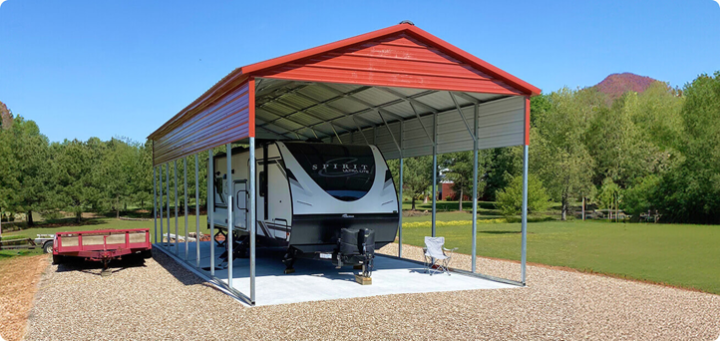
Understanding the key differences between an RV garage and an RV carport will help you make a smarter, long-term decision.
What Is an RV Carport?
An RV carport is an open-sided structure with a roof supported by steel posts. It provides overhead protection while allowing air to flow freely around the vehicle.
Carports are popular because they are cost-effective and quick to install. They shield your RV from direct sunlight, rain, and light snow, reducing UV damage and helping preserve exterior finishes. For many owners in mild climates, this level of protection is enough to prevent the most common forms of wear.
However, carports do not fully enclose the vehicle. Wind-driven rain, dust, debris, and temperature fluctuations can still affect the RV. While they offer basic protection, they are not designed for complete environmental control.
What Is an RV Garage?
An RV garage is a fully enclosed structure with walls, a roof, and large access doors. It functions similarly to a traditional garage but is specifically designed with the height and clearance needed for RV storage.
An RV garage provides maximum protection. It shields the vehicle from sun, wind, rain, snow, and debris, while also offering enhanced security. Because it is enclosed, it can also support insulation, ventilation systems, and even climate control.
Many RV owners choose garages for long-term storage, especially when the vehicle is not used frequently or when the climate is harsh. In addition to protection, an RV garage can double as a workspace, maintenance area, or storage for tools and accessories.
Protection: Partial vs Complete Coverage
The most important difference between an RV garage and an RV carport is the level of protection.
An RV carport protects from top-down exposure, such as sun and rainfall, but leaves the sides open. This means the RV is still vulnerable to wind, moisture, dust, and debris.
An RV garage offers full enclosure, protecting the vehicle from all directions. This significantly reduces wear on seals, paint, and rooftop components, and helps prevent issues like mold, corrosion, and interior damage.
For owners in regions with extreme weather, an RV garage provides a clear advantage.
Cost and Budget Considerations
Cost is often the deciding factor. RV carports are more affordable because they use fewer materials and require simpler construction. They are ideal for homeowners who want a practical solution without a large upfront investment.
RV garages require a higher budget due to enclosed walls, doors, and additional structural components. However, they deliver greater long-term value by reducing maintenance costs and preserving the RV’s condition.
For many owners, the decision comes down to balancing initial cost vs long-term protection.
Security and Storage Flexibility
Security is another key difference. RV carports offer minimal security since the vehicle remains accessible from all sides. This may not be an issue in rural or low-risk areas, but it can be a concern in more populated locations.
An RV garage provides a secure, lockable space. It protects not only the RV but also any tools, equipment, or accessories stored inside. Many owners also use RV garages as multi-purpose buildings, combining storage, workspace, and maintenance areas under one roof.
Climate and Usage Should Guide Your Choice
The best option depends heavily on your environment and how you use your RV.
- In mild climates, an RV carport may provide sufficient protection for regular use
- In harsh climates (snow, storms, intense sun), an RV garage offers far better durability and protection
- For long-term storage, garages are generally the better choice
- For frequent use and easy access, carports offer convenience
Thinking about how often you use your RV—and how long it sits unused—can help guide the right decision.
Conclusion
Both RV garages and RV carports serve important roles in protecting recreational vehicles, but they offer different levels of performance. RV carports provide an affordable, practical solution for basic protection, while RV garages deliver full coverage, enhanced security, and long-term preservation. The right choice depends on your climate, budget, and storage goals. By choosing the right structure from the start, you can protect your RV investment and enjoy greater peace of mind for years to come.